

Clara, a lonely nurse from the outskirts of São Paulo, is hired by mysterious and wealthy Ana as the nanny for her unborn child. The two women develop a strong bond, but a fateful night changes their plans.
Read More »
Clara, a lonely nurse from the outskirts of São Paulo, is hired by mysterious and wealthy Ana as the nanny for her unborn child. The two women develop a strong bond, but a fateful night changes their plans.
Read More »

Bob, a middle-aged gambler and thief, plans a complicated heist. He deals with a number of underworld characters while planning the robbery of the Deauville Casino. Bob eventually hires a gang that includes an ace safecracker. Unfortunately for them, Bob’s nemesis, an old cop who Bob once saved from death, is tipped off after a money-hungry croupier’s wife betrays them. The police are waiting when the gang begins the seemingly impossible task of robbing the casino vault. Meanwhile in the casino, Bob starts to gamble.Read More »

Synopsis:
Makhmalbaf puts an advertisement in the papers calling for an open casting for his next movie. However when hundreds of people show up, he decides to make a movie about the casting and the screen tests of the would-be actors.
Review:
A seminal film for Makhmalbaf (it laid the foundations for Moment of Innocence) and a key film for Iran’s new cinema. In 1994, to celebrate the medium’s upcoming centenary, Makhmalbaf placed an ad for aspiring movie actors in a newspaper. Five thousand people of all ages showed up (this opens with scenes of the riot) and the resulting film is a highly selective compilation of episodes from the screen tests. It packs a lot into 70 minutes. It’s a spot-sample of Iranian society in 1994, noting the rise of assertive young women. There’s a wry perspective on Khomeini’s revolution (note the man who trades on his prison friendship with Makhmalbaf to ask favours for his sons). There are reflections on cinephilia, from the idiots who think they look like Hollywood stars or want to show off their macho gunplay to the would-be actor who pretends to be blind and claims to be able to ‘feel’ the films he sits through. And there’s Makhmalbaf deconstructing the film-making process: acting the directorial bully, then watching others (women!) emulate his bullying. Read More »

Synopsis:
At the deathbed of his used-to-be militant mother an older man looks back at his childhood, when he was in love with his sensual aunt Coleta. Read More »

Quote:
Julieta (Emma Suarez) is a middle-aged woman living in Madrid with her boyfriend Lorenzo. Both are going to move to Portugal when she casually runs into Bea, former best friend of her daughter Antia, who reveals that this one is living in Switzerland married and with three children. With the heart broken after 12 years of total absence of her daughter, Julieta cancels the journey to Portugal and she moves to her former building, in the hope that Antia someday communicates with her sending a letter. Alone with her thoughts, Julieta starts to write her memories to confront the pain of the events happened when she was a teenager (Adriana Ugarte) and met Xoan, a Galician fisherman. Falling in love with him, Julieta divides her time between the family, the job and the education of Antia until a fatal accident changes their lives. Slowly decaying in a depression, Julieta is helped by Antia and Bea, but one day Antia goes missing suddenly after a vacation with no clues about where to find …Read More »
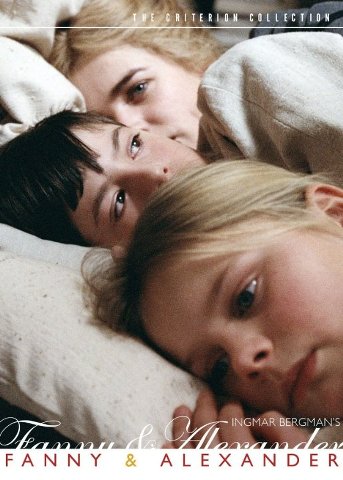
Plot Synopsis from ALLMOViE:
Though he made allusions to his own life in all of his films, Fanny and Alexander was the first overtly autobiographical film by Ingmar Bergman. Taking his time throughout (188 minutes to be exact), Bergman recreates several episodes from his youth, using as conduits the fictional Ekdahl family. Alexander, the director’s alter ego, is first seen at age 10 at a joyous and informal Christmas gathering of relatives and servants. Fanny is Alexander’s sister; both suffer an emotional shakedown when their recently-widowed mother (Ewa Froling) marries a cold and distant minister. Stripped of their creature comforts and relaxed family atmosphere, Fanny and Alexander suddenly find their childhood unendurable. The kids’ grandmother (Gunn Wallgren) “kidnaps” Fanny and Alexander for the purpose of showering them with the first kindness and affection that they’ve had since their father’s death. This “purge” of the darker elements of Fanny and Alexander’s existence is accomplished at the unintentional (but applaudable) cost of the hated stepfather’s life. Ingmar Bergman insisted that Fanny and Alexander, originally a multipart television series pared down to feature-film length, represented his final film, though within a year after its release he was busy with several additional Swedish TV projects, and he returned to make one more theatrical release movie before his death – the 2003 Saraband. Oscars went to Fanny and Alexander for Best Foreign Film, Best Cinematography (Sven Nykvist), Best Costume Design and Best Art Direction/Set Decoration.Read More »
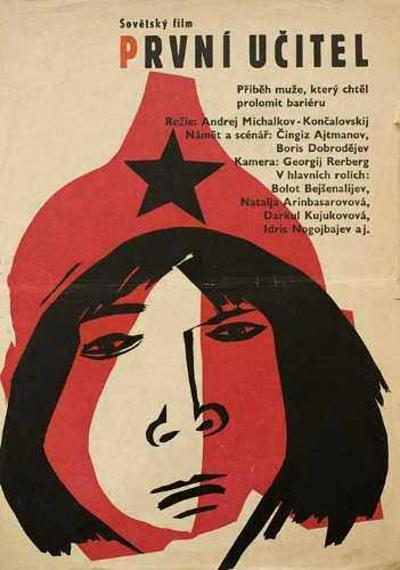
Synopsis:
Soviet Union, near the Chinese border, 1923. A stranger has just come in this little country village. He is a teacher, sent by the Communist Party to teach the ignorant masses. But the countrymen are to help him, and even to let their children go and “sleep” at school instead of giving a hand. There is only, Altynai, an orphan, to seem fascinated by the teacher and his knowledge.Read More »

Quote:
A kidnapped happiness
In Wrony (Crows, 1994), the central place is given once again to a little girl, this time set against the background of a small town. It also is a film about love, but this time about the absence of it. Wrona, the skinny and mouthy girl of a fragile build with a face of both an innocent and a scamp, kidnaps another little girl (Maleństwo) from the neighbourhood. She does so in order to find someone to love and to be loved herself.
Read More »

Synopsis:
Winner of a Golden Plaque award at the Chicago International Film Festival “for its complex and poetic evocation of an ambiguous period in Soviet history,” Marina Razbezhkina’s debut film HARVEST TIME is a beautiful portrait of a woman living in a small Russian village after World War II. More than a story of survival against ethics, or individuality against collectivity, HARVEST TIME is a piercing meditation on family unity. Read More »