Quote:
In the 1970s, a 12-year-old boy Esko lives in Tornio, northern Finland, a town bordering Sweden across the river. Esko befriends a Swedish boy, Pate, and learns to share his obsession for Harry Houdini, the legendary escape artist. While standing handcuffed on the railway bridge, contemplating a stunt jump into the icy river, he reminisces the dramatic events of the summer before. For the viewer, his problems are presented with warm humour: gang fights, feeling guilty for lying, Father losing his job, Mother losing her nerves, not to mention Grandfather having lost his willingness to speak since a traumatic war experience 30 years earlier.Read More »
Drama
-
Arto Koskinen – Kahlekuningas AKA The Handcuff King (2002)
2001-2010Arto KoskinenComedyDramaFinland -
Michel Franco – Las hijas de Abril AKA April’s Daughter (2017)
2011-2020DramaMexicoMichel FrancoQuote:
Valeria is 17 and pregnant. She lives in Puerto Vallarta with Clara, her half sister. Valeria has not wanted her long-absent mother, April, to find out about her pregnancy, but due to the economic strain and the overwhelming responsibility of having a baby in the house, Clara decides to call their mother. April arrives, willing to her daughters, but we soon understand why Valeria had wanted her to stay away.Read More » -
Dennis Iliadis – Hardcore (2004)
2001-2010Dennis IliadisDramaGreeceTwo young women on the wrong side of both society and the law fall into a dangerous love affair in this stylish drama from Greece. Martha is a cynical 17-year-old drug addict who supports her habit by working as a prostitute for pimp Manos. Martha has resigned herself to a short and ugly life on the streets when she meets Nadia, a 16-year-old who has fallen into the street life and is also hooking for Manos. Martha and Nadia are rivals at first, especially when Nadia attracts the attentions of good-looking hustler Argyris, for whom Martha has long carried a torch. But in time, the two girls become close friends, and then Nadia takes their relationship to a new level by seducing Martha. Martha falls hard for Nadia, but Nadia takes a more opportunistic attitude toward their new romance, and refuses to break things off with Argyris, while Martha retaliates by becomes involved with Miltos, a close friend of Argyris.
-All Movie GuideRead More » -
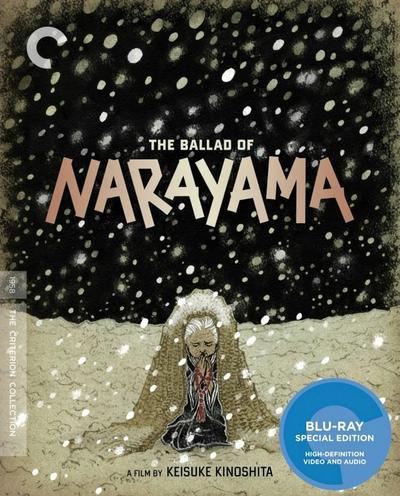
Keisuke Kinoshita – Narayama bushikô AKA Ballad of Narayama (1958)
1951-1960ArthouseDramaJapanKeisuke KinoshitaQuote:
In Kabuki style, the film tells the story of a remote mountain village where the scarcity of food leads to a voluntary but socially-enforced policy in which relatives carry 70-year-old family members up Narayama mountain to die. Granny Orin is approaching 70, content to embrace her fate. Her widowed son Tatsuhei cannot bear losing his mother, even as she arranges his marriage to a widow his age. Her grandson Kesa, whose girlfriend is pregnant, is selfishly happy to see Orin die. Around them, a family of thieves are dealt with severely, and an old man, past 70, whose son has cast him out, scrounges for food. Will Orin’s loving and accepting spirit teach and ennoble her family?Read More » -
Wim Wenders – Im Lauf der Zeit aka Kings of the Road (1976)
1971-1980ArthouseDramaGermanyWim Wenders
Dave Kehr of the Chicago Reader wrote:
The first masterpiece of the New German Cinema. Wim Wenders’s existentialized road movie follows two drifters–an itinerant movie-projector repairman and a child psychologist who has followed his patients by dropping out–in a three-hour ramble through a deflated Germany, touching on their private pasts and their hopes for the future. It’s full of references to Hawks, Ford, and Lang, and one scene has been lovingly lifted in its entirety from Nicholas Ray’s The Lusty Men. As the hommages indicate, one of the subjects is the death of cinema, but this isn’t an insider’s movie. Wenders examines a played-out culture looking for one last move. An engrossing, enveloping film, made with great craft and photographed in highly textured black-and-white by Robby Muller (1976).Read More »
-
Mikio Naruse – Shiroi yajuu aka White Beast (1950)
1941-1950AsianDramaJapanMikio NaruseQuote:
The third film that Naruse made in 1950, White Beast (Shiroi yaji, 1950), was described by Kinema Junpo critic Tsumura Hideo three years later as “so indescribably miserable as to haunt me even today.” Tsumura represents the bulk of Japanese critics of the time, who felt that Naruse experienced a terrible slump throughout the 1940s and this film seemed to be the “bottom of the ocean.” The critical establishment was clearly not prepared to accept a woman’s prison film featuring former prostitutes recovering from venereal diseases, unwanted pregnancies, and estranged lovers. With its catfights, hysterical tantrums, film noir lighting, and dramatic music, White Beast is indicative of the new influences of the Hollywood psychological thriller on Naruse. Caged (John Cromwell, 1950) initiated a cycle of women’s prison movies in the United States that may or may not have been shown in Japan, but the stylistics of White Beast draw on the same paranoid woman’s films and film noir conventions that preceded the American cycle.Read More » -
Souleymane Cissé – Finye AKA The Wind (1983)
1981-1990African CinemaDramaMaliSouleymane CisséOverview
Finye / Le vent/ The Wind (1982) continues Cisse’s examination of internal African problems. This film examines the sources of student unrest and the relationship between postcolonial and traditional authority under a military regime. It opens with a statement about the wind awakening man’s thoughts. Batrou, the daughter of the governor, Sangare, falls in love with Bah. The students become involved with a protest against the repressive government. Batrou must confront her father, who is both a parental as well as military authority figure. Sangare faces resistance on many fronts in addition to the conflict with his daughter. His third wife confronts his abuse of authority as does Kansaye, Bah’s grandfather and traditional leader who has been overthrown by the governor. While Cisse presents these stories, he is really concerned with the larger concerns of society. This film also won the FESPACO Grand Prize in 1983.
Sharon A. Russell, Guide to African CinemaRead More » -
Bille August – Honning måne AKA In My Life (1978)
1971-1980ArthouseBille AugustDenmarkDramaA young man, Jens, gets a job in a Copenhagen factory. He lives with his mother and has been without a job for a while. One day he meets Kirsten, who works at the library, and asks her out. He meets her parents, and soon they are married. They move into a house, Kirsten stops working, and they prepare their lives together. But Kirsten soon starts to feel a discontent that turns into depression and detachment. Jens fights to stay close to her, but eventually he must decide if he is suited for the respectable life he has built for himself. (IMDb)Read More »
-
Bahram Beizai – Bashu, gharibeye koochak AKA Bashu, the Little Stranger (1989)
Drama1981-1990Bahram BeizaiIranQuote:
Hailed as one of the masterpieces of post-revolutionary Iranian cinema, Bashu, the Little Stranger opens during an Iraqi air-raid on a small Iranian village bordering the war-front in Khuzestan. When 10-year old Bashu’s loses his home and his entire family in the raid he takes refuge in a truck that unexpectedly drives north, close to the Russian border. There he is assumed to be ‘wild’ because of his incomprehensible dialect and dark skin; only Nai, a mother of two whose husband is away for work, takes pity on him. Soon she and Bashu weave a relationship strong enough that Bashu’s traumatic experience with the war makes way for hope and trust.Read More »