Quote:
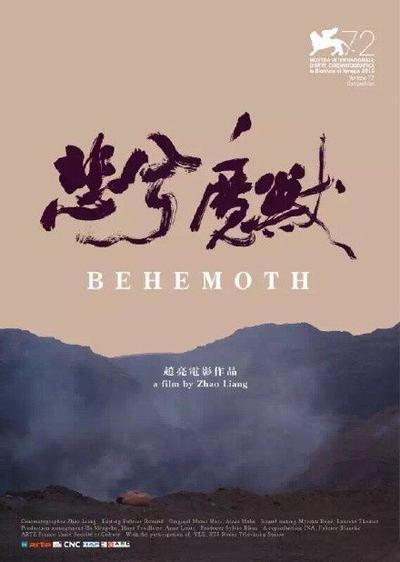
Under the sun, the heavenly beauty of grasslands will soon be covered by the raging dust of mines. Facing the ashes and noises caused by heavy mining , the herdsmen have no choice but to leave as the meadow areas dwindle. In the moonlight, iron mines are brightly lit throughout the night. Workers who operate the drilling machines must stay awake. The fight is tortuous, against the machine and against themselves. Meanwhile, coal miners are busy filling trucks with coals. Wearing a coal-dust mask, they become ghostlike creatures. An endless line of trucks will transport all the coals and iron ores to the iron works. There traps another crowd of souls, being baked in hell. In the hospital, time hangs heavy on miners’ hands. After decades of breathing coal dust, death is just around the corner. They are living the reality of purgatory, but there will be no paradise.Read More »
Documentary
-
Zhao Liang – Bei xi mo shou AKA Behemoth (2015)
2011-2020ChinaDocumentaryZhao Liang -
Dean DeBlois – Heima AKA At Home [+Commentary] (2007)
2001-2010Dean DeBloisDocumentaryIcelandPerformance‘heima’ is sigur rós’s first ever film, filmed over two weeks last summer when the band undertook a series of free, unannounced concerts in iceland. they hauled 40-plus people round 15 locations to the furthest flung corners of their homeland for their debut venture into live film, to create something, well, inspirational.
on their way they went to ghost towns, outsider art shrines, national parks, small community halls and the absolute middle-of-nowhere-ness of the highland wilderness, as well as playing the largest gig of their career (and in icelandic history) at their homecoming reykjavik show.
‘heima’ (icelandic for “at home” or “homeland”), truly, shows sigur rós as never before. whereas seeing the group live is normally a large-scale and sometimes overwhelming experience, making full use of lights and mesmeric visuals, ‘heima’ was always intended to reveal more of what was actually going on on stage. it does this via long-held close-ups and a rare intimate proximity, without ever once breaking the spell.Read More »
-
Kon Ichikawa – Tokyo orimpikku AKA Tokyo Olympiad [+Extra] (1965)
1961-1970AsianDocumentaryJapanKon Ichikawa
Review from the Criterion website :
A spectacle of magnificent proportions, Kon Ichikawa’s Tokyo Olympiad ranks among the greatest documents of sport ever committed to film. Utilizing glorious widescreen cinematography, Ichikawa examines the beauty and rich drama on display at the 1964 Summer Games in Tokyo, creating a catalogue of extraordinary observations that range from the expansive to the intimate. The glory, despair, passion, and suffering of Olympic competition are rendered with lyricism and technical mastery, culminating in an inspiring testament to the beauty of the human body and the strength of the human spirit.Read More » -
Harun Farocki – Parallel I (2012)
2011-2020DocumentaryGermanyHarun FarockiVideo ArtParallel I opens up a history of styles in computer graphics. The first games of the 1980s consisted of only horizontal and vertical lines. This abstraction was seen as a failing, and today representations are oriented towards photo‐realism.
“For over one hundred years photography and film were the leading media. From the start, they served not only to inform and entertain, but were also media of scientific research and documentation. That’s also why these reproduction techniques were associated with notions of objectivity and contemporaneity — whereas images created by drawing and painting indicated subjectivity and the transrational.Read More »
-
TVTV – TVTV Looks at the Oscars (1976)
1971-1980DocumentaryTVTVTVUSAEAI writes:
Made in 1976, TVTV’s close-up look at Hollywood’s annual awards ritual mixes irreverent documentary with deadpan comedy. TVTV’s cameras go behind the scenes to follow major Hollywood figures (including Steven Spielberg, Michael Douglas, Lee Grant, Jack Nicholson, and many others), capturing them in candid moments—inside their limousines, dressing for the ceremony, backstage at the awards. Lily Tomlin appears as a fictional character watching the televised Oscar ceremony in her suburban home. Tomlin, nominated for best supporting actress in Robert Altman’s Nashville in 1975, is also seen as she attends the actual awards ceremony. With Tomlin serving as a fulcrum between Hollywood’s insiders and outsiders—the adoring fans, the workers who serve the stars, those overlooked by the awards—TVTV records the lead up to and letdown after the ceremony, revealing the vagaries of fame and stardom.Read More » -
Sergei Loznitsa – Sobytie AKA The event (2015)
2011-2020DocumentaryNetherlandsSergei LoznitsaSynopsis
In August 1991 a failed coup d’e´tat attempt (known as Putsch) led by a group of hard-core communists in Moscow, ended the 70-year-long rule of the Soviets. The USSR collapsed soon after, and the tricolour of the sovereign Russian Federation flew over Kremlin. As president Gorbachev was detained by the coup leaders, state-run tv and radio channels, usurped by the putschists, broadcast Tchaikovsky’s swan lake instead of news bulletins, and crowds of protestors gathered around Moscow’s White House, preparing to defend the stronghold of democratic opposition led by Boris Yeltsin, in the city of Leningrad thousands of confused, scared, excited and desperate people poured into the streets to become a part of the event, which was supposed to change their destiny. A quarter of a century later, Sergei Loznitsa revisits the dramatic moments of August 1991 and casts an eye on the event which was hailed worldwide as the birth of “Russian democracy.” What really happened in Russia in August 1991? What was the driving force behind the crowds on the Palace Square in Leningrad? What exactly are we witnessing: the collapse or the regime or its’ creative re-branding? Who are these people looking at the camera: victors or victims?Read More » -
Jean-Luc Godard – 3x3D: Les trois desastres (2013)
2011-2020DocumentaryExperimentalFranceJean-Luc GodardQute:
It’s no surprise that in undertaking his first 3D project (one third of 3X3D, a triptych that also includes Peter Greenaway and Edger Pêra), Jean-Luc Godard would do so much that everything else yet shot in the format looks meager and infantile by comparison (even the few notable filmmakers to have explored 3D’s potential fall short of Godard’s ambitions: Scorsese, Herzog, Paul W.S. Anderson). Also, it should not have been a surprise that 3D would make perfect sense for Godard’s layering of texts and superimpositions, which command an even greater effect with the extra dimension. All of Godard’s films, are, to an extent, about images, and here as much as ever he concerns himself with the apparatus, perspective, history (through images) and specifically 3D and digital’s impact on these things, as well as on cinema itself.
Adam CookRead More » -
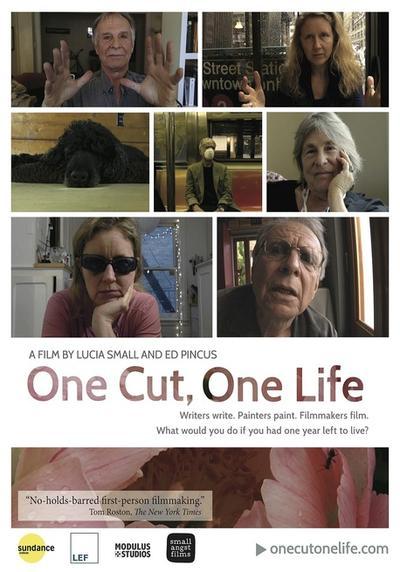
Ed Pincus & Lucia Small – One Cut, One Life (2014)
2011-2020DocumentaryEd PincusEd Pincus and Lucia SmallUSAWhen seminal documentarian Ed Pincus, considered the father of first person non-fiction film, is diagnosed with a terminal illness, he and collaborator Lucia Small team up to make one last film, much to the chagrin of Jane, Ed’s wife of 50 years. Told from two filmmakers’ points of view, ONE CUT, ONE LIFE challenges the form of first person documentary. Ed and Lucia’s unique approach to filming offers a vulnerability and intimacy rarely seen in non- fiction, questioning whether some things might be too private to be made public. The film is an intense, raw, and sometimes humorous exploration of the human condition which invites the viewer to contemplate for themselves what is important, not only at the end of life, but also during.Read More »
-
Rob Epstein & Jeffrey Friedman – And the Oscar Goes To… (2014)
2011-2020DocumentaryEpicRob Epstein and Jeffrey FriedmanUSAOn the opening night of its annual 31 Days of Oscar festival, TCM presents the world premiere of “And the Oscar Goes To…”, a documentary tracing the history of the Academy Awards. The documentary is one of a series of programming events leading up to the TCM 20th anniversary in April 2014. In telling the story of the gold-plated statuette that became the film industry’s most coveted prize, And the Oscar Goes To… traces the history of the Academy itself, which began in 1927 when Louis B. Mayer, then head of MGM, led other prominent members of the industry in forming this professional honorary organization. Two years later the Academy began bestowing awards, which were nicknamed “Oscar” and quickly came to represent the pinnacle of cinematic achievement.Read More »