

Oscar winner for BEST DOCUMENTARY (SHORT SUBJECT)
As daily air strikes pound civilian targets in Syria, a group of indomitable first responders risk their lives to rescue victims from the rubble.Read More »
Oscar winner for BEST DOCUMENTARY (SHORT SUBJECT)
As daily air strikes pound civilian targets in Syria, a group of indomitable first responders risk their lives to rescue victims from the rubble.Read More »
Part One: Such Such Were the Joys
‘From a very early age, perhaps the age of 5 or 6, I knew that when I grew up I should be a writer …One would never undertake such a thing if one were not driven on by some demon whom one can neither resist nor understand.’
George Orwell is one of the greatest writers England has produced. Tonight and for the next four nights Arena presents a unique full-scale portrait of this remarkable man, filmed in the places where he lived and worked and told in his own words and the words of those who knew him.
The first programme traces Orwell’s upbringing in a sedate middle-class home near Henley, his horrific experiences at preparatory school, his years at Eton and as a military policeman in Burma – and closes with his sudden and dramatic emergence as a writer with Down and Out in Paris and London, a book drawn from his experiences among vagrants, tramps and outcasts. Among those appearing are Jacintha Buddicon Sir John Grotrion, Malcolm Muggeridge Cyril Connolly and Professor Bernard CrickRead More »
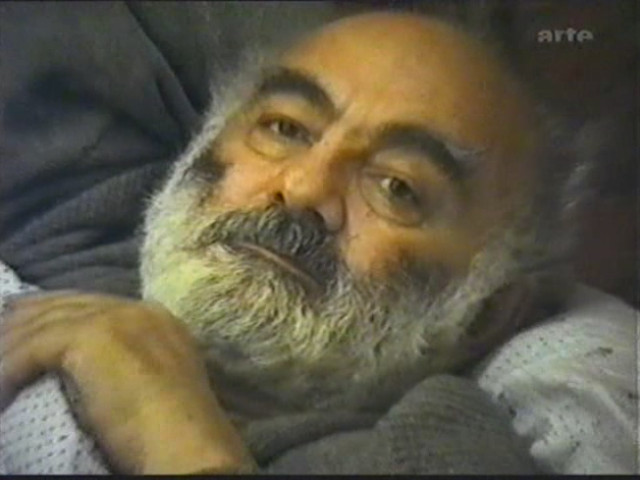
One of the several documentaries dedicated to the great master Sergei Paradjanov, died in 1990. On this occasion, who is behind the camera is the acclaimed director of Armenian origin Don Askarian. The film was produced in 1998 by Don Film in Co-Production with Margarita Woskanian and ZDF-ARTE.Read More »
Quote:
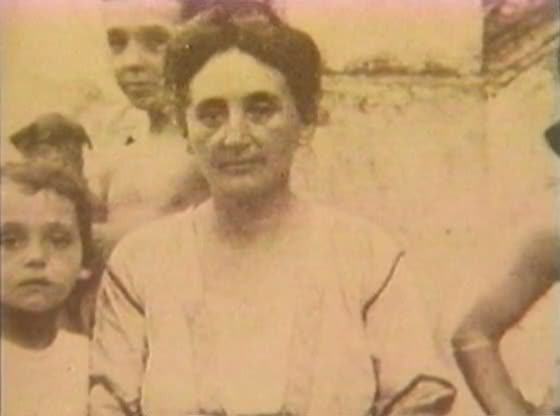
She was the sort of woman who spared neither herself nor others—and arguably qualifies as 20th-century France’s greatest femme de lettres. In this interview, the late novelist and filmmaker talks openly about the hardship and the romance of her childhood in French Indochina, sharing how this period haunted her life and shaped her work. Excerpts from her films and readings from her books by actress Elizabeth Rider and Duras herself—including The Lover, winner of the Prix Goncourt and translated into more than forty languages—bring to life those formative years in Vietnam. (52 minutes)Read More »

Synopsis:
A coast guard captain on a small Greek island is suddenly charged with saving thousands of refugees from drowning at sea.
Review:
4.1 miles – the distance between Turkey and Greece. It might not sound like much – in fact, many people might consider it swimmable – but these are dangerous waters. Nevertheless, hundreds of thousands of refugees and asylum seekers have made the desperate journey over the past few years. Concern about how to cope with this influx has extended right across the continent. What has it done to those on the coastlines directly affected?Read More »
Synopsis:
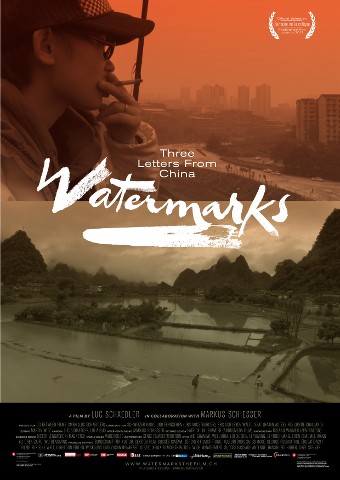
Based on three different places, the film portrays the infractions to which people living in modern day China are subjected due to rapid developments: in the deceptively idyllic Jiuxiancun in the rainy south; in the apocalyptic coal mining site of Minqin and Wusutu in the parched north; and in Chongqing, the mega city on the Yangtze River. The protagonists give their moving accounts of an unresolved past, an uncertain present and their tentative steps into the future. The film thus paints a complex image of the mental state of the people in this complicated country. “Watermarks” is a subjective snapshot in time that takes a poetic look at the changing everyday life in China.Read More »

Synopsis
The director brings the viewer on a journey to a place that is haunted, in present day, by the myth of a mysterious inscription. The viewer can see the film maker depict fractional images of a divinely inspired Nature, interweave mythological and historical accounts, as well as glean fragments to record the identity of a place that confronts and is confronted with the great philosophical questions of life. Koutsaftis not only is the director but is also the writer and the photography director of the film.Read More »

Synopsis:
A grandmother dies and leaves behind hours of secret film and audio recordings as well as an envelope with the words “Must read after my death”, which reveal a dark history for her family to discover.Read More »
