Quote: A look at what people from different countries suffer in order to have a job. Includes a coal miner in the Ukraine, a slaughterhouse worker in Nigeria, a sulfur miner in Indonesia, a steel worker in China, and a ship-breaker in Pakistan.Read More »
IDFA Synopsis : A number of farmers – Jean Rouch’s actors who more or less play themselves – is looking for a simple and cheap way to irrigate their farmland. They dream of a green Niger. While struggling against their Sahel country turning into a desert more and more, they develop the idea to get a windmill from Holland. Rouch follows the three men – Damour, Lam, and Tallou – when they examine how wind-energy is applied in Holland. Jean Rouch: “The solution we are looking for is simple, so it will work. That is the moral of the film. So many projects have been carried out in this country that have failed. They are the ‘poisoned presents’: waterpumps installed but never maintained. The landscape is filled with these modern ruins.” MADAME L’EAU unmistakably has ironic overtones, but Rouch’s effort is genuine. He protests against the tendency of Third World development projects looking for expensive and complicated solutions that do not fit in with the needs of the local population.Read More »
A cinematic essay in defense of remembering, The Royal Road offers up a primer on Junipero Serra’s Spanish colonization of California and the Mexican American War alongside intimate reflections on nostalgia, the pursuit of unavailable women, butch identity and Alfred Hitchcock’s Vertigo — all against a contemplative backdrop of 16mm urban California landscapes, and featuring a voiceover cameo by Tony Kushner. This bold, innovative film from acclaimed San Francisco filmmaker Jenni Olson combines rigorous historical research with lyrically written personal monologue and relates these seemingly disparate stories from an intimate, colloquial perspective to tell a one-of-a-kind California tale.Read More »
Rossellini 77 Last images from Roberto Rossellini filming the Centre Georges Pompidou, February-March-April-May 1977.
Following the steps of Roberto Rossellini on day to day basis, making the film “LE CENTRE GEORGE POMPIDOU” we could not know the issue of his last encounter with the cinéma.
10 Hours of 16 mm coulour film, 30 hours of sound recordings… More than 2500 slides were produced as he wished : “to represent things as they are and stay on the field of the honesty”. Unique experience… 30 years after… From this story, as promised… a film is being born.Read More »
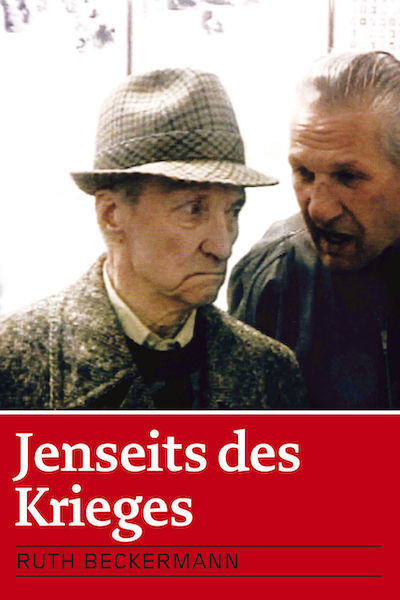
Synopsis White-tiled rooms, neon lighting; on the walls black and white photographs from an exhibition entitled ,Vernichtungskrieg’ (War of Extermination) documenting the atrocities committed by the Wehrmacht on the Eastern Front. Against this background, Ruth Beckermann and cameraman Peter Roehsler have filmed former soldiers talking about their experiences beyond the bounds of ,normal’ warfare. With a mixture of helplessness, impotence, shame, opportunism and undiminished fanaticism, witnesses from that time tell of atrocities such as the shootings of Russian prisoners-of-war, the murder of Jews and abuse of women. The differing accounts of these events demonstrate how selective perception was even in this most inhuman and brutal of environments.Read More »
Queen is a ribald hour-long documentary about a “Miss All-American Beauty” contest held in New York in 1967. So what, you say? Well, it happens that all the contestants are male transvestites — and some of them are real knockouts. Alternately hilarious and depressing, Queen was considered the cutting edge of obscene outrageousness when originally distributed by Grove Press (the publishers of several above-the-counter “alternative” magazines of the 1960s). Nowadays it’s practically kid stuff, thanks to the surfeit of TV tabloids and Fox Network sitcoms.allmovie.comRead More »
PLOT DESCRIPTION The Forgotten Village in this powerful 68-minute documentary is an unnamed, poverty-stricken Mexican community. Living in deplorable conditions, the villagers must not only contend with the elements but with their own lack of inner resourcefulness. In grim detail, the film records the life-cycle of a typical peasant family, from birth to death. Perhaps as a sop to the Mexican authorities, the film ends with the assurance that new government programs have been placed into effect to help the unfortunates depicted on screen. The narration for The Forgotten Village was written by novelist John Steinbeck and spoken by Burgess Meredith, who in 1939 starred in the film version of Steinbeck’s Of Mice and Men. ~ Hal Erickson, All Movie GuideRead More »
Quote: Notes on Marie Menken explores the almost forgotten story of the legendary artist Marie Menken (1909-1970) who became one of New York´s outstanding underground experimental filmmakers of the 1940s through the 1960s, inspiring artists such as Stan Brakhage, Andy Warhol, Jonas Mekas, Kenneth Anger, and Gerard Malanga. She was a probable role model of Edward Albee´s “Who´s Afraid of Virginia Woolf?” and ended up as a Warhol Superstar.Read More »