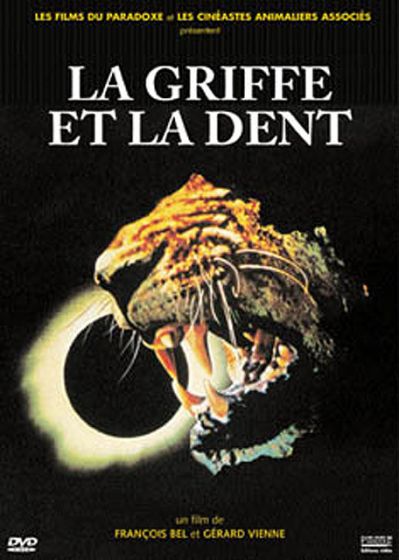

A documentary depicting the day- and nighttime behaviors of African animals.Read More »

Jewish life in Poland before World War II. The Vladimir Medem Sanatorium stood as the embodiment of health and enlightenment in striking contrast to the grim images of urban Polish-Jewish poverty.Read More »

“Palestine Vaincra (Palestine Will Win)” is regarded as the first French documentary film made in support of the Palestinian liberation movement. Shot in 1969 by Jean-Pierre OLIVIER de SARDAN in a student dorm, the film blends historical testimonies by Palestinians, photographs, stock footage, maps, and music. The documentary centers on the 1968 Battle of Karameh, while also tracing the complex story of the past five decades of Palestinian resistance against oppression and colonialism.Read More »

Filmed in his studio in 1988, in front of Benoît Jacquot’s camera, the painter Robert Motherwell, then aged 73, retraces the main creative stages of his work and describes very precisely his way of working: the importance of the choice of brush , of the support, of the paint used, the accidents which occur and which determine the work… He engages in a discourse on art in the serene atmosphere of his studio in Greenwich. He describes the principles of psychic automatism and comments on the different periods of his work to which dozens of retrospectives, including one in Paris in 1977, have been devoted throughout the world. A rigorous portrait that reveals the painter with his doubts and convictions.Read More »

Quote:
The film is characterised by atypical landscape shots, with views of nature being distorted without technical effects. Close-ups, details and overhead shots without a horizon create an impression of flatness. Flora and fauna are transformed into graphic elements through symmetrical reflections.
‘Fischfang in der Rhön’ is reminiscent of Ella Bergmann-Michel’s experimental landscape photographs on the one hand and her collages on the other, in which she layered coloured transparent papers on top of each other.Read More »

Quote:
Ella Bergmann-Michels’ second film, ‘Erwerbslose kochen für Erwerbslose’ (The Unemployed Cook for the Unemployed), was commissioned by the Frankfurt Association of Soup Kitchens, which had run out of funds to provide thousands of unemployed people with hot meals as the economic crisis worsened. The film was shown as a supporting feature in many Frankfurt cinemas and in street screenings at the Frankfurt Hauptwache.Read More »

Jazz and decolonization are entwined in this historical rollercoaster that rewrites the Cold War episode that led musicians Abbey Lincoln and Max Roach to crash the UN Security Council in protest against the murder of Patrice Lumumba.Read More »

Quote:
The documentary film ‘Where Do Old People Live’, commissioned in 1931 by Dutch architect Mart Stam, shows the modern and forward-looking architecture of the Budge Home in Frankfurt. Its residents live in spacious, light-filled rooms and are accommodated in single rooms with state-of-the-art facilities. The film focuses on presenting architecture that promotes social interaction among residents through its spatial structure.Read More »
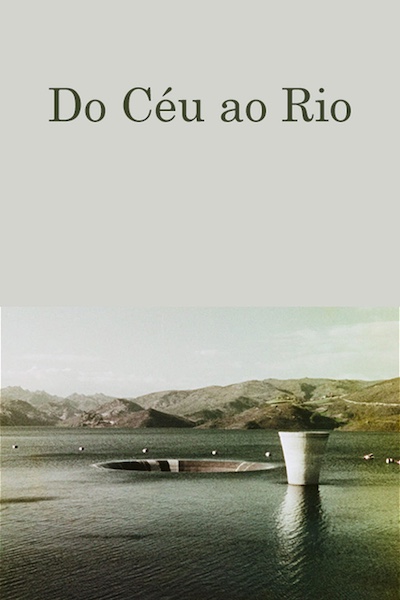
The second short film directed by António Reis in partnership with producer César Guerra Leal premiered at the Ódeon cinema in Lisbon on January 29, 1964. It is presumed to have been commissioned by the Cávado Hydroelectric Plant, as it reveals various aspects of the construction of the dam network in that river basin.Read More »