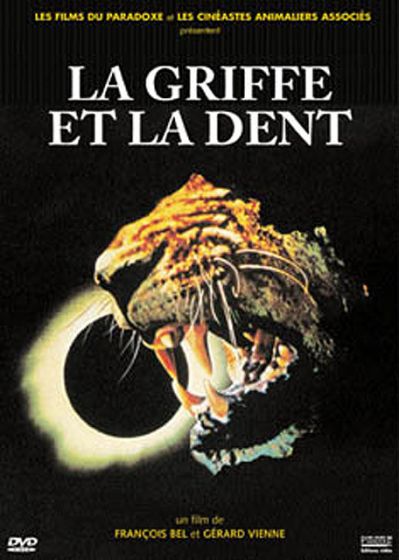
During its presentation at the 1976 Cannes Film Festival, Fang and Claw was a sensation. The fruit of labours which spanned over two years, and whose editing amalgamated some 65,000 meters of film and 37 hours of sound, the film was unlike anything from the world of wildlife documentary. Not only was it technically interesting at the time (the construction and transportation of two large high powered spotlights for night scenes, as well as special trucks to carry them), nor the exceptional preparation required to craft each scene, but what all this work is in the service of. Totally without dialogue, with a soundtrack crafted by Michel Fano from natural sounds as well as an electronic instrumentarium, using an editing technique devoted to the rhythm and rhyme between each shot. Between plastic beauty and bloody cruelty, hunting scenes and scenes of rut, stillness, quickness, carnivorous, and nocturnal and diurnal races hound this feral world which becomes savage, becomes fragmented and alien.Read More »
Documentary
-
François Bel & Gérard Vienne – La griffe et la dent [+Extras] (1976)
1971-1980DocumentaryExperimentalFrançois BelGérard Vienne -
Hélène Chatelain – Néstor Makhno, paysan d’Ukraine AKA Nestor Makhno (1996)
1991-2000DocumentaryFranceHélène ChatelainPoliticsWith breathless pace, Hélène Chatelain (“the woman” in “La jetée”) reconstructs the life of Nestor Makhno from his writings, Soviet propaganda films, reactions of workers today and the memory he has left in the hearts & minds of his people in Gouliaïpolié, in the east of the Ukraine.Read More »
-
Erik Gandini – Videocracy (2009)
Documentary2001-2010Erik GandiniItaly

Much has been sad about this documentary, before it’s been shown. Europe outside Italy has its view clear. How is Berlusconi possible? You meet this agent with Mussolini songs in his cell phone. You meet the paparazzi king who with a considerable amount of self irony calls himself a Robin Hood, who takes from the poor and gives to himself. You also meet the 26-year-old worker, still living with his mother, who wants to be famous, combining Ricky Martin songs with karate tricks.Read More »
-
Peter Nestler – Något om USA:s indianer (1978)
1971-1980DocumentaryPeter NestlerPoliticsSwedenDocumentary short made for Swedish public television (SVT) about the past and current situation for Native Americans in the US. The film was produced as an introduction to the American documentary Navajo Girl (Robert Young, 1973). Något om USA:s indianer [Something about the Indians in the USA] is another example of Nestler’s method of combining still photos, drawings and moving images from different sources.Read More »
-
Borhane Alaouié & Lotfi Thabet – Il ne suffit pas que Dieu soit avec les pauvres AKA It is Not Enough for God to be with the Poor (1978)
1971-1980ArchitectureArthouseBorhane AlaouiéDocumentaryFranceLotfi Thabet -
Vittorio De Seta – Lu tempu di li pisci spata AKA The Age of Swordfish (1955)
1951-1960DocumentaryItalyShort FilmVittorio De SetaQuote:
Vittorio De Seta’s rhythmic editing adds drama to this chronicle of a Sicilian spearfishing expedition.Read More » -
Krzysztof Kieslowski & Tomasz Zygadlo – Robotnicy 1971 – Nic o nas bez nas AKA Workers ’71: Nothing About Us Without Us (1971)
1971-1980DocumentaryKrzysztof KieslowskiPolandPoliticsTomasz Zygadlo

Quote:
“We tried to draw a broad picture showing that the class which, theoretically at least, was said to be the ruling class, had somewhat different views from those which were printed on the front page of the Trybuna Ludu.”
— Krzysztof KieslowskiRead More » -
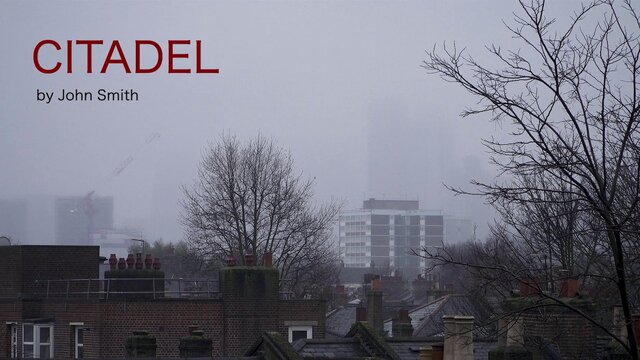
John Smith – Citadel (2020)
2011-2020DocumentaryExperimentalJohn SmithUnited KingdomQuote:
Filmed from the artist’s window during lockdown, short fragments from British Prime Minister Boris Johnson’s speeches relating to COVID-19 are combined with views of the London skyline.Read More » -
Lilyan Sievernich – John Huston and the Dubliners (1988)
1981-1990DocumentaryDramaLilyan SievernichUSAJohn Huston and the Dubliners is a valentine to the late director and a relatively standard production film about his making of The Dead. Much time is devoted to the actors’ understandably admiring comments about Mr. Huston, and to the disposition of the prop department’s fake snow. The film has the potential to seem ordinary, but it becomes touched with magic whenever the director makes his presence felt. Mr. Huston displays his characteristic gallantry and his keen attention to seemingly unimportant touches (”Don’t worry about what you say, just keep talking,” he tells one actor, and gives precise instructions for reading the line ”Would you please pass the celery?”). He describes The Dead as ”lacework,” and this film makes the aptness of that description very clear.Read More »