Quote:
Interviews with a procurer and with nineteen boys and young men who are prostitutes in Prague. The youths range in age from 14 to 19. They hustle at the central train station and at clubs. Most of their clients are foreign tourists, many are German. The youths talk about why they hustle, their first trick, prices, dangers, what they know about AIDS, their fears (disease and loneliness), and how they imagine their futures. The film’s title, its liturgical score, much of it elegiac, and shots of the city’s statues of angels underline the vulnerability and callow lack of sophistication of the young men.Read More »
Czech Republic
-
Wiktor Grodecki – Not Angels But Angels (1994)
1991-2000Czech RepublicDocumentaryQueer Cinema(s)Wiktor Grodecki -
Frantisek Vlácil – Marketa Lazarová (1967)
1961-1970ArthouseCzech RepublicDramaFrantisek VlácilQuote:
In less than a minute, before the film’s opening titles even conclude, Marketa Lazarová has announced itself as something potentially unique, perhaps indefinable. The first line of a brief prologue declares, “This tale was cobbled together almost at random,” before a title card reiterates what we’re about to see as a “rhapsody in film,” one “freely adapted” by director František Vláčil and co-screenwriter František Pavlíček. That all these things are soon confirmed, even exceeded, is certainly the impetus behind Marketa Lazarová’s reputation as simultaneously one of the greatest and most difficult works of Czechoslovakian cinema. Though it emerged at the height of what came to be known as the Czech New Wave, this 1967 film stands as something rare not just amid the anarchic vulgarity of Daisies or the emotional naïveté of Loves of a Blonde, but also among the greater cinematic landscape of the period. What this film is—along with being, yes, random, free, and rhapsodic—is something stranger, something paradoxical and altogether original: an intimate epic, a tangible hallucination, a visceral symphony, and, perhaps most affectingly, a beautiful display of brutality.Read More » -
Milos Forman – Lásky jedné plavovlásky AKA Loves of a Blonde (1965)
1961-1970Amos Vogel: Film as a Subversive ArtComedyCzech RepublicDramaMilos FormanThe flirtatious title of Milos Forman’s breakthrough comedy Loves of a Blonde says a lot about the film without even trying. Everybody in Forman’s bittersweet film thinks about sex constantly but only in terms of hypothetical scenarios that almost never come to pass. The funny thing about these daydreams of coitus is that they’re not strictly sexy. In fact, most of the time characters in Loves of a Blonde are wringing their hands about sex, even the trio of homely soldiers licking their lips at the thought of seducing a table of bored blondes at a local dance. First they send alcohol to the wrong table and are subsequently unsure of how long they should smile at the girls they plan on getting drunk and taking to the woods (they aren’t even sure if the idea of taking girls to the woods for sex is just a euphemism or not). Sex is comedy here because it breeds nothing but the kind of anxiety that the title of Forman’s film teems with.Read More »
-
Petr Václav – Nikdy nejsme sami AKA We Are Never Alone (2016)
2011-2020Czech RepublicDramaPetr VáclavA paranoid prison guard moves into a village flanked by a state motorway. He befriends his new neighbour, an unemployed hypochondriac supported by his wife, working in the local grocery. Weary of life and caring for her two sons, she develops an attraction to the nightclub bouncer, but he is in love with the club stripper, who is in turn waiting for the father of her child to return from the same prison where our prison guard works. A story about the demons of our day.Read More »
-
Wiktor Grodecki – Telo bez duse AKA Body Without Soul (1996)
1991-2000Czech RepublicDocumentaryQueer Cinema(s)Wiktor GrodeckiQuote:
An unflinching portrait of life on the post-Communist streets of Prague where young men find it all too easy to pick up extra money as porno models and hustlers. Their clients consist largely of German, Swiss, and Dutch tourists in search of cheap sex – and for additional income they make pornos on the side. Along the way they are ripped off, abused, and degraded until they simply wear out.Read More » -
Oldrich Lipský – Happy End (1967)
1961-1970ComedyCzech RepublicExperimentalOldrich LipskyQuote:
Delightfully witty and with a Kafkaesque spin, Oldřich Lipský‘s brilliant film Happy End (1967) is a quirky little gem from the archives of cinematic history. Crafted with unrelenting precision and grace, Stastny Konec (to give it its Czech name) really gives its audience a taste of the bleak humour renowned by Czech comedy. Without spoiling too much, the film concerns the wondrous (or tragic) life-story of the kind-hearted (or vengeful) butcher Bedrich Frydrych (Vladmír Mensík), his various ups and downs with his wife Julie (Jaroslava Obermaierová) and the tribulations of a surreal existence in reverse.Read More » -
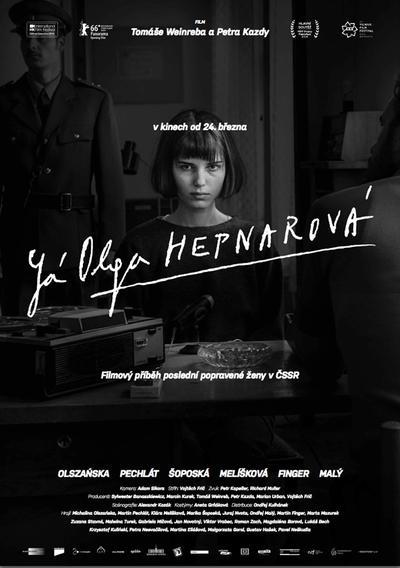
Petr Kazda & Tomás Weinreb – Já, Olga Hepnarová AKA I, Olga Hepnarova (2016)
2011-2020CrimeCzech RepublicDramaPetr Kazda and Tomás WeinrebOlga Hepnarova was a young, lonely lesbian outsider from a coldhearted family who couldn’t play the part society had chosen for her. Her paranoid self-examination and inability to connect with other people eventually drove her over the edge of humanity when she was only 22 years old. The film shows the human being behind the mass murderer. Guided by her letters, we delve into Olga’s psyche and witness the worsening of her loneliness.
Olga is a complex young woman desperate to break free from her unfeeling family and social conventions. With her Louise Brooks-like tomboyish looks she drags herself, chain-smoking, from one job to another until she appears to find her niche as a truck driver. Although she has female lovers she does not form a bond with any of them; instead she clashes, time and again, venting herself in wordless emotional outbursts and other behavioural extremes.Read More »
-
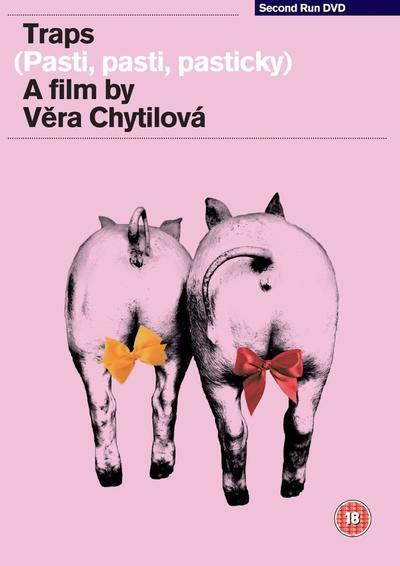
Vera Chytilová – Pasti, pasti, pasticky AKA Traps (1998)
Arthouse1991-2000ComedyCzech RepublicVera ChytilováFrom starburstmagazine
For anyone feeling a little squeamish, of vegetarian inclination or just full from a hearty meal, the graphic opening scenes of Traps (or Pasti, Pasti, Pasticky to give its original title) that feature pig castration may prove a little difficult to stomach. These images also feel burned into your retina somehow; a poignant, pre-emptive piece of filmmaking that becomes disturbingly relevant later in the film. For Czech new wave director Vera Chytilovà, filmmaking was a mission. She became a dominant force in the industry and was often described as a militant feminist, although she preferred the term individualist. Traps bears many of the hallmarks that justify both these labels, and even now remains both boldly ambitious and deeply flawed.Read More » -
Jirí Krejcík – Vyssi princip AKA Higher Principle (1960)
Drama1951-1960Czech RepublicJirí KrejcíkWar

SYNOPSIS from kviff.com:
Jiří Krejčík’s A Higher Principle, together with Weiss’s film Romeo, Juliet and Darkness (1959), was one of those Czechoslovak films at the forefront of what is characterised in literature as the second wave of war prose. After years of the schematism and trivialisation of heroic pathos, films were gradually appearing towards the end of the 1950s which treated the theme of war with greater intimacy, and the heroism of those who resisted evil and Nazi barbarity was not so apparent at first glance. Krejčík selected a story by Jan Drda written almost immediately after the liberation, whose short text he and the author considerably reshaped.Read More »