In “The Scholar and The Soldier”, Major Fang is obsessed with Yu Zhen by chance, knowing that she is the daughter of scholar Xu, he decided to enter their house in disguise with his page, and however, Yu Zhen’s cousin comes back for the pre-arranged marriage at the same time. Li Han-hsiang both scripted and helmed “Tales of Larceny” about the scams cons worked and the games people played during the corrupt Chinese Warlord era, featuring a cast filled with the best of Shaw’s exceptional character actors.Read More »
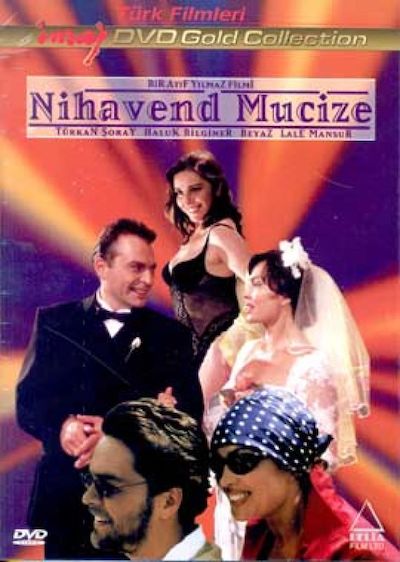
Synopsis Suzan died 25 years ago. But after seeing his son’s loneliness and despair in the world, he had to return to the world at the end of these 25 years. The world he left is completely different from the world he finds. Suzan suffers from a deep adaptation to this change. After a while, he realizes that he must adopt such a fit. The goal is clear: to regulate the life of his son. This goal will have other benefits.Read More »
Quote: One 24 December, Léopold Tremblay, 32 years old, a snow removal worker, is busy with the snowstorm falling on Montreal. But he must also think of buying gifts for his wife and son, picking up his cousin returning from the South at the train station, and moving furniture for his friend Théo. At 11 p.m., the snow lets up and Léopold can finally go to midnight mass at St. Joseph’s Oratory, where his son sings in the choir.Read More »
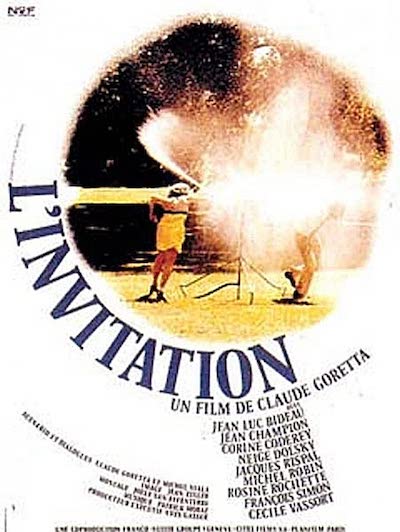
Synopsis wrote: After the death of his mother, middle-aged insurance employee inherits her small cottage surrounded by a garden. Selling the cottage which is situated on unexploited ground near the center of a big city makes him a rich man and he buys a big house in the countryside. He takes some time off and decides to throw a big garden party at the house and invite all his colleagues from the office. Aided by alcohol, the guests gradually lose all their inhibitions and reveal personality traits and frustrations that they normally keep hidden.Read More »
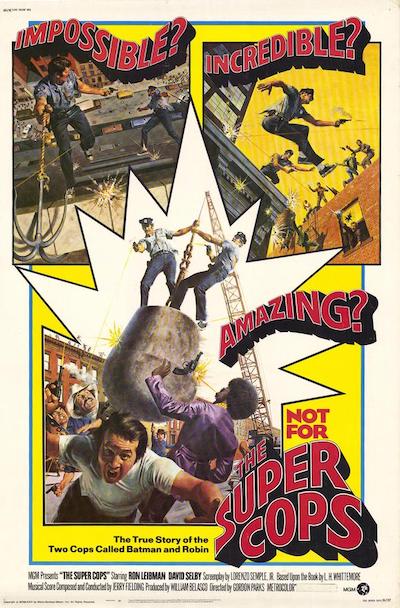
Dave and Rob, fresh from the Police Academy, enrage their captain because they want to do more than controlling the traffic. As penalty they are sent to Brooklyn. However they don’t give up, but develop their own methods to fight against dealers, criminals and corrupt colleagues.Read More »
A small and thin barefoot slave (played by Polanski) plays a flute and beats a drum to entertain his large master who rocks in a rocking chair in front of his mansion. The slave jumps and leaps like a madman, wipes his master’s brow, feeds him, washes his feet, shades him from the sun with an umbrella and holds a urinal for him.Read More »
Here’s an edited synopsis from the website TV Party: Quote: Promoted by Woody as “an hour of horny comedy,” the show was refreshingly adult by the standards of 1969 network TV. After wacky animated titles that depicted Allen as an astronaut, a guillotine victim and Virgil Starkwell, his Take The Money & Run character and after the first of 3 very funny Libby’s commercials featuring Tony Randall as detective Justice Dunn, the show opens with the monologue.Read More »
Quote: The strains of Debussy’s “Afternoon of a Faun” waft through this amusing comedy about an aging lecher’s ever-optimistic pursuit of the fair sex, for fair sex, or better. The “faun” wakes up to a new day of happy hunting because the proof of the pudding is irrelevant, it is the joy of finding the ingredients that matters. Whether out on the streets or at his job in an office, he does not relent in his hopeful approaches to mainly young women, who mainly ignore him. No one is more aware of his skirt-chasing than an older companion in the same office who has loved him from the beginning. And the big question is, will the late-blooming Don Juan come to his senses?Read More »
The second film to be made from Woody Allen’s successful stage comedy (following a 1969 feature starring Jackie Gleason), Don’t Drink the Water is a made-for-television adaptation directed by and starring Allen himself. The fish-out-of-water premise remains the same: Allen plays Walter Hollander, a caterer from New Jersey who takes his family on vacation to a fictional Eastern European country. The trip turns sour when, thanks to a series of misunderstandings involving some inopportune snapshots, they are accused of espionage. The family goes on the run, taking refuge in the American Embassy. There, with the help of a wily young diplomat, they try to figure out a way to return to America without sparking an international incident. Though this version is set 25 years later than the original film, the changes are mostly cosmetic: the visual style is hand-held and more frantic, and the script replaces numerous references to the Cold War with a few glancing nods to present-day politics. Another notable change, the addition of an opening montage parodying newsreels, was reportedly the result of network pressure after Allen’s initial cut proved too short for the planned time slot.Read More »