Plot:
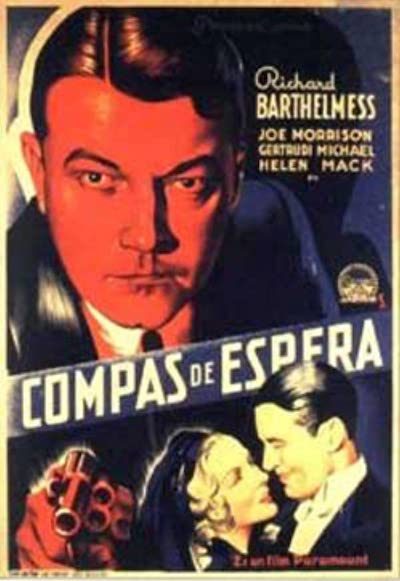
Adapted from Norman Krasna’s Broadway hit A Small Miracle, Four Hours to Kill is a multi-plotted effort that can best be described as “Grand Hotel goes to the theater.” Richard Barthelmess stars as Tony, a condemned murderer, who is handcuffed to Detective Taft (Charles Wilson) while en route to the death house. Tony breaks loose and heads for the theater, where the man who squealed on him is attending a play. As the killer prepares to rub out the stoolie, the action cuts away to the romance between a hatcheck boy (Joe Morrison) and his girlfriend (Helen Mack), which is complicated by the clerk’s allegedly pregnant former love (Dorothy Tree). Another subplot involves unfaithful wife Gertrude Michael and her lover Ray Milland. All the various plotlines are knitted together in the climax, wherein Tony closes in on his intended victim.Read More »
Classics
-
Mitchell Leisen – Four Hours to Kill! (1935)
Mitchell Leisen1931-1940ClassicsCrimeUSA -
Giorgio Ferroni – Il mulino delle donne di pietra AKA Mill of the Stone Women [+Commentary] (1960)
Giorgio Ferroni1951-1960ClassicsHorrorItalyHans arrives in a town near Amsterdam to write a story on the reclusive sculptor, Professor Val, who lives on an island in the old mill house the locals call the Mill of the Stone Women. Hans meets the professor’s beautiful and seductive daughter, and begins feeling passion for her despite his true love for Lisa Lotta. Slowly he becomes aware of the nefarious experiments being conducted by Val and his furtive assistant Dr. Boles, and local women continue to disappear.Read More »
-
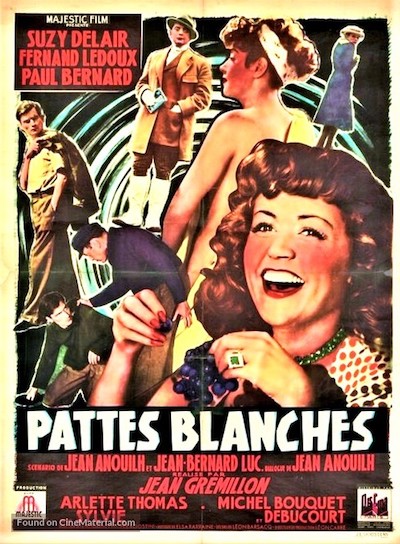
Jean Grémillon – Pattes blanches AKA White Paws (1949)
Jean Grémillon1941-1950ClassicsDramaFrance

The “white paws” of this noirish melodrama are the gaudy white spats sported by a reclusive French aristocrat in a fishing village on the coast of Normandy. Scripted by French playwright Jean Anouilh, who was originally to have directed it, Pattes blanches was ultimately brought to the screen by Grémillon, who accepted the project after the commercial failure of his Le ciel est à vous. The moody plot concerns the relationship of the aristocrat (Bernard) and his vengeful half-brother (Bouquet) and their rivalry over a promiscuous flirt from the city (Delair) who has married the local innkeeper. Although produced within the framework of the commercial cinema, Grémillon’s film manages to imbue the melodrama with a sharp sense of class divisions and his characteristic visual harmonies. (Harvard Film Archives)Read More »
-
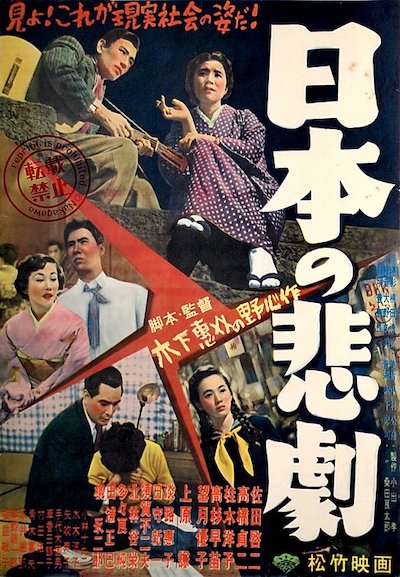
Keisuke Kinoshita – Nihon no higeki AKA A Japanese Tragedy (1953)
Keisuke Kinoshita1951-1960ClassicsDramaJapanNick Wrigley, Masters of Cinema wrote:
At the close of the war in Japan, a widowed mother makes every possible sacrifice to bring up her ungrateful son and daughter who are unimpressed with their poor standard of living at home. They gradually reject her in search of the material comforts that working as a maid cannot provide. The mother’s despair becomes interminable.Read More » -
Chusheng Cai & Junli Zheng – Yi jiang chun shui xiang dong liu AKA The Spring River Flows East (1947)
Chusheng Cai1941-1950ChinaClassicsDramaJunli Zheng

Synopsis:
An idealistic schoolteacher leaves his wife and family behind in 1930s Shanghai to join the Red Cross in the fight against the Japanese invasion. After he is captured, he escapes to Chongqing, where he marries a high-society hostess and establishes a new bourgeois life for himself. Meanwhile, his family lives a life of poverty in a squatter’s camp in Japanese-occupied Shanghai. Director Zheng and veteran filmmaker Cai (who focused mainly on the screenplay for fear of reprimand from the ruling Kuomintang Government) successfully intercut between the parallel narratives, which reflect the contradictory social conditions of prerevolutionary China and bring an epic scale to the life of the Chinese everyman. Considered the country’s equivalent of Gone with the Wind, this sweeping melodrama gave rise to a “romantic family epic” craze in 1940s China.Read More » -
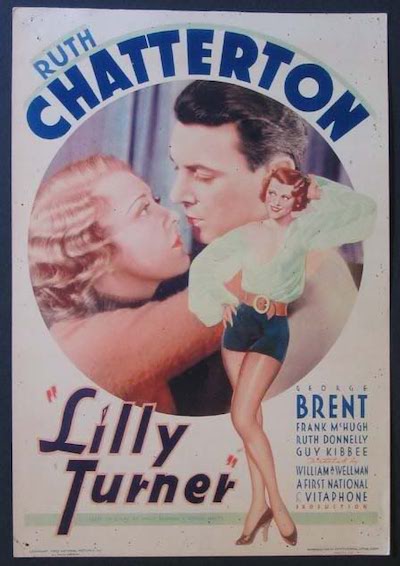
William A. Wellman – Lilly Turner (1933)
William A. Wellman1931-1940ClassicsDramaUSALilly Turner (1933) provided a bravura role for star Ruth Chatterton, and another opportunity to display her versatility. Lilly is a hard-luck dame with lousy taste in men. First she marries a no-good bounder who promises her the world, but instead turns her into a cootch dancer in a carnival. Then she finds out her “husband” already has a wife. Left alone and pregnant, Lilly marries an alcoholic pal (Frank McHugh), and the couple joins a traveling medicine show. Things go from bad to worse when a psychotic strongman in the show develops an obsession for her. When a genuine nice guy, played by Chatterton’s then-husband George Brent, comes into her dreary life, Lilly tries to grab some happiness. But it may be too late.Read More »
-
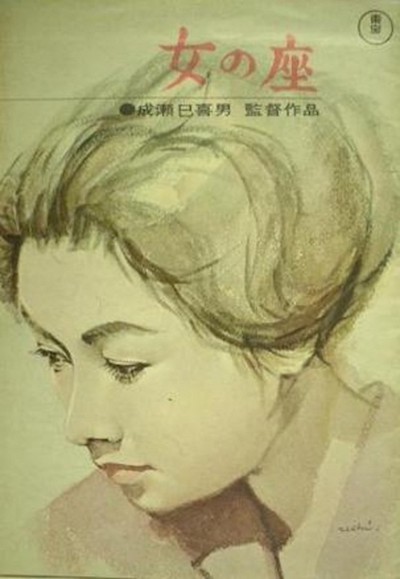
Mikio Naruse – Onna no za AKA A Woman’s Place (1962)
Mikio Naruse1961-1970ClassicsDramaJapanSynopsis:
A Women’s Place follows the daily lives of the Ishikawa family who own a general goods store in Tokyo. The film’s opening sees the Ishikawa children rush to the bedside of their father after hearing that he collapsed. As all is well, they go on with their hurried lives. A mystery son later appears out of nowhere to upend the family order and stability.Read More » -
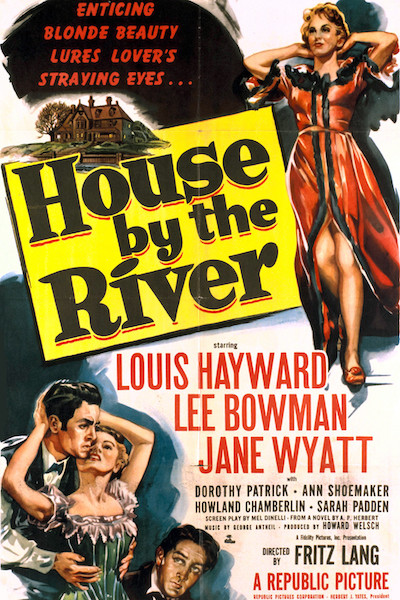
Fritz Lang – House by the River (1950)
1941-1950250 Quintessential Film NoirsClassicsFilm NoirFritz LangUSAQuote:
A deranged writer murders a maid after she resists his advances. The writer engages his brother’s help in hiding the body, causing unexpected problems for both of them.Read More » -
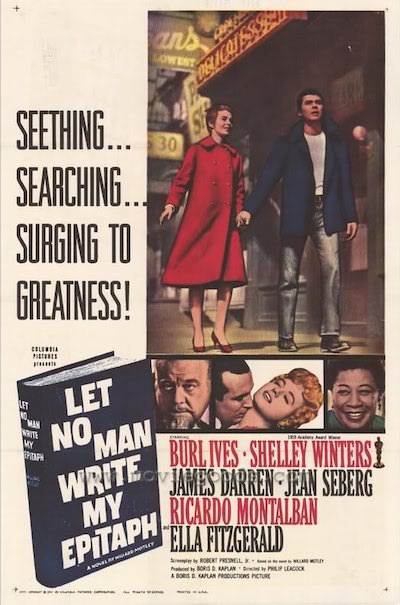
Philip Leacock – Let No Man Write My Epitaph (1960)
Philip Leacock1951-1960ClassicsDramaUSAIMDB:
In this sequel to “Knock On Any Door”, the residents of a Chicago tenement building band together to insure that the son of Nick Romano does not follow in his father’s footsteps…to the electric chair.Read More »