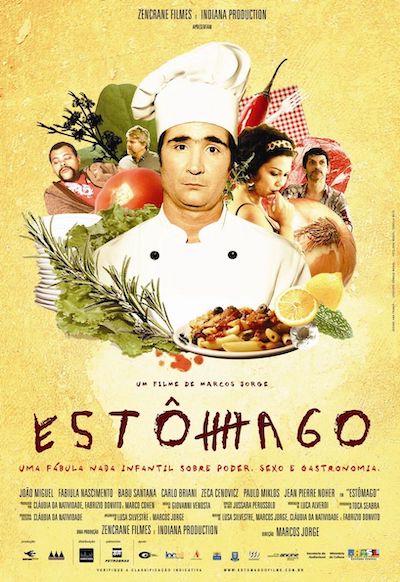
Quote: A penniless immigrant arrives in the big city with no work or money and discovers he is a talented cook, but still ends up in prison as he realises everybody seems to be out to exploit him. Lively, crowdpleasing black comedy whose grand-guignolesque ending and predictable storyline aren’t enough to offset its clever handling and writing and good performances.Read More »
The life of Pedro Arcanjo, self-taught mestizo intellectual who in the first decades of the XXth century challenged racist ideas of the School of Medicine of Bahia and highlighted the importance of the blacks’ contribution to Brazilian culture.Read More »
As if he was a comet, Rafael, the traveler, appears at the party for the town’s patron saint. He is the one who brings passion and crime, vanishing afterwards.Read More »
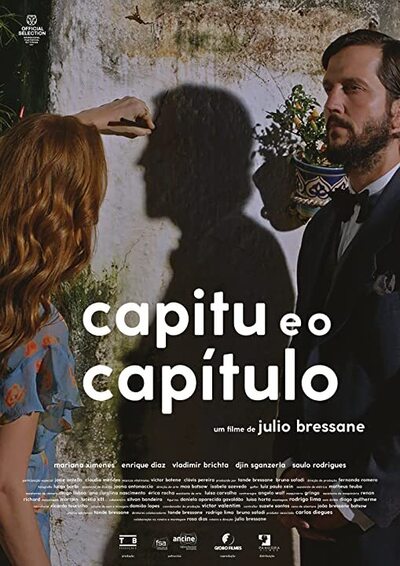
“If you had to choose between me and your mother, who would it be?” Capitu asks provocatively of her problematic lover. Elsewhere, they dance to inaudible music, with their friends, each couple keeping to a rhythm of their own. At times, this depiction of the memories we see one Dom Casmurro commit to paper with a flamboyant pen seems to be an interplay of conflicting emotions – particularly when jealousy raises its head.Read More »
In January 1990, at the age of 33, the artist José Leonilson starts registering an intimate journal in a tape recorder. His views on events that shook both Brazil, such as the resignation of former president Collor, and overseas, such as the fall of the Berlin Wall, permeate his confessions. He also talks about his impressions on the various movies he used to watch. The records of this sensitive artist in tune with modern life did not intend, at first, anything more than register the harmony that existed between his life and his peculiar and intimate work. However, J.L. suffers the unexpected blow of the discovery that he himself is HIV positive. The uncertainty and urgency in his life begin to permeate his reports.Read More »
Young girl, born and raised in an isolated farm, is brought to a small town to live with her cousins, her only relatives. Once in town, she encounters great difficulty adapting to city life.Read More »
Synopsis: The great reclaiming march for the sacred Guarani Kaiowá territories through Vincent Carelli’s filming, who recorded the birthplace of the movement in the 1980s. Twenty years later, touched by the successive massacres reports, Carelli searches the origins of this genocide, a conflict of disproportionate forces: the peaceful and obstinate insurgency of the dispossessed Guarani Kaiowá against the powerful apparatus of agribusiness.Read More »
The saga of adolescents living on their own as adults was treated as early as 1961 by Triguerinho Neto in this film set in Salvador, Bahia, under the Vargas dictatorship. Tonio has left home, unable to identify with his parents’ community centered around their African-derived religion. But he finds that, as a mulatto, in the outside world he is rejected by whites who see him as black and by blacks who see him as white. Tonio, who prefers the company of marginals who are as indefinable as himself, settles into the protection of a woman old enough to be his mother and befriends local dockworkers who are on strike. Betraying the former to help the latter, he finds himself alone. In his inability to commit, Tonio may be a proletarian version of the rootless character central to early sixties Cinema Novo in such films as São Paulo S/A.Read More »