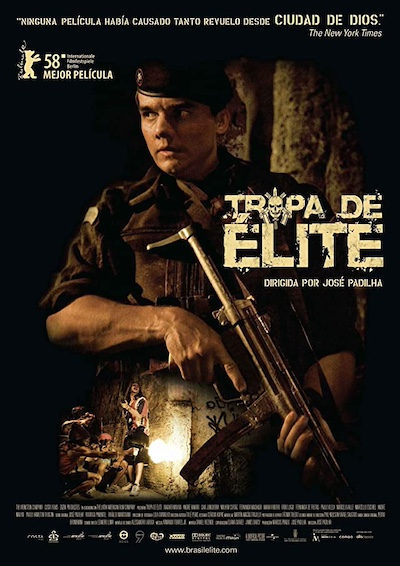

In 1997 Rio de Janeiro, Captain Nascimento has to find a substitute for his position while trying to take down drug dealers and criminals before the Pope visits.Read More »
In 1997 Rio de Janeiro, Captain Nascimento has to find a substitute for his position while trying to take down drug dealers and criminals before the Pope visits.Read More »

During one night, a woman walks through Rio de Janeiro, and hears the music around: jazz, rock, eletronica…Read More »

A Deusa Negra is a love story that spans two centuries. In 18th century Yorubaland, Prince Oluyole is taken prisoner in the course of internecine warfare fanned by overseas slave traders. He is sold into slavery in Brazil. In present day Nigeria, at his father’s deathbed, the young Babatunde promises to go to Brazil and search for traces of their once-enslaved ancestors. Beginning with a Candomblé ritual, his journey takes him ever deeper into this culture and, in a dream-like sequence, affords him a deeper understanding of his ancestors’ suffering and powers of resistance. Balogun effortlessly links present with past, real with magical worlds and discourse with trance. The hypnotic atmosphere is also heightened by the music of the Nigerian drummer Remi Kabaka, which plays with repetitive patterns and distortions. ×Read More »

After a catastrophe that modified the world’s natural state and destroyed civilized society, a couple begins a new life in a shelter. Their relationship is disturbed by the arrival of a woman.
The critical success in France of How Tasty Was My Little Frenchman made possible dos Santos’ delirious science-fiction vision of free love in a post-apocalyptic wilderness besieged by flesh hungry zombies contaminated by an unnamed nuclear attack. Who is Beta? follows two statuesque survivors drawn irresistibly together only to be entranced by the arrival and sudden disappearance of a third, the bewitching raven haired Beta. With its cartoon-like depiction of extreme violence and desire, Who is Beta? offers a heady Pop-infused companion to Hunger for Love. Yet beneath its giddy play of surfaces, dos Santos’ underappreciated film gradually reveals a darkly ambiguous metaphoric dimension. (Harvard Film Archive)Read More »

Quote:
Clemente Celidônio, known as Quelé, upon returning to his home in Pajeú das Flores (in Pernambuco), is shocked by the fact that his sister was raped by a stranger, identified only by a scar on his face and a missing finger. Overcome with hatred, Quelemente sets off in search of the stranger, swearing vengeance. But the road is long, and the journey holds decisive surprises for him.Read More »

As the Amazon burns for the seventeenth day, a nurse in Sao Paulo finds herself drawn to a Neo-Pentecostal church.Read More »
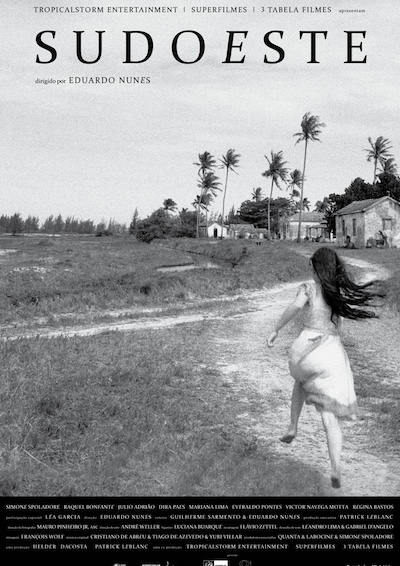
In a Brazilian coastal village where everything seems motionless, Clarice grasps her life in a single day, unlike those she meets and who are living this day like any other. She tries to understand her obscure reality and the destiny of the people around her in a circular time that haunts and disorients.Read More »

Quote:
After killing his employer when said employer tries to cheat him out of his payment, a man becomes an outlaw and starts following a self-proclaimed saint.
Reehan Miah wrote:
Glauber Rocha’s Aesthetics of Hunger – a 1965 essay which attempts to explicate the Cinema Novo – reads like a convoluted mass of allegations, opacities and rhetoric (none of which are necessarily without substance). Somewhere within these imbroglios however, one stumbles upon an assertion that’s especially jarring:Read More »

Luiz Antônio, a sociologist, had his political rights suppressed, during the Brazilian military dictatorship. Also, his wife Ruth had been tortured and killed. So he decides to hide in his niece Natércia and her husband Felipe’s country house for a while. But she invites the intellectual Marcela and broker Ricardo for a weekend together. Luiz’s world is upset and the existential problems of all get entangled, with unexpected results.Read More »