

Synopsis
After a long day at work, Khadija falls asleep on the last subway train. When she wakes up at the end of the line, she has no choice but to make her way home on foot.Read More »
Synopsis
After a long day at work, Khadija falls asleep on the last subway train. When she wakes up at the end of the line, she has no choice but to make her way home on foot.Read More »

Synopsis from Imdb:
Tintin travels to Peru to rescue some archaeologists from an old Inca curse.
Wikipedia:
Tintin and the Temple of the Sun (original title Tintin et le temple du soleil) is a 1969 animated film produced by Belvision Studios. A co-production between Belgium, France and Switzerland, it is an adaptation of Hergé’s two-part Tintin adventure The Seven Crystal Balls and Prisoners of the Sun.
Coming after the success of the Belvision cartoon series, Hergé’s Adventures of Tintin, there was a lot of publicity for the movie (which was the first of two animated films, the second being 1972’s Tintin and the Lake of Sharks).Read More »

Margaret is charged with a three-month restraining order for having hit her mother. But the 100 meters that now separate her from her home only exacerbate Margaret’s desire to come closer to her family.Read More »

From DVD booklet:
Right from the opening credits we come into contact with logograms, starting with the place where this desire to write was fantastically formed, inspired by the love Dotremont has for Gloria, the woman of his life for whom he invented this new poetic form. Throughout the film the camera records the position of the body, the hands, the progress of the ink, the birth of his visual poems, right up to the burning that awaits those that are not perfect. With the fictional reconstruction of a morning’s work, ‘Pension pluie de roses, Tervueren, Belgique’, the film also gives an account of a morning like any other, one that summarises all of them: the confinement of an ill man, connected to the world by a huge amount of correspondence, infinite telephone calls, an accumulation of papers, books, souvenirs from travels, with Lapland, a mythical place, ever present. A Lapp song, Dotremont’s gravelly voice, that of a correspondent, Gloria maybe, emphasize what the image shows, the creative effort during ‘Proust-like’ declining years that are confined and feverish.Read More »

In a youth correctional facility, 17-year-old Joe is preparing for his return to society, uncertain of what life on the other side will look like. His complex feelings about his imminent freedom are further complicated by the arrival of William, his new neighbour in the cell next door. As the two grow closer through lessons on camera obscura and rap workshops, Joe’s desire to explore the outside world gives way to a new desire. This striking feature debut captures the growing passion between the two young men and the ways in which it could ultimately lead to their downfall.Read More »

From DVD booklet:
After Perséphone, his first film which he describes as “an experimental, mythological poem” and shoots under the pseudonym Luc Zangrie, he makes a portrait of playwright Michel de Ghelderode together with his friend Jean Raine. It introduces us to the world of a creator obsessed with and fascinated by death. If biographic references are present, they are only there in order to place the writer in the right setting: nostalgia for Bruges and Flanders, solitary wanders through a backward-looking, legendary Brussels. Ghelderode’s gravelly voice is the leitmotiv of the film, which focuses on rehearsals of his plays at the Théâtre de Poche and with the puppets of the Théâtre Royal de Toone. We accompany him into his study, a place of dreams and fantasy, full of baroque objects that define his world.Read More »
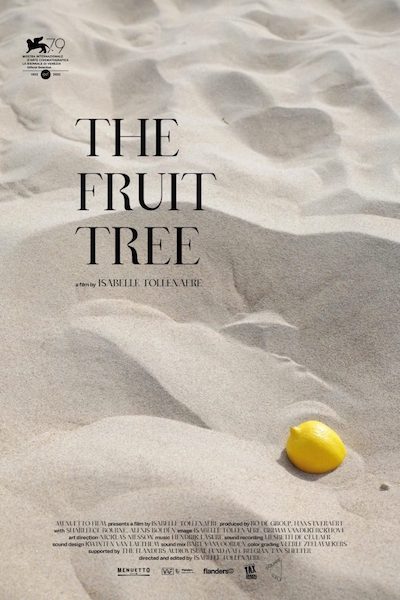
In The Fruit Tree a young woman, Sharleece, wanders through a house that is available to rent in the sleepy desert town where she lives, California City. Looking out of the window evokes unexpected memories of her childhood home in Los Angeles.Read More »
Synopsis:
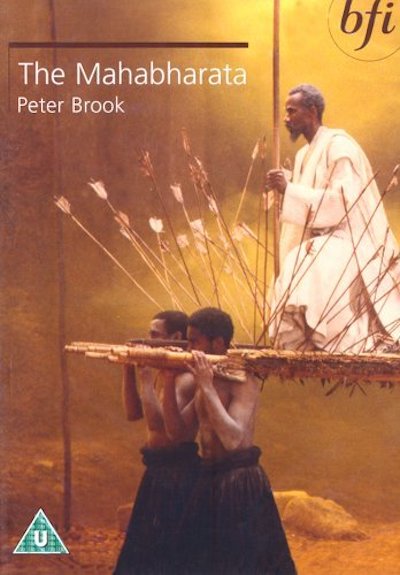
In ancient India the five Pandava brothers, Yudhishthira, Bhima, Arjuna, Nakula and Sahadeva, are cousins of the sons of king Dhritharashtra, known as the Kaurava. The five are the sons of the wives of king Pandu, who seceded in favor of his blind brother after he was cursed. The men are raised together, but from the beginning there are difficulties. They are prone to fight and when Arjuna becomes a great archer, the Kaurava are both jealous and afraid. Is it the kingdom the Pandava are after? Yudhishthira, the eldest of the Pandava, strives after it as he is told by the deity Krishna that he will become king. The hatred and jealousy of the Kaurava grows even stronger when the Pandava turn a barren wasteland Dhritharashtra gave them into a great court. This can’t go on forever. Inevitably a war will follow, a war that will shake the foundations of the Earth.Read More »
