

Self-imprisoned in an apartment which is reminiscent of a theater stage, Otto Weininger recalls certain events of his life before shooting himself on October 4, 1903.Read More »
Self-imprisoned in an apartment which is reminiscent of a theater stage, Otto Weininger recalls certain events of his life before shooting himself on October 4, 1903.Read More »

Young girl becomes Alice in dreamland during menstruation. Wild dreams and nightmares about sexuality, vampirism, death, obsessions and other bizarre things.Read More »
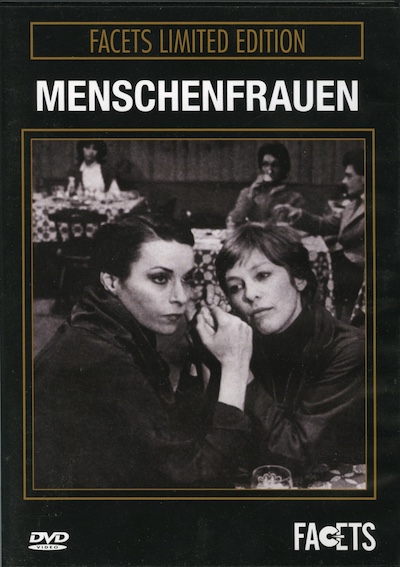
Valie Export’s daring film about relationships, “Menschenfrauen” (loosely translated, “humanwomen”), focuses on Franz S., a journalist, and his relationship with four women: the kindergarten nurse Petra, he teacher Gertrude, barmaid Elisabeth and his wife Anna.
Franz “doles out honorary pieces of himself to the ‘human women’ in his seraglio, whispers the same assurances. Eventually, everyone catches on and makes some effort toward independence” (East Village Eye). “A landmark film…Valie Export achieves in ‘Menschenfrauen’ what Godard strove for but failed in his ‘Every Man for Himself’–a human view of a woman’s place in a man’s world…From credits to close, ‘Menschenfrauen’ eludes conventional cinematic vision” (Seattle Film Festival).Read More »

Vienna, 1995. Jasmin, Tamara, Valentin, Senad and Roman live near the northern border of Austria. Their lives repeatedly intersect and drift apart. The characters involved are young migrants from the former Yugoslavia, Romania, Poland and Austria itself. Strangers in a strange land, they feel a sense of loss in their new, temporary environment. The five-some meet and get close to each other, hopelessly clinging to friendships and relationships with no future. They frequent cafés and train stations dreaming of a better tomorrow. Often, they just fall back on the prospect of short-term affection in yet another doomed romantic or sexual encounter. Trying hard to suppress the memories of war and alienation, they try to find moral strength and warmth through one another.Read More »

Description
Alternating between early-1970’s interviews with his wife, priest, and other villagers and re-enactments of his final months, the film follows Austrian peasant farmer Franz Jaegerstaetter’s path to martyrdom under the Nazis. The first scene shows his execution, followed by a graveyard tableau in which Franz objects to his priest’s praise for a fallen soldier’s patriotism. Arguments between Franz and his priest and then with a bishop follow, with the clerics both insisting that he owes military service to his country and that he has no right to choose defiance and certain death.Read More »

There are no taboos in the grotesque underground realm of Pfaffenbichler’s 2551 movies, which cross all borders, especially those of good taste. Reviving the original punk spirit of true independent filmmaking, Pfaffenbichler and his ingenious collaborators have concocted another marvel of no-budget ingenuity.Read More »

Marianne (Birgit Doll) is driven from her father’s home when she is impregnated by Alfred (Hanno Poeschi), a vagabond loafer who abandons her after he has his fun. She goes to Vienna and takes a job in a strip club to provide for herself and her baby. Her father discovers his daughter’s tawdry vocation when he and his buddies go to the club for a night of leering and drinking. Marianne later has no choice but to go back to the butcher to whom her father promised her in marriage before she fell for Alfred. The story is taken from a play by Oedoen Von Horath and is directed with flair by Maximilian Schell.Read More »

Quote:
“To live in Vienna, you either have to be cynical or stupid,” says the director’s alter ego at the end of the semi-documentary feature Slow Summer. A summary as temperamental as the film which deals with personal states of mind, the filmmaker’s very own existential entanglements one of which is crucially the stranger’s view of the semi-familiar city of Vienna but yet aims at an insight that goes beyond the private. This is only one of many self-reflective double entendres in a work rather unusual in Austrian cinema.Read More »

“Documentary feature about the traditional Viennese cinema “Bellaria”, which is specialized in German cinema from the 20s, 30s and 40s and its regular customers, whose idols are stars like Zarah Leander or Karl Schönböck. They’re visiting regularly, some of them even daily, to see the movies of their youth.”Read More »