Arthouse

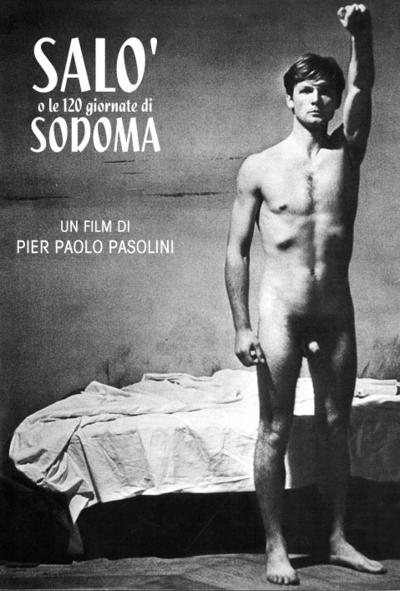
  • Pier Paolo Pasolini – Salò o le 120 giornate di Sodoma AKA Salo, or the 120 Days of Sodom (1975)

    1971-1980ArthouseItalyPier Paolo Pasolini

    29f7c043f76a2bde437fd0d52a185152

    Set in the Nazi-controlled, northern Italian state of Salo in 1944, four dignitaries round up sixteen perfect specimens of youth and take them together with guards, servants and studs to a palace near Marzabotto. In addition, there are four middle-aged women: three of whom recount arousing stories whilst the fourth accompanies on the piano. The story is largely taken up with their recounting the stories of Dante and De Sade: the Circle of Manias, the Circle of Shit and the Circle of Blood.Read More »

  • Pier Paolo Pasolini – Il Fiore delle mille e una notte AKA Arabian Nights (1974)

    Arthouse1961-1970FantasyItalyPier Paolo Pasolini

    29f7c043f76a2bde437fd0d52a185152

    Quote:

    The concluding part of Pier Paolo Pasolini’s “Trilogy Of Life”, following The Decameron and The Canterbury Tales, Arabian Nights corrects many of the mistakes found in the latter, noticeably its ramshackle, uneven approach, and returns to the charming territory of the former. Indeed, the film is as good as The Decameron, if not better, and is generally considered to be the trilogies crowning moment and one of Pasolini’s finest films (critic Tony Rayns recently included it amongst his choices for Sight and Sound’s 2002 Top Ten Critics’ Poll).Read More »

  • Pier Paolo Pasolini – Porcile aka Pigsty (1969)

    1961-1970Amos Vogel: Film as a Subversive ArtArthouseDramaItalyPier Paolo Pasolini

    29f7c043f76a2bde437fd0d52a185152

    Quote:
    One of Pasolini’s most enigmatic films, it extends his cinematic obsessions into the realms of cannibalism and bestiality with two interweaving stories of two young men who become sacrificial victims of their different societies. One of them is a soldier and cannibal (Clementi) in a medieval wasteland and the other a son (Léaud) of an ex-Nazi industrialist (Tognazzi) in modern-day Germany. The young German is more attracted to pigs than to his fiancée (Wiazemsky). This rather silly parable, very much a product of the late 1960s, in which the bourgeoisie is caricatured, is filmed with such calm beauty and underlying disgust that it seems to gain in significance. Theorem (1968) and Pigsty were the only films in which the Marxist Pasolini dealt directly with the hated middle classes; thereafter he left the 20th-century behind until his final film, Salo (1975), which looks at even more extreme human actions.Read More »

  • Jovan Jovanovic – Mlad i zdrav kao ruza aka Young and healthy as a rose (1971)

    Arthouse1971-1980Jovan JovanovicYugoslaviaYugoslavian Cinema under Tito


    29f7c043f76a2bde437fd0d52a185152

    Quote:
    A director with a very distinctive style, Jovan Jovanovic has filmed in 1971 one of the most significant works in the history of contemporary Serbian film. “Young and Healthy Like a Rose” is a strong visionary achievement that still looks topical today as back in the times when it was filmed and banned by the then communist censorship. A story about a young delinquent, who evolves from typical outsider to mafia boss of Belgrade seemed shocking back then; today, it is the cruel reality of our times. With incredible foresight of things to come, Jovanovic’s leading character says: “I am your future”. More poetical than Hollywood movies, much more realistic than “Trainspotting”. An exciting story about crime, drugs and the deadly grip of the secret police in Serbia. The best role of Dragan Nikolic, one of the rare ones he presented himself as a tough guy and the authentic sex symbol from this region. A slap in the face of film and other convention. A must see!Read More »

  • Atom Egoyan – Where the Truth Lies (2005)

    2001-2010ArthouseAtom EgoyanCanadaDrama

    29f7c043f76a2bde437fd0d52a185152

    From AMG:
    A reporter unexpectedly gets a personal perspective on a legendary show-business story in this adaptation of Rupert Holmes’ novel, scripted and directed by noted Canadian independent filmmaker Atom Egoyan. In the mid-’50s, Lanny Morris (Kevin Bacon) and Vince Collins (Colin Firth) were a wildly popular comedy team who suddenly and unexpectedly broke up at the peak of their popularity. Fifteen years after Morris and Collins called it quits, journalist Karen O’Connor (Alison Lohman), who has earned a reputation for her celebrity exposés, wants to write about the true story of what happened with Morris and Collins — and to her surprise, her publisher tells her Collins has agreed to co-author the book for a cool million dollars. The only catch is that Collins has to tell the full truth about a very large skeleton in the team’s closet — a beautiful naked woman was found drowned in the bathtub of Morris and Collins’ hotel suite shortly before they broke up the act, and while the comics were cleared of any wrongdoing, rumors about the incident followed them for years. As O’Connor and Collins complete their book, they learn to their surprise that Morris has opted to write a book of his own about the team’s career; eager to learn what Morris has to say, O’Connor meets him posing as a schoolteacher, and soon falls into an unexpected romantic relationship with him. O’Connor soon finds herself playing two sides against one another as she tried to learn the truth about two men with dark and scandalous pasts. Where the Truth Lies became the subject of unexpected controversy when the MPAA gave the film an NC-17 rating due to a brief scene involving a ménage à trois; the film earned significantly more lenient rating in other countries.Read More »

  • Naomi Kawase – Sharasojyu aka Shara (2003)

    2001-2010ArthouseAsianDramaJapanJapanese Female DirectorsNaomi Kawase

    29f7c043f76a2bde437fd0d52a185152

    A film about mourning and its eventual passing. Like in Antonioni’s L’avventura and in Fahrhadi’s About Elly, the unexplained, unresolved disappearance of a central character puts into motion the complex interplay between the public and personal dimension of mourning. Kawase herself plays the mother who, seven years after the disappearance of one of her twins, is heavily pregnant again. This coincides with upsetting news from the authorities. The family and neighbours and friends are plunged once more into the work of mourning. But by means of an extraordinary street festival, a family ceremony of acceptance in which the curse of the disappeared is at last transformed into a benign omen for the coming birth, and the birth of a new family member the trance-like state of collective dissociation is broken. Ultimately, it is not just the disappeared twin who can pass on to the next life in peace, but the entire family. The three core scenes, the festival, the ceremony, and the birth are overwhelmingly effective, in part due to Kawase’s (and her team’s) subtle control, in part due to the impossible admixture of calm and joyous exuberance. If the ending does suggest notions of rebirth, release from the curse of eternal return and memory, it is accomplished, like the entire film, in the absence of dogma. There is no lesson here other than that life ought to be gentle.Read More »

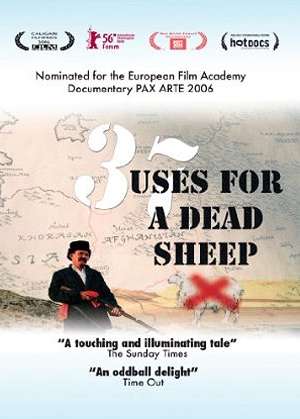
  • Ben Hopkins – 37 Uses For A Dead Sheep (2006)

    Arthouse2001-2010Ben HopkinsDocumentaryUnited Kingdom

    http://img405.imageshack.us/img405/4254/37usesforadeadsheeplst0.jpg

    29f7c043f76a2bde437fd0d52a185152

    portrait of the Kirghiz tribe, living a quasi-Iron Age existence in one of the remotest places on earth.

    37 Uses For A Dead Sheep is a documentary with a sense of humour. However, as he recounts the eventful history of Central Asian tribe the Pamir Kirghiz, director Ben Hopkins stays on the right side of Borat-style ethnic mockery, treating his subjects with affection and esteem. He also turns a few of them into film stars in a range of reconstructions that entertainingly reveal the community’s journey over the last century or so.

    Evocative title, that. Could the film itself possibly match it? Director Ben Hopkins finds the Pamir Kirghiz, a small Central-Asian tribe now living in eastern Turkey, and works together with them to craft a fleet-footed, intriguingly pomo documentary about this little-known group of nomads. Hopkins uses the tribes people to reenact moments from their history (shot in grainy 16mm), then shoots himself shooting them, then interviews them about it, while intercutting it all with images of their life today, in a village the Turkish government pretty much settled just for them. Oh yeah, there’s also a framing device in which the director talks to an old Kirghiz man about—you guessed it—all the things they can do with a dead sheep. It’s all very meta, but once Hopkins reveals the odd backstory of this people, pingponging between the Great Powers (Russia, China, the U.K.) who controlled their homeland at various times, it’s hard to think of a more appropriate approach to this material. The result is an inventive look at some truly unwitting victims of history’s relentless, unforgiving march.Read More »
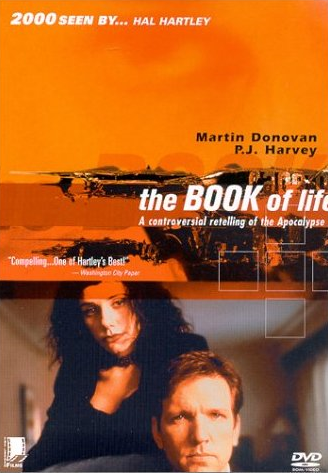
  • Hal Hartley – The Book of Life (1998)

    1991-2000ArthouseComedyHal HartleyUSA

    http://img542.imageshack.us/img542/9683/bookj.png

    29f7c043f76a2bde437fd0d52a185152

    from movie martyr:
    Set on the eve of the millennium (December, 31, 1999), Hal Hartley’s The Book of Life manages to send up the notion of the apocalypse in Hartley’s typically offbeat way. The film, which is shot on digital video, follow Jesus (Martin Donovan) as he wanders around Manhattan, pondering whether or not he should unleash his judgment upon the world. He is accompanied by Magdalena (P.J. Harvey) who is his personal assistant and confidante. In a little over an hour, with only about a half dozen main characters and only the barest special effects, Hartley weaves a fugue of hope, resignation, and a generalized sense of millennial tension. Few writers are better than Hartley at spinning memorable dialogue, and his stuff here is as good as anything that he’s turned out. For example, when Jesus calls Lucifer (Thomas Jay Ryan) on his cell phone, he greets him with a simple, “It’s me…” Hartley always underplays things, even when the world’s about to end.Read More »

  • Ingo Niermann & Erick Niedling – The Future of Art (2011)

    2011-2020ArthouseDocumentaryGermanyIngo Niermann and Erick Niedling

    http://img846.imageshack.us/img846/8826/vlcsnap2012030522h24m01.png

    A film that came with a book in the same name, The Future of Art; A manual.
    The film contains documentary and interviews on acclaimed artists about the direction of art towards the future.

    with:

    Marina Abramovic
    Thomas Bayrle
    Olaf Breuning
    Genesis and lady Jaye Breyer P-Orridge
    Olafur Elaisson
    Harald Falckenberg
    Boris Groys
    Damien Hirst
    Gregor Jansen
    Terence Koh
    Gabriel Von Loebell
    Marcos Lutyens
    Philomene Magers
    Antje Majewski
    Hans Ulrich Obrist
    Thomas Olbricht
    Friedrich Petzel
    Tobias Rehberger
    Hans Georg Wagner
    Read More »

Back to top button