Arthouse

  • Samuel Beckett – Beckett at Süddeutscher Rundfunk (1966-1985)

    ArthouseDramaGermanySamuel Beckett

    Image Hosted by ImageShack.us

    Samuel Beckett’s German Television productions for Süddeutscher Rundfunk.

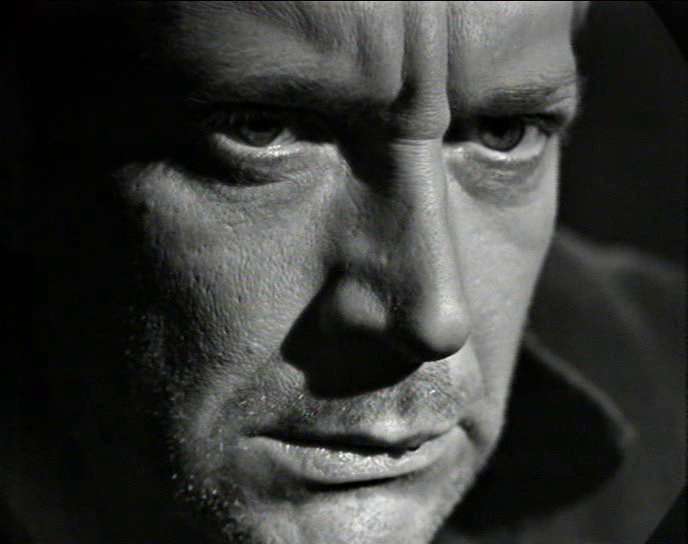
    Berühmt wurde Samuel Beckett als Theaterinnovateur (Warten auf Godot) und Romancier (Der Namenlose), der Literaturnobelpreisträger schrieb jedoch auch Hörspiele und inszenierte Kurzfilme für das Fernsehen. 1966 produzierte er für den Süddeutschen Rundfunk (SDR) im Rahmen der Reihe »Der Autor als Regisseur« das Fernsehspiel He Joe und schuf damit ein revolutionäres Stück Medienkunst. Bis 1986 folgten sieben weitere »crazy inventions«, wie Beckett seine TV-Arbeiten nannte. Immer wieder erprobt er, von den technischen Möglichkeiten des Theaters zunehmend enttäuscht, neue Arrangements für Stimme und Schweigen, für Raum, Kamera und Musik. Damit erfand Beckett, so Gilles Deleuze in dem Essay Erschöpft, neben den Sprachen des Romans und der Theaterstücke eine »Sprache III«: »Das Entscheidende beim Bild ist nicht sein kläglicher Inhalt, sondern die wahnsinnige Energie, die jederzeit explodieren kann.«Read More »
  • Abel Ferrara – Chelsea on the Rocks (2008)

    2001-2010Abel FerraraArthouseDocumentaryUSA

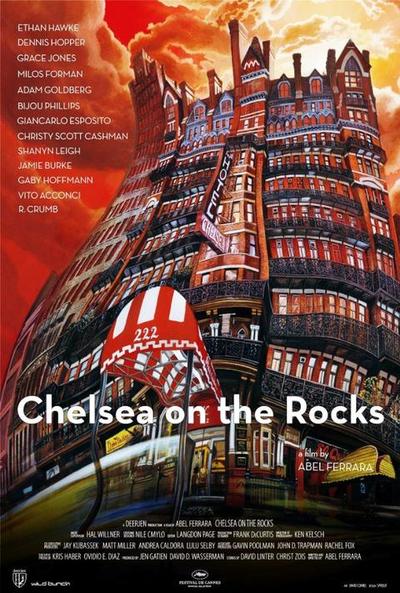
    The Chelsea Hotel has long been considered the creative epicentre of New York City, a sort of unofficial gathering point for the most renowned artists and entertainers that the city has to offer. But while the Chelsea Hotel was once thought an impenetrable, untouchable monument to the creative spirit, an early 21st century renovation led many to believe that the new management company had little appreciation for its unique history. Dennis Hopper, Milos Forman, Robert Crumb, Ethan Hawke, Grace Jones, and a whole host of Chelsea Hotel regulars all chime in with their fondest memories about the New York landmark, and their thoughts about what may be in store for the iconic building in the future.Read More »

  • Kira Muratova – Lyst do Ameryky AKA Letter To America (1999)

    Arthouse1991-2000Kira MuratovaShort FilmUkraine

    Description: The short is made in a typical Muratova style that merges surrealism and reality into a mesmerizing act full of understatement and metaphor.

    Some trivia: this is nominally Muratova’s first short. However, she herself considers it her fourth – she prefers to think of her Three Stories as three short films instead of a single feature.

    The film was made with no budget whatsoever – all Muratova was given were the camera and the film stock. None of the actors were paid. The rumor has it that the film was shot in Muratova’s own apartment.Read More »

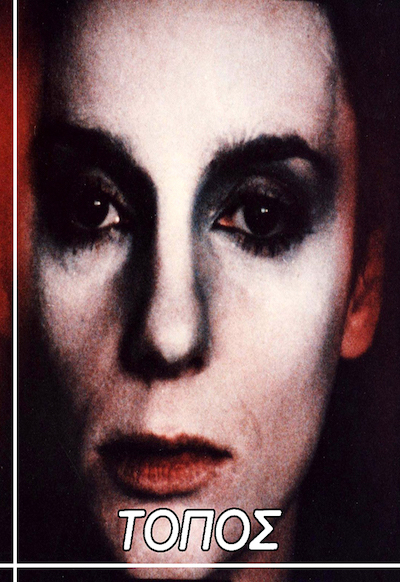
  • Antouanetta Angelidi – Topos (1985)

    1981-1990Antouanetta AngelidiArthouseExperimentalGreece

    Quote:
    The deconstruction of visual pleasures and the emergence of a new visual poetry.

    This experimental film is about the representation and alternative views trelated to the passage of time. The visual syntheses are assembled with the voices of the woman that gives birth and dies, and is torn by the conflicts inhabiting her body. “Topos” (Place) is in dialogue with the paintings of Uccello, Carpaccio, Cranach, De Chirico and Balthus, in an attempt to deconstruct the visual pleasures of traditional cinema, but simultaneously to give birth to an innovative seductive iconography.Read More »

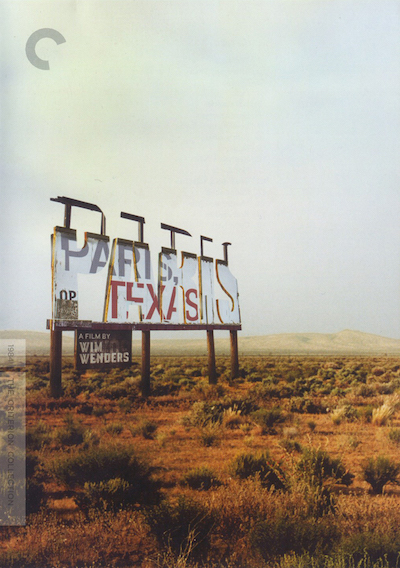
  • Wim Wenders – Paris, Texas [+Extras] (1984)

    Drama1981-1990ArthouseGermanyWim Wenders

    Quote:
    From its hazily Southwestern skyscraper surfaces to its barren, prickly bush and junk car-pocked bedrock, there’s something slightly off-kilter about the America of Paris, Texas. The central masculine cast is nothing if not indigenous—when the sun-punched Travis Henderson (Harry Dean Stanton) first stumbles into frame, his uncultivated, hirsute face and dusty red cap seem like natural geological formations that have been patiently waiting, cragged and craterous, for us to anticlimactically discover them—and the relationship-oriented, plot-shunning dialog by western playwright Sam Shepherd taps into dialectal heartbrokenness without a shred of disassociating local lingo. But there are tellingly alien factors: How did both Henderson brothers wind up with women who drip sophisticated European sex appeal from their ripe lips and honey hair? And why does every truck stop along highway 10 emit the same sickly green aura that glows like a clumsy, wistful metaphor against the ferociously red sunset? And how do aridly panoramic, sneeringly and smokily man-made L.A. skylines upstage the parched siltstone and yucca tree of God’s creation in a film with Texas in the title?Read More »

  • Wim Wenders – Die Angst des Tormanns beim Elfmeter AKA The Goalkeeper’s Fear of the Penalty Kick (1972)

    1971-1980ArthouseDramaGermanyWim Wenders

    29f7c043f76a2bde437fd0d52a185152

    IMDB User Comments (Frank from Iceland):

    The Goalie s Anxiety at the Penalty Kick is the first collaboration of
    Wim Wenders and Peter Handke, a collaboration which produced Wings of
    Desire in 1987. In The Goalie, Handke and Wenders explore patterns of
    thought and their relation to reality.

    The main action of the film occurs in the first minute, where we get
    one view of how the Goalie misses blocking a penalty kick and loses
    the game for his team.

    Later, we get to hear him describe the action and we also get a view
    of the way it really happened, the videotaped highlights on the tv
    news. They are three wonderfully different plausible representations
    which each explain the result just as well. While only one explains
    the goalie’s anxiety before the penalty kick, all three allow for his
    anxiety afterwards.Read More »

  • Wim Wenders – Summer in the City (1970)

    1961-1970ArthouseDramaGermanyWim Wenders

    Image Hosted by ImageShack.us

    29f7c043f76a2bde437fd0d52a185152

    Prison discharges Hans into a freedom as inhospitable as the winter weather. As a stranger, he strays in familiar streets, bars, flies to a friend in Berlin.

    Always fleeing from invisible enemies.
    Always on the way to an indeterminate goal.

    Wenders’ graduation film for the Academy of Film and Television marked out Wenders’ innovative and individual style, which was to become such a recognizable characteristic of his later films.

    This is very rare VHS -rip.Low quality..Read More »

  • Wim Wenders – Aufzeichnungen zu Kleidern und Städten AKA A Notebook on Clothes and Cities (1989)

    1981-1990ArthouseDocumentaryGermanyWim Wenders

    From tankmagazine
    “Fashion, I’ll have nothing of it,” announces Wim Wenders in the opening to his 1990 fashion documentary Notebook on Cities and Clothes. It was the year after the Berlin Wall fell, and there is a sense in his introduction, of the German film-maker defending a subject his critics might view as superficial. In a voiceover, Wenders explains that he had been invited to make a short film about the fashion industry by the Centre Pompidou. And while initially dismissive, he found that the idea grew on him – “After all, why not examine fashion… Maybe fashion and cinema had something in common.”Read More »

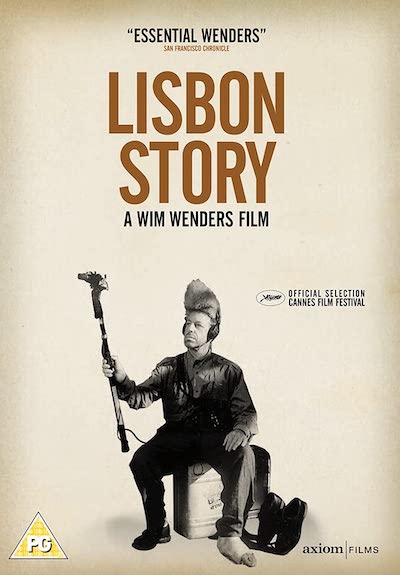
  • Wim Wenders – Lisbon Story (1994)

    1991-2000ArthousePhilosophyPortugalWim Wenders

    Quote:
    Lisbon Story is more dream than story – and this, I think, defines and justifies it most effectively. There is no clear structure, no consistently cohesive or progressive dialogue. Wim Wenders subtly reveals some form of portrait of the city, but not in the way one might expect. The film is largely made up of sounds, scattered pieces of Lisbon, strange children, a mysterious filmmaker and Wenders’ protagonist, the sound engineer, Philip Winter. In Philip Winter’s efforts to understand his friend Friedrich’s disappearance, in his enchantment with Portuguese band Madredeus, the singer Teresa Salgueiro and his search for the sounds that would accompany Friedrich’s film about Lisbon, Wender’s self-proclaimed “most entertaining film” emerges.Read More »

Back to top button