Arthouse

  • Koji Wakamatsu – Joji no rirekisho AKA A Personal history of a love affair (1965)

    Arthouse1961-1970AsianJapanKoji Wakamatsu

    Image Hosted by ImageShack.us

    29f7c043f76a2bde437fd0d52a185152

    Roland Domenig, Vital flesh: the mysterious world of Pink Eiga
    Koji Wakamatsu is one of the more important directors to have worked in the pink film (pinku eiga), a genre of softcore, dramatically charged films which were dominant on the Japanese domestic scene in the 1960’s and 1970’s (the roman porn were a more radical and explicit subset of the pink film). The Japanese studios who produced these films, including Nikkatsu, were reluctant to distribute these films abroad, for fear of the sort of image the films would project of Japan. Seeing these films today one must conclude that it was not the more obvious sexual display that worried the Japanese, but the radical anarchist politics of the films, perhaps above all else, often compounded by violent sadomasochism, and the undercurrent of misogyny.Read More »

  • Shirin Neshat & Shoja Azari – Zanan-e bedun-e mardan AKA Women Without Men (2009) (HD)

    2001-2010ArthouseDramaIranShirin Neshat and Shoja Azari

    29f7c043f76a2bde437fd0d52a185152

    Against the tumultuous backdrop of Iran’s 1953 CIA-backed coup d’état, the destinies of four women converge in a beautiful orchard garden, where they find independence, solace and companionship. (IMDb)

    *

    WOMEN WITHOUT MEN, an adaptation of Shahrnush Parsipur’s magic realist novel, is acclaimed Iranian artist, Shirin Neshat’s, first feature length film.
    It is an incisive and sumptuously filmed reflection on the pivotal moment in history that directly led to the Islamic revolution and the Iran we know today.
    The story chronicles the intertwining lives of four Iranian women during the summer of 1953; a cataclysmic moment in Iranian history when an American led, British backed coup d’état brought down the democratically elected Prime Minister, Mohammad Mossadegh, and reinstalled the Shah to power.
    Over the course of several days four disparate women from Iranian society are brought together against the backdrop of political and social turmoil. Fakhri, a middle aged woman trapped in a loveless marriage must contend with her feelings for an old flame who has just returned from America and walked back into her life. Zarin, a young prostitute, tries to escape the devastating realization that she can no longer see the faces of men. Munis, a politically awakened young woman, must resist the seclusion imposed on her by her religiously traditional brother, while her friend Faezeh remains oblivious to the turmoil in the streets and longs only to marry Munis’ domineering brother.
    Read More »

  • Glauber Rocha – Câncer (1972)

    1971-1980ArthouseBrazilExperimentalGlauber Rocha

    Free Image Hosting at www.ImageShack.us

    29f7c043f76a2bde437fd0d52a185152

    Quote:
    The film does not have a story. There are three characters and violent action. I was interested in making a technical experiment, concernig the problem of the resistance of the duration of the cinematographic take. There, we can see how the technique interferes in the cinematographic process. I decided to make a film in which each take would have the length of a chassis, and study the almost elimination of the editing when there is a verbal action and a psychological action in the same take. – Glauber RochaRead More »

  • Jem Cohen – Just Hold Still (1989)

    1981-1990ArthouseExperimentalJem CohenUSA

    29f7c043f76a2bde437fd0d52a185152

    Quote:
    In his New York City landscape, Cohen finds inspiration in disturbance. Looking to life for rhythm and to architecture for state of mind, he locates simple mysteries. Just Hold Still is comprised of an interconnected series of short works and collaborations that explore the gray area between documentary, narrative, and experimental genres.

    The first part concerns a personal, poetic approach to narrative and includes 4:44 (From Her House Home), Never Change (with Blake Nelson), Love Teller (with Ben Katchor), and Light Years. The second part involves hybridized use of verité footage and the confrontation of documentary concerns with the music video format and includes Selected City Films, Glue Man (with Ian MacKaye), and Talk about the Passion (with R.E.M). The work can be considered as a whole, or each piece in the project can be viewed (and rented) as a separate entity.Read More »

  • Atom Egoyan – Exotica (1994)

    1991-2000ArthouseAtom EgoyanDramaUSA

    Free Image Hosting at www.ImageShack.us

    29f7c043f76a2bde437fd0d52a185152

    Quote:
    In this cryptic, moody film, seemingly unrelated tales ultimately dovetail to reveal the shared past of a tortured government tax auditor (Bruce Greenwood), a gay pet-shop proprietor (Don McKellar), a sultry young stripper (Mia Kischner) and her co-workers. The characters’ focal point is a kitsch Toronto strip joint called Exotica, where the club’s dancer’s strut their stuff to satisfy the sale clientele’s voyeuristic and emotional needs.Read More »

  • José María Nunes – Sexperiencias (1968)

    1961-1970ArthouseExperimentalJosé María NunesSpainSpanish cinema under Franco

    Free Image Hosting at www.ImageShack.us

    29f7c043f76a2bde437fd0d52a185152

    Although allusions to François Truffaut’s Jules and Jim and Jean-Luc Godard’s Breathless suggest José María Nunes’s affection for French New Wave, Sexperiencias finds greater kinship with Nagisa Oshima’s fractured, interconnected themes of sexual and social revolution. In a way, young hitchhiker, María (María Quadreny) is also a stand-in for accidental revolutionary, Motoki in The Man Who Left His Will on Film, a cipher who, in trying to capture the rhythms of everyday life (albeit through photography rather than filmmaking), is politicized by an atmosphere of unrest. Finding momentary connection with an outspoken activist, Antonio (Antonio Betancourt), María’s life is upended when her lover is imprisoned for dissent. Restless and adrift, she embarks on an affair with a nurturing, middle-aged engraver, Carlos (Carlos Otero), only to find her newfound life of comfort and stability at odds with the chaos of the world around her. But while Oshima’s melding of fact and fiction captures the spirit of an internal revolution, Nunes’s revolution is a distant one – a reminder of an empowered other reality that can be turned inward to incite change – galvanized by geopolitical headlines that dominated the local newspapers of 1968: Prague Spring and the Soviet invasion of Czechoslovakia, the assassinations of Martin Luther King Jr. and Robert Kennedy, May 68 protest, the coup in Panama, the turning of the tide in the Vietnam War with Lyndon Johnson’s decision not to seek re-election. Incorporating an incongruous soundtrack of nature sounds, assorted music, and ambient noise, Nunes creates a disorienting environment that is literally out of sync – the separation between image and sound implicitly reflecting the disconnection between the reality of Franco-era Spain and its projected image. Framed against the bookending reference to the U.N.’s adoption of the nonbinding Universal Declaration of Human Rights in 1968, the question of enforcement becomes an ironic coda to the problem of inaction, where the struggle is not in the ability to speak, but in an unwillingness to listen.Read More »


  • Jem Cohen – Drink Deep (1992)

    1991-2000ArthouseExperimentalJem CohenUSA

    29f7c043f76a2bde437fd0d52a185152

    Quote:
    Drink Deep is a lyrical vision of friendship, hidden secrets, and desires. Cohen uses several types of film image to add texture to the layered composition. Beautiful shades of grey, silver, black and blue echo the water, reminiscent of early photography and silverprints. Cohen says, “The piece was constructed primarily from footage I’d shot of skinnydippers at swimming holes in Georgia and rural Pennsylvania. It’s about water and memory and stories just submerged. It is also, in part, a response to thinking about censorship. I would say that Drink Deep is both unabashedly and deceptively romantic. Surface, flow, and undertow. What looks like paradise is always paradise lost.”

    Music composed by Stephen Vitiello and performed with Gabriel Cohen and Mary Wooten.Read More »

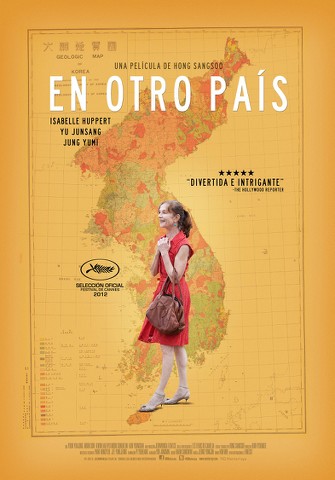
  • Sang-soo Hong – Da-reun na-ra-e-suh AKA In Another Country (2012)

    2011-2020ArthouseSang-soo HongSouth Korea

    29f7c043f76a2bde437fd0d52a185152

    from; link

    In Another Country is an airy comic romance by the Korean director Hong Sangsoo which begins in a hotel in Mohang, a quiet Korean seaside town. A young film student called Wonju (Jung Yumi) idly jots down script ideas in her room. As she writes, we see three, or perhaps four, distinct stories playing out, all made up of common characters and motifs that emerge from Wonju’s scribblings.Read More »

  • Andrzej Zulawski – Mes nuits sont plus belles que vos jours AKA My Nights Are More Beautiful Than Your Days (1989) (HD)

    1981-1990Andrzej ZulawskiArthouseDramaFrance

    29f7c043f76a2bde437fd0d52a185152

    Lucas has invented a new computer language but at the same time he has been informed about his strange terminal illness during which he has been gradually losing his memory. Shortly after that he meets Blanche who acts as a medium in a bizarre traveling show. Dying Lucas follows her to the sea resort where they spend together several days and nightsRead More »

Back to top button