Arthouse

  • Jean-Luc Godard – Week End AKA Weekend [+Extras] (1967)

    1961-1970Amos Vogel: Film as a Subversive ArtArthouseComedyFranceJean-Luc Godard

    29f7c043f76a2bde437fd0d52a185152

    SYNOPSIS
    The master of the French New Wave indicts consumerism and elaborates on his personal vision of Hell with this raucous, biting satire. A nasty, scheming bourgeois Parisian couple embarks on a journey through the countryside to her father’s house, where they pray for his death and a subsequent inheritance. Their trip is at first delayed, and later it is distracted by several outrageous events and characters including an apocalyptic traffic jam, a group of fictional philosophers, a couple of violent carjackers, and eventually, a gross display of cannibalism. By the time the film concludes, their seemingly simple journey has deteriorated into a freewheeling philosophical diatribe that leaves no topic unscathed. With Week End, Jean-Luc Godard reaches an impressive plateau of film originality, incorporating inter-titles, extended tracking shots, and music to add an entirely new grammar to film language. The result is a deeply challenging work that will most certainly invigorate some viewers just as much as it will as frustrate others. Standout highlights include a jarring, sexually graphic opening monologue shot with a roaming camera and blaring musical accompaniment, and the infamous traffic jam scene, where an endless parade of cars sit bumper to bumper amidst burning cars, picnics, and honking horns. The work of a true artist and pioneer, Godard’s Week End is a landmark film that hasn’t aged or lessened in impact over time.
    (Taken from Rotten Tomatoes)Read More »

  • Michelangelo Antonioni – Identificazione di una donna AKA Identification of a Woman (1982)

    1981-1990ArthouseDramaItalyMichelangelo Antonioni

    29f7c043f76a2bde437fd0d52a185152

    Michelangelo Antonioni’s Identification of a Woman is a body- and soul-baring voyage into one man’s artistic and erotic consciousness. After his wife leaves him, a film director finds himself drawn into affairs with two enigmatic women: at the same time, he searches for the right subject and actress for his next film. This spellbinding antiromance was a late-career coup for the legendary Italian filmmaker, and is renowned for its sexual explicitness and an extended scene on a fog-enshrouded highway that stands with the director’s greatest set pieces (-Criterion)Read More »

  • Viktor Kosakovsky – Sreda AKA Wednesday (1997)

    1991-2000ArthouseDocumentaryRussiaViktor Kosakovsky

    Free Image Hosting at www.ImageShack.us

    29f7c043f76a2bde437fd0d52a185152

    Quote:
    Wednesday, July 19, 1961: it’s summertime and the newspapers are full of the usual articles. The world is comfortably embedded in the Cold War. An average day in Leningrad. 51 girls and 50 boys are born in Leningrad on this day.
    One of them is Victor Kossakovsky. Why here and not somewhere else? Why then and not another time? These questions are the starting point for his film. Could it be that this child was mistaken for another in hospital? Who are all the people who began their lives on that same day? Do they somehow share the same fate or are they merely contemporaries?Read More »

  • Noboru Tanaka – Jitsuroku Abe Sada aka A Woman Called Abe Sada (1975)

    1971-1980ArthouseEroticaJapanNoboru Tanaka

    29f7c043f76a2bde437fd0d52a185152

    Critical Appraisal (From Wiki)
    Midnight Eye’s review of A Woman Called Sada Abe compares it to In the Realm of the Senses, notes, “Aside from being less sexually explicit, it is also smaller scale, more intimate, more cinematically stylised and arguably more erotic.”[5]

    A Woman Called Sada Abe is generally considered one of Nikkatsu’s five best Roman porno films.[1] Many Japanese critics consider it to be superior to Oshima’s internationally better-known In the Realm of the Senses, and Junko Miyashita is called a more realistic Sada Abe than Eiko Matsuda.[2] Miyashita’s performance in the film has been judged one of the best of her career, and the film has been called director Tanaka’s masterpiece.[1]Read More »

  • Raymond Bernard – Maya (1949)

    Arthouse1941-1950Film NoirFranceRaymond Bernard

    Very weird piece of mystic low-life exotica, with perennial foreigner Valery Inkijinoff as Eastern sage dispensing strange wisdom and Viviane Romance looking stunning in Betty Page fringe as a prostitute and femme fatale. Lots of Third Manic running around in a sort of non-specifically-exotic soukh set, crime, atmosphere and Marcel Dalio. Quite peculiar by Raymond Bernard’s standards, but VERY diverting.Read More »

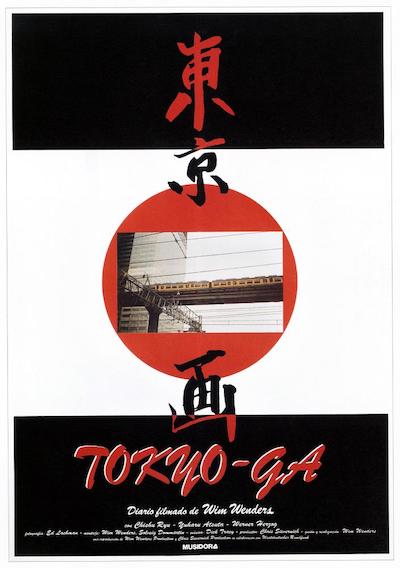
  • Wim Wenders – Tokyo Ga (1985)

    1981-1990ArthouseDocumentaryUSAWim Wenders

    Quote:
    Taking a breather from the Paris, Texas shooting, Wim Wenders hopped a plane, camera in hand, to look for the Tokyo enshrined by the late Yasujiro Ozu (whose work Wenders dubs “the sacred treasure of the cinema”). What he found instead, documented in this filmic journal, was an urbanized dislocation not far from the forlorn emptiness he coached out of German and American vistas. Whether abstracting businessmen teeing off atop skyscrapers or the rigorous, artisanal craft of building a wax sandwich display, Wenders scrambles for humanity seeping through neon and steel — a humanity linked, inevitably, to the old Japan of Ozu’s films (rebellious tykes, cherry blossoms, tranquil countrysides).Read More »

  • Nagy Shaker & Paolo Isaja – Summer 70 (1970-1971)

    1961-19701971-1980ArthouseEgyptExperimentalNagy Shaker and Paolo Isaja

    from MOMA:
    Nagy Shaker was studying stage design in Rome and Paolo Isaja ran a ciné-club that specialized in experimental cinema when they met at the Rome Film School. They decided to collaborate on their respective film projects, and with the help of friends, they launched into production, casting an American nurse of Italian descent who was in Rome at the time. The film, a meditation on freedom at the turn of the 1970s, utilizes the full vocabulary of experimental cinema to evoke youthful experimentation and energetic abandon. The two alternated between directing, filming, and recording sound. Jamil Suleiman authored the musical score and Renzo Rossellini financed the print.Read More »

  • Peeter Urbla – Balti armastuslood (1992)

    1991-2000ArthouseEroticaEstoniaPeeter Urbla

    29f7c043f76a2bde437fd0d52a185152

    Three episodes from three Baltic nations, all about lost love. In Estonia a political prisoner is set free. Meanwhile his best friend had stolen his girl and now defends his political cowardice: “Some of us must be left outside the prisons to pursue the political fight.” – In Latvia a Russian soldier has a Latvian girlfriend. Her Latvian friends accept her boyfriend. But his two closest soldier friends beat him up, tear the clothes of his girl and threaten to rape her. The loving couple understands that they cannot continue their relationship. – In Lithuania a priest student and an Estonian stripper fall in deep love. The student’s uncle is an enlightened priest who says: “I bless you whatever road you choose to go.” The couple sleep together and agree to meet at the railway station the next morning and go to Estonia. But when the student comes home his uncle has died… (written by Max Scharnberg)Read More »

  • Matthew Barney – Cremaster 5 (1997)

    1991-2000ArthouseExperimentalMatthew BarneyUSA

    29f7c043f76a2bde437fd0d52a185152

    IMDB:
    part of a modern art classic
    9/10
    Author: Chris_Docker from United Kingdom
    20 March 2004

    The Cremaster Cycle 9/10 The Cremaster Cycle is a series of five films shot over eight years. Although they can be seen individually, the best experience is seeing them all together (like Wagner’s Ring Cycle) – and also researching as much as you can beforehand. To give you an idea of the magnitude, it has been suggested that their fulfilment confirms creator Matthew Barney as the most important American artist of his generation (New York Times Magazine).

    The Cremaster films are works of art in the sense that the critical faculties you use whilst watching them are ones you might more normally use in, say, the Tate Modern, than in an art house cinema. They are entirely made up of symbols, have only the slimmest of linear plots, and experiencing them leaves you with a sense of awe, of more questions and inspirations than closed-book answers. The imagery is at once grotesque, beautiful, challenging, puzzling and stupendous. Any review can only hope to touch on the significance of such an event, but a few clues might be of interest, so for what it’s worth …
    Read More »

Back to top button