Arthouse

  • Panagiotis Fafoutis – Paradeisos AKA Paradise (2011)

    2011-2020ArthouseDramaGreecePanagiotis Fafoutis

    29f7c043f76a2bde437fd0d52a185152

    Synopsis: Marianna returns to Greece on a whim to surprise her boyfriend, secretly plotting to stay with him forever, while Nikos is using the carnival as an excuse to confess his love to his unsuspecting boss. Eugenia hesitates to tell her daughter about her secret romance with the much younger carnival crew leader, while Ilias has no qualms about begging his estranged wife to come home.

    Four couples, each one desperately trying to either rescue or escape their relationship, lose themselves in the intoxicating atmosphere of the carnival before they finally reveal their true colors, hidden behind the masks.
    In the midst of carnival madness, four duets are staking their claim on their own personal Paradise…Read More »

  • Leos Carax – Gradiva (2014)

    2011-2020ArthouseBelgiumDramaLeos CaraxShort Film

    29f7c043f76a2bde437fd0d52a185152

    Two minutes in which Carax attempts to reach the essence of Art : sculpture, Cinema, actress, music, gallery, myth…
    a delicious mixture;
    Godard influence is still here and will always be with Carax;
    The short seems like the continuity of the movie Holy Motors, with always the small frontier between reality and Art.Read More »

  • Jeanne Balibar & Pierre Léon – Par exemple, Electre (2013)

    2011-2020ArthouseExperimentalFranceJeanne Balibar and Pierre Léon

    29f7c043f76a2bde437fd0d52a185152

    Synopsis:

    Balibar, well-known as an actress and singer, left none of her talents unused in her directing debut. In this eclectic homage to Greek tragedy, Balibar and Léon are free of any convention. With a cameo by Barbet Schroeder.

    Jeanne Balibar and Pierre Léon roam in tourist outfits through Paris and prepare a play with a producer who keeps changing her clothes. In a parallel world, another layer if you wish, actors rehearse their texts for a Greek tragedy on the beach at Deauville and at prominent Parisian locations. It is the story of Electra, probably a rather inefficient character, one who perseveres and refuses to give up the battle against injustice.
    This absurd, slightly surrealist and occasionally humorous film looks like a theatre performance with its solemn dialogues and mise-en-scène issues. The makers, the actress Balibar and filmmaker Léon, however also use the medium by inserting screenshots of business e-mails – reflections on their plans. In addition, Balibar is a singer and she sings the texts as if the e-mails were edifying lieder. Electra, for Instance is, as one of the characters puts it, a true ‘culture souq’.
    Read More »

  • Bahman Ghobadi – Niwemang aka Half Moon (2006)

    2001-2010ArthouseBahman GhobadiDramaIran

    29f7c043f76a2bde437fd0d52a185152

    Synopsis:
    Mamo, an old and legendary Kurdish musician living in Iran, plans to give one final concert in Iraqi Kurdistan. After seven months of trying to get a permit and rounding up his ten sons, he sets out for the long and troublesome journey in a derelict bus, denying a recurring vision of his own death at half moon. Halfway the party halts at a small village to pick up female singer Hesho, which will only add to the difficulty of the undertaking, as it is forbidden for Iranian women to sing in public, let alone in the company of men. But Mamo is determined to carry through, if not for the gullible antics of the bus driver.Read More »

  • Andrzej Wajda – Niewinni czarodzieje AKA Innocent Sorcerers (1960)

    1951-1960Andrzej WajdaArthouseDramaPoland

    29f7c043f76a2bde437fd0d52a185152

    Quote:
    A young doctor is tired of being sought by women. One night he meets a young girl who all but forces herself into his room where they talk of morals and love. But he loses her when he goes out to see some friends and then rushes madly around the city after her.

    A neglected masterpiece by Andrzej Wajda, reflective of the best of 1960s Polish cinema. Wry and cynical in tone, the work is important for being “the first film in Eastern Europe to chronicle the disillusionment of the younger generation” (San Francisco Chronicle). A bachelor doctor, who is also a jazz musician, can’t quite commit himself to his superficial girlfriend. He and his aimless friends find any kind of human contact or emotional commitment a troubling and ultimately uninviting prospect. With Tadeusz Lomnicki, Zbigniew Cybulski, and a young Roman Polanski.Read More »

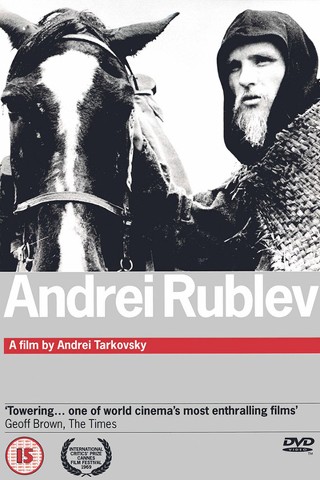
  • Andrei Tarkovsky – Andrey Rublyov (1966)

    1961-1970Amos Vogel: Film as a Subversive ArtAndrei TarkovskyArthouseEpicUSSR

    29f7c043f76a2bde437fd0d52a185152

    Quote:
    Widely recognized as a masterpiece, Andrei Tarkovsky’s 205-minute medieval epic, based on the life of the Russian monk and icon painter, was not seen as the director intended it until its re-release over twenty years after its completion. The film was not screened publicly in its own country (and then only in an abridged form) until 1972, three years after winning the International Critics Prize at the Cannes Film Festival. Calling the film frightening, obscure, and unhistorical, Soviet authorities edited the picture on several occasions, removing as much as an entire hour from the original.

    Presented as a tableaux of seven sections in black and white, with a final montage of Rublev’s painted icons in color, the film takes an unflinching gaze at medieval Russia during the first quarter of the 15th century, a period of Mongol-Tartar invasion and growing Christian influence. Commissioned to paint the interior of the Vladimir cathedral, Andrei Rublev (Anatoli Solonitsyn) leaves the Andronnikov monastery with an entourage of monks and assistants, witnessing in his travels the degradations befalling his fellow Russians, including pillage, oppression from tyrants and Mongols, torture, rape, and plague. Faced with the brutalities of the world outside the religious enclave, Rublev’s faith is shaken, prompting him to question the uses or even possibility of art in a degraded world. After Mongols sack the city of Vladimir, burning the very cathedral that he has been commissioned to paint, Rublev takes a vow of silence and withdraws completely, removing himself to the hermetic confines of the monastery.
    Read More »

  • Xiaolu Guo – UFO in Her Eyes (2011)

    2011-2020ArthouseDramaGermanyXiaolu Guo

    29f7c043f76a2bde437fd0d52a185152

    Quote:
    Premiered at Toronto Film Festival, UFO In Her Eyes is a cinematic adaptation of her most recent novel of the same title. The film stars Shi Ke and Udo Kier and is a political metaphor recounted through the phantasmagoric transformation that befalls a small Chinese village after an alleged UFO sighting. Inspired by Soviet cinema, Xiaolu Guo dedicated this film to Soy Cuba, a 1964 Soviet-Cuban film directed by Mikhail Kalatozov. The movie’s score is composed by the Somali-Canadian musician Mocky and produced by Turkish-German filmmaker Fatih Akin. It received the Public Award at Milan 3-Continental Film Festival 2013.Read More »

  • Hilton Lacerda – Tatuagem AKA Tatoo (2013)

    2011-2020ArthouseBrazilDramaHilton Lacerda

    29f7c043f76a2bde437fd0d52a185152

    Hilton Lacerda’s film debut is a lively take on the conflict between the straight establishment and the gay avant garde in late ’70s Brazil, and won a clutch of awards at the recent Rio festival.

    The spirit of Fassbinder lives on in Hilton Lacerda’s Tattoo, at once an homage to the anarchist theater scene in late 1970s Brazil, a portrait of a society on the edge of change, and a punchy critique of Latin American homophobia. As drama, Tattoo tells an often-told story, but it does achieve a distinctive air of controlled chaos, managing to be both bouncy and thought-provoking in an unsubtle kind of way. Having picked up several awards in Rio, Tattoo should go on to leave its mark at festivals where the gay and the political meet. Its five Rio awards included best actor and best supporting actor.Read More »

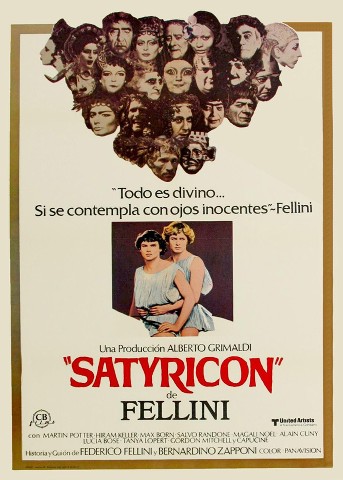
  • Federico Fellini – Fellini – Satyricon [+Extra] (1969)

    1961-1970ArthouseFantasyFederico FelliniItaly

    29f7c043f76a2bde437fd0d52a185152

    Quote:
    In first century Rome, two student friends, Encolpio and Ascilto, argue about ownership of the boy Gitone, divide their belongings and split up. The boy, allowed to choose who he goes with, chooses Ascilto. Only a sudden earthquake saves Encolpio from suicide. We follow Encolpio through a series of adventures, where he is eventually reunited with Ascilto, and which culminates in them helping a man kidnap a hermaphrodite demi-god from a temple. The god dies, and as punishment Encolpio becomes impotent. We then follow them in search of a cure. The film is loosely based on the book Satyricon by Gaius Petronius Arbiter, the “Arbiter of Elegance” in the court of Nero. The book has only survived in fragments, and the film reflects this by being very fragmentary itself, even stopping in mid-sentence.
    Read More »

Back to top button