Carl Celler (CC) Culture Institute specializes in selling art projects to big companies: Carl Celler, the dynamic boss with an inherent melancholic drift towards failure, feels that his first project proves to be a difficult one. For the project, he invited a young elite group of artists and curators to Berlin to realize a project: videos, photos, campaigns, and art objects about a specific topic, namely brand logos and animals. The invited artists are furnished with a sufficient budget and insight into Berlin’s arts milieu. Furthermore there are two male (anti-)models, Kai and Jork, arbitrarily chosen, non-styled, people from the street. Kai is over 30 and he confronts this world with nonchalance. He feels his late juvenile attitude is in anger and the ambition he encounters in CC takes him by surprise. Rena Yazka, one of the invited artists, catches his attention. Their little flirt is the background for Kai’s experience to become an object, to be regarded as a body. Is he in love – or only eroticized in this dazzling experience? Is he exploited and abused by the creative industry? The mood of this bizarre, tightened coolness gives way slowly to an existential problem. What kind of life are they working for, or, if they live for their work, what kind of life is that? (IMDb)Read More »
Arthouse
-
Stephan Geene – After Effect (2007)
2001-2010ArthouseDramaGermanyStephan Geene -
Aleksey German – Khrustalyov, mashinu! AKA Khrustalyov, My Car! (1998)
1991-2000Aleksey GermanArthouseDramaUSSRQuote:
Winter is never-ending in Aleksei Guerman’s impenetrable film ”Khroustaliov, My Car!,” a nearly two-and-a-half hour absurdist nightmare of life in the Soviet Union during the final days of Stalin’s rule. Snow falls in almost every scene of this starkly grim, black-and-white movie, which follows the triumph, fall from grace and hasty rehabilitation of a hulking Red Army general and brain surgeon named Yuri Glinshi (Yuri Tsourilo). Processions of black government vehicles are forever materializing like ominous phantoms through the curtains of snow that drift over a dilapidated town decorated with gleaming white statues of the beady-eyed, mustached Soviet dictator.Read More » -
Jos Stelling – De Wachtkamer AKA The Waiting Room (1995)
1991-2000ArthouseJos StellingNetherlandsShort FilmFrom IMDB:
User Review“O be careful little eyes what you see . . .”
19 October 2001 | by Timothy DamonThis director is simply incredible. I saw Jos Stelling’s film THE POINTSMAN some years ago, and I’m not sure I would have believed a feature length film without the spoken word could be made. But he did it, and it was great! So then, would a shorter film in the same format be easier to make? You might think so. But Mark Twain once remarked (paraphrased) that he could do a 2 hour speech on most any subject with little advance preparation, but to properly do a 15 minute speech might take at least a week to properly prepare. Regardless, he has a wonderful time in a train station, mostly in the waiting room. The camera is mainly on a Casanova of a man as his gaze goes well beyond the personal boundaries of the women he is, . . . well, to put it bluntly, lusting after. It reminded me of the cartoon postcard of a slick-talking guy next to a woman asking her “Do you mind if I undress you with my eyes?” and she is thinking {‘well, I guess it’s better than having you touch me”] Whether or not this guy knows he’s gone beyond the bounds of propriety I’ll leave to your contemplation. But his come-uppance is quite delightful.Read More »
-
Pawel Pawlikowski – Ida (2013)
2011-2020ArthouseDramaPawel PawlikowskiPolandIda is a 2013 Polish drama film directed by Paweł Pawlikowski. It was screened in the Special Presentation section at the 2013 Toronto International Film Festival where it won the FIPRESCI Special Presentations award. The film has been selected as the Polish entry for the Best Foreign Language Film at the 87th Academy Awards. It is also nominated for People’s Choice Award for Best European Film at 27th European Film Awards.
Read More » -
Jean-François Stévenin – Double messieurs AKA Double gentlemen (1986)
Arthouse1981-1990FranceJean-François Stévenin

Synopsis
In a routine look at what it means to finally leave adolescence behind — even in one’s mature years — this series of mood swings and sequences focuses on two grown men. Francois (Jean Francois Stevenin, the director) and Leo (Yves Alonso) are old friends, and at one point they decide to go out and search for one of their childhood buddies, the brunt of several of their practical jokes. In true form, the men opt for playing yet another practical joke on their friend, but their plans backfire when his wife Helene (Carole Bouquet) comes into the picture instead. Her presence forces them to reconsider their shenanigans in a new light.Read More » -
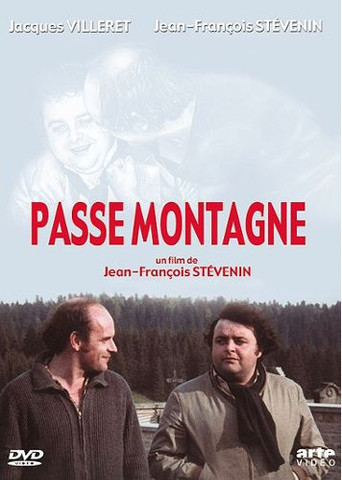
Jean-François Stévenin – Le Passe-montagne AKA Mountain Pass (1978)
1971-1980ArthouseFranceJean-François StéveninPLOT DESCRIPTION
This film marks the directorial debut of actor Jean-François Stevenin. Serge (Stevenin) is a dweller in the French provinces who happens upon Georges (Jacques Villeret), a Parisian motorist in distress. Serge arranges for the car to be taken to a nearby garage. Georges’ friends, who were with him in the car, have continued their journeys. Because of that, Serge takes Georges under his wings while he waits for his car to be repaired, and they tour the countryside and party with the local revelers. Nothing much is said between them, but it is clear that they have become friendsRead More » -
Alexandros Avranas – Miss Violence (2013)
2011-2020Alexandros AvranasArthouseDramaGreeceSynopsis
On her birthday, 11-year-old Angeliki jumps off the balcony to her death with a smile on her face. An investigation is started as to the reason for this apparent suicide, but the family keeps insisting that it was an accident.
IMDb.com
Read More » -
Nicolás Pereda – El palacio (2013)
2011-2020ArthouseDocumentaryMexicoNicolás PeredaPereda’s films pass through a transitional period; Los mejores temas was probably a conscious farewell to a filmic representation system while Matar extraños turned out to be an enigmatic first test; El palacio is a new attempt at renovation, an experiment. These last two films show a novel element —the shifting of the family and domestic spheres to a public and political space. Whereas Matar extraños used revolution as its focal concept, in this enigmatic film the microphysics of power is the permeating idea.
The opening wide shot is brilliant; the 17 women who appear in this film are washing their teeth at the same time. Among this group there are little girls, young and old women, and they are not at a bathroom but at a patio filled with large sinks. Their activity unites them, though their experiences and, eventually, their functions differ. Where are they? For several minutes the only thing we will see are the diverse cleaning-related actions performed by these women. Everything happens in an old house, without any indication of its location. Abstraction and routine. Pereda is capable of filming someone hanging clothes to dry or making a bed as if those were aesthetic events.
A donkey wonders around and imposes a comical tone for a moment; but a donkey is an animal used for servitude. And the title of the film mentions a palace.
Read More » -
Jan Nemec – Die Verwandlung AKA Metamorphosis (1975)
1971-1980ArthouseClassicsCzech RepublicJan NemecJan Němec’s original proposal in 1966 to adapt Kafka’s Metamorphosis as a theatrical feature was rejected by the Czech state film board. In 1974, he was forced into exile — first seeking refuge in Germany:Read More »