Arthouse

  • Yulian Kalisher – History of Soviet Puppet animation 24 – The Art of Yulian Kalisher (1983 – 1993) (DVD)

    Arthouse1981-1990AnimationUSSRYulian Kalisher

    Yulian Kalisher ( 1935-2007) was a relative late-bloomer in the field of puppet animation. Coming from the field of puppet theatre, where he had worked in Tasjkent, Uzbekistan and in Moscow. He was hired by the Soviet TV organisation Ecran to direct puppet-plays for TV in 1971. In 1974 he was teamed up with Youri Trofimov and co-directed 3 episodes of The Wizard of Emerald City ( see DVD 17) In 1977 he realized his first solo-direction: a feature film puppet animation after a puppet play. From then on his work always stood out for its originality and inventiveness. “A New Year’s Adventure” on DVD 20 is a good example of his work between 1977 and 1982.
    Russian animation uses the words Puppets and flat Puppets (in English called Cut-out) for stop-motion techniques, and cell animation for drawn animation. Read More »

  • Luciano Emmer – Parole dipinte. Il cinema sull’arte di Luciano Emmer [+Extras] (1946-1966; 2000-2009)

    DocumentaryArthouseItalyLuciano Emmer

    The art film by Luciano Emmer: the camera explores the figurative worlds of Giotto, Bosch, Carpaccio, Leonardo, Michelangelo, Picasso. First edition on DVD of a valuable asset for art history and Italian cinema.
    This two-DVD boxset presents, collected for the first time, a wide selection of art films made by Luciano Emmer (1918-2009). Emmer, screenwriter and director, is the author of films that told with delicacy and humor about Italy in the Fifties (Domenica d’agosto, Terza liceo) and one of the inventors of TV commercials; especially personal and meaningful is his work on art documentaries, awarded all over the world.Read More »

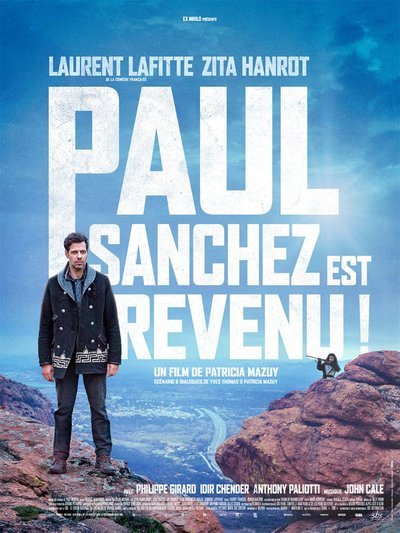
  • Patricia Mazuy – Paul Sanchez est revenu! (2018)

    2011-2020ArthouseCrimeFrancePatricia Mazuy

    Synopsis / Review from CINEUROPA:

    With only four feature films to her name over the past 30 years and a propensity to always go where you don’t expect, from the rural drama of Peaux de vaches (discovered in the Un Certain Regard section at Cannes in 1989) to high-level horse riding in Of Women and Horses [+] (screened on the Piazza Grande at Locarno in 2011) and Mme de Maintenon’s ruthless gynaecium at the end of the seventeenth century in The King’s Daughters (also screened in the Un Certain Regard section in 2000 and nominated for a César Award for Best Film). Read More »

  • Abbas Kiarostami – Ta’m e guilass AKA Taste of Cherry (1997)

    Drama1991-2000Abbas KiarostamiArthouseIran

    Quote:
    An Iranian man drives his truck in search of someone who will quietly bury him under a cherry tree after he commits suicide.Read More »

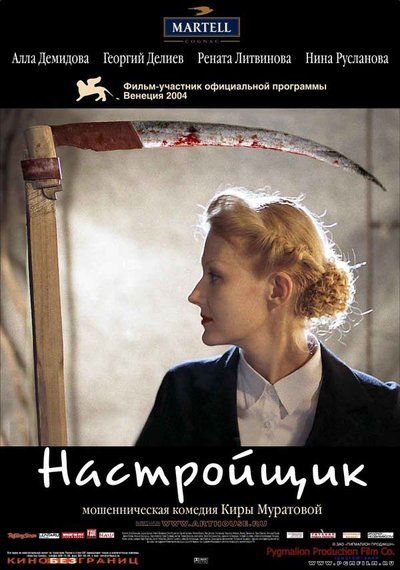
  • Kira Muratova – Nastroyshchik AKA The Tuner (2004)

    2001-2010ArthouseKira MuratovaRussia

    Quote:
    At the heart of Kira Muratova’s newest film, The Tuner (Nastroishchik, 2004), is her characteristic and enduring love of predation—predation for its own sake. Of course, any talk of “the heart of Muratova’s work” is a judgment of anatomy rather than sentiment, as any admirer would attest. With The Tuner, she has produced an extraordinary new film that offers a complex assessment of the human subject, civilization, and the creative act.Read More »

  • Claude Jutra – Kamouraska (1973) (HD)

    1971-1980ArthouseCanadaClaude JutraDrama

    Quote:
    A writer, Kamouraska is based on a real nineteenth-century love-triangle in rural Québec. It paints a poetic and terrifying tableau of the life of Elisabeth d’Aulnières: her marriage to Antoine Tassy, squire of Kamouraska; his violent murder; and her passion for George Nelson, an American doctor. Passionate and evocative, Kamouraska is the timeless story of one woman’s destructive commitment to an ideal love.Read More »

  • Costas Zapas – I antarsia tis kokkinis Marias AKA The Rebellion of Red Maria (2011)

    2011-2020ArthouseCostas ZapasDramaGreece

    Quote:
    In a city – with heavy metal music haunting the heroes and the voice of Maria Callas being heard, an aged man, ex-terrorist, who dresses like a woman, the “red Maria”, lives without any law and is hiding in the social shadows as a prostitute and performer, dancing in the streets, old and out-dated dances, for the passersby who give him money. In the street he meets a young boy, who lives there as a street urchin, at deaths door after a neo-fascists attack. The boy, alcohol addicted, hears the voice of Maria Callas, speaks with the dead diva, with the mother he misses. Read More »

  • Peter Greenaway – Eisenstein in Guanajuato (2015)

    2011-2020ArthouseNetherlandsPeter GreenawayQueer Cinema(s)

    Quote:
    In 1931 the Soviet director Sergei Eisenstein travels to Guanajuato to direct his film Que viva México. There he encounters a new culture and its dealings with death; he also discovers another revolution – and his own body. Peter Greenaway depicts Eisenstein as an eccentric artist who travels to Mexico filled with the hubris of being an internationally celebrated star director. Once there, he gets into difficulties with his American financier, the novelist Upton Sinclair. At the same time he begins, in the simultaneously joyful and threatening foreign land, to re-evaluate his homeland and the Stalinist regime. And, in doing so, he undergoes the transition from a conceptual filmmaker into an artist fascinated by the human condition. Under his gaze, the signs, impressions, religious and pagan symbols of Mexican culture assemble themselves anew.Read More »

  • Andrei Tarkovsky – Andrey Rublyov (1966) DVD

    Arthouse1961-1970Amos Vogel: Film as a Subversive ArtAndrei TarkovskyEpicUSSR

    Free Image Hosting at www.ImageShack.us

    Presented as a tableaux of seven sections in black and white, with a final montage of Rublev’s painted icons in color, the film takes an unflinching gaze at medieval Russia during the first quarter of the 15th century, a period of Mongol-Tartar invasion and growing Christian influence.

    Commissioned to paint the interior of the Vladimir cathedral, Andrei Rublev (Anatoli Solonitsyn) leaves the Andronnikov monastery with an entourage of monks and assistants, witnessing in his travels the degradations befalling his fellow Russians, including pillage, oppression from tyrants and Mongols, torture, rape, and plague. Faced with the brutalities of the world outside the religious enclave, Rublev’s faith is shaken, prompting him to question the uses or even possibility of art in a degraded world. After Mongols sack the city of Vladimir, burning the very cathedral that he has been commissioned to paint, Rublev takes a vow of silence and withdraws completely, removing himself to the hermetic confines of the monastery.Read More »

Back to top button