

“Certainly the oddest Oshima film yet to surface in this country,” was how Vincent Canby, an Oshima champion, characterized Dear Summer Sister when it got its first New York release in 1985, and the film remains quite amazingly strange.Read More »
“Certainly the oddest Oshima film yet to surface in this country,” was how Vincent Canby, an Oshima champion, characterized Dear Summer Sister when it got its first New York release in 1985, and the film remains quite amazingly strange.Read More »

AMG: The story of how a friendship between two of Europe’s most important filmmakers turned into a rivalry is recounted in this documentary. François Truffaut and Jean-Luc Godard first met in 1949; in many ways they were very different people — Godard came from a wealthy and supportive family, while Truffaut had troubles with both school and the law during a hardscrabble youth — but they were both passionate devotees of the cinema, and became star writers at the pioneering film journal Cahiers du Cinéma. Ten years later, Truffaut and Godard were the most visible figures in the New Wave of French cinema, having enjoyed international success with The 400 Blows and Breathless. Read More »

Quote:
Lisa Heredia, la veuve et la monteuse de Jean-Claude Brisseau, nous a confié ces films. Ce sont ses tout premiers essais, qu’il a montrés quelques années plus tard à Eric Rohmer, qui en fut enthousiasmé et qu’il l’a introduit auprès [de la maison de production] des Films du Losange. Comme il est pour l’instant peu probable que la société nous permette de reprogrammer la rétrospective qui aurait dû lui être consacrée, nous avons jugé de notre devoir de montrer ces films sur notre plate-forme pour compléter la connaissance qui est due à tout grand cinéaste. (Frédéric Bonnaud, Le Monde)Read More »

Quote:
Writing with all the brilliance, authority, and pungent wit that have distinguished his art criticism for Time magazine and his greatly acclaimed study of modern art, The Shock of the New, Robert Hughes now addresses his largest subject: the history of art in America.Read More »
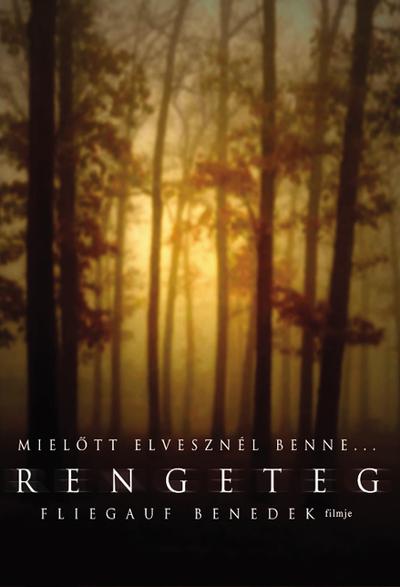
Hungarian director Benedek Fliegauf makes his feature-length debut with Rengeteg (Forest). Shot on digital video, the episodic film is composed of a series of seven different intimate parts bookended by footage of the same people in a large public space. These characters aren’t given an introduction, context, or even character names. Cinematographer Zoltan Lovasi shoots the ensemble cast of non-actors exclusively in close-ups, so the larger situation is never made completely clear. Each segment involves a small group of people in some kind of intense and possibly disturbing conversation. ~ Andrea LeVasseur, All Movie GuideRead More »

Quote:
Heat was Shepitko’s diploma feature, her extraordinary talent underlined by its unprecedented success, winning prizes at the Leningrad and Karlovy Vary Film Festivals. It was also made in gruelling conditions on the barren steppes, the young director falling ill and having to direct from a stretcher. The story fuses serious political drama and cowboy showdown as an idealistic high school graduate goes to work on a state farm, only to clash with its authoritarian, Stalinist leader.Read More »

Quote:
Pauline a la Plage is the third of French filmmaker Eric Rohmer’s “Comedies et Proverbes.” Pauline (Amanda Langlet) is the teen-aged cousin of the seemingly more worldly and sensible Marion (Arielle Dombasle). Both girls become entwined in amorous escapades while vacationing at the beach. It gradually develops that Marion is the one least capable of handling herself, while Pauline grows in maturity from her summertime experiences. It is nothing short of amazing how Eric Rohmer can take the most conventional and obvious of material and weave something as charming and profound as Pauline at the Beach. ~ Hal Erickson, RoviRead More »

In a apocalyptic 19th century landscape where wealthy vampires have taken over the world, a group of humans prepare an uprising, and select an adventurous young man to track down the leader of the undead and destroy him.Read More »

A touching story of brothers raised apart and then brought together under tragic circumstances, this drama by Valerio Zurlini remains true to Vasco Pratolini’s novel. Told in a series of flashbacks as Enrico (Marcello Mastroianni) remembers the past, the brothers are separated after their mother dies. Enrico is raised by a humble guardian who works as a butler, his brother Lorenzo (Jacques Perrin) is taken in by a grandmother who gives him all he wants or needs. Enrico grows up to become a hard-working journalist, spending most of his time in Rome. Lorenzo is a young idealist living in Florence with no real need to work. The brothers rarely see each other, but when they finally meet after an extended absence, Lorenzo is gravely ill and dying. (-allmovie.com)Read More »