Arthouse

  • Alain Tanner – Charles mort ou vif AKA Charles, Dead or Alive (1969)

    1961-1970Alain TannerArthouseDramaSwitzerland

    Quote:
    That the critics baptized the wave which emerged at this time as the “new Swiss cinema” simply reflects the fact that the “old” Swiss cinema was unknown to the cinema-going public. Today, the appeal and energy of this first film remain undiminished, magnified by the exceptional stature and presence of François Simon and the sublimely uncluttered camera work of Renato Berta. Tanner drew his subject matter from what he saw of the events of May ’68 in Paris, which he covered for Swiss television. Unimpressed by the ideological pronouncements of the young demonstrators (Tanner was nearly 40 and mistrustful of the siren songs of militancy), he was more struck by the elderly people marching alongside them.Read More »

  • Jean-Jacques Beineix – Diva (1981)

    1981-1990ArthouseFranceJean-Jacques BeineixThriller

    Quote:
    A young opera-loving mailman, Jules, becomes inadvertently entangled in murder, when a young woman fleeing two mob hit men drops an incriminating cassette into his mailbag. Jules has just recently recorded opera star Cynthia Hawkins’ latest concert, something of a coup as Hawkins refuses to make recordings of any kind. Soon Jules finds himself the target of the hit men, who want the voice recording, and also of another couple of ominous and mysterious agents.Read More »

  • Claude Jutra – Mon oncle Antoine AKA My Uncle Antoine (1971)

    1971-1980ArthouseCanadaClaude JutraDrama

    All Movie.com Plot Synopsis by Hal Erickson
    With Mon Oncle Antoine, actor Jean Duceppe established himself as Canada’s principle purveyor of eccentric relatives. Playing the uncle of 15-year-old Jacques Ganon, Duceppe acts as the lad’s confidante through the difficult coming-of-age process. The Canadian backwoods and the mining-town milieu of the 1940s are displayed to excellent nostalgic advantage in this retrospective piece from writer/director Claude Jutra (who also plays a supporting role). Though relatively unknown in the states (and often dismissed as unremarkable by below-the-border critics), Mon Oncle Antoine is regarded as a classic of the Canadian Cinema. The film won an unprecedented eight statuettes at the 1972 Canadian Film Institute Awards, including best picture and best director.Read More »

  • Chantal Akerman – Demain On Demenage aka Tomorrow We Move (2004)

    2001-2010ArthouseChantal AkermanComedyFrance

    FilmLinc wrote:
    The late Belgian filmmaker Chantal Akerman brings us an intellectual comedy about a mother and daughter who find themselves living together for the first time in decades. Charlotte, a freelance writer, invites her recently widowed mother, Catherine, to live in her apartment, and the ensuing clutter becomes a source of irritation and strife. When Catherine decides to revitalize her career as a piano teacher, the claustrophobia reaches new and absurd levels. Charlotte continues to pursue her desperate quest for peace as Tomorrow We Move develops into a slyly Jewish tale of rootlessness and familial burdens.Read More »

  • Danièle Huillet & Jean-Marie Straub – Machorka-Muff (1963) (HD)

    Arthouse1961-1970Danièle HuilletGermanyJean-Marie StraubShort Film

    Quote:
    The caustic, satirical tone of Machorka-Muff is immediately evident, but successive viewings will reward spectators as they become more familiar with the nuances of Böll’s text—to which the film owes a great deal of its incisiveness—and will be more able to appreciate the precise orchestration executed by Straub and Huillet of the relations between sound and image, of tensions between voice, gesture, tempo, and action. The film’s opening—combining, in barely 48 seconds, extreme concision, lucid insight, and brutal parody—offers us an excellent example of this.

    — Cristina Álvarez López, MubiRead More »

  • Kalpana Lajmi – Rudaali AKA The Mourner (1993)

    1991-2000ArthouseDramaIndiaKalpana Lajmi

    Quote:
    Rudaali is a 1993 Hindi film directed by Indian director Kalpana Lajmi, based on the short story written by famous Bengali litterateur Mahasweta Devi. The film was selected as the Indian entry for the Best Foreign Language Film at the 66th Academy Awards, but was not accepted as a nominee.

    The film is set in a small village in Rajasthan, India. It tells the story of a woman named Shanichari, who was abandoned by her mother shortly after her father’s death. Bad fortune follows her throughout her life.Read More »

  • Andrei Tarkovsky – Nostalghia AKA Nostalgia (1983)

    1981-1990Andrei TarkovskyArthouseDramaRussia

    Quote:
    The opening scene is a single shot showing a family and their dog descending a hill, a large tree in the foreground, the distant countryside vanishing into the rolling fog. The camera pushes in imperceptibly, but continuously from the beginning. On the soundtrack, possibly diegetic, a sole woman sings. Meanwhile, the film credits scroll up over the scene. The family and dog, upon reaching the area in front of a hut, stop moving. Verdi’s Messa da Requiem fades in, overlapping for a brief moment with the woman singing. Once the foreground tree fully disappears, the scene freezes; the credits continue until the title appears, and the scene fades to black. The Requiem continues an audible transition to the second scene.Read More »

  • Bruno Barreto – Dona Flor e Seus Dois Maridos AKA Dona Flor and Her Two Husbands [+Extra] (1976)

    1971-1980ArthouseBrazilBruno BarretoComedy

    Quote:
    In a small city of Brazil, a woman named Flor marries a man named Vadinho, but once married she finds that he is a good-for-nothing. She works teaching cooking and he takes all of her money to gamble. After Vadinho dies, Flor marries Tedoror, the owner of a drugstore. Flor is happy with her new husband but misses the love life with her previous husband. When one day the ghost of Vadhino comes back to peruse her.Read More »

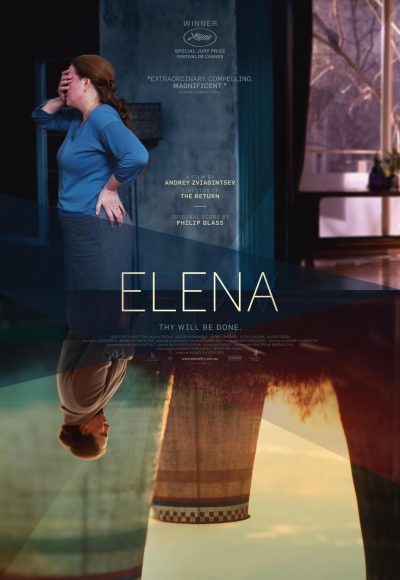
  • Andrey Zvyagintsev – Elena (2011)

    2011-2020Andrey ZvyagintsevArthouseDramaRussia

    Elena and Vladimir are an older couple, they come from different backgrounds. Vladimir is a wealthy and cold man, Elena comes from a modest milieu and is a docile wife. They have met late in life and each one has children from previous marriages. Elena’s son is unemployed, unable to support his own family and he is constantly asking Elena for money. Vladimir’s daughter is a careless young woman who has a distant relationship with her father. A heart attack puts Vladimir in hospital, where he realizes that his remaining time is limited. A brief but somehow tender reunion with his daughter leads him to make an important decision: she will be the only heiress of his wealth. Back home he announces it to Elena. Her hopes to financially help her son suddenly vanish. The shy and submissive housewife then comes up with a plan to give her son and grandchildren a real chance in life.Read More »

Back to top button