

Ana lives with the idealistic way of life of a religious family and avoid most subjects related to sex and other tabú themes. But love and rape came to her life and make her sink in a promicuos world that is very well shown by Nilsson.Read More »
Ana lives with the idealistic way of life of a religious family and avoid most subjects related to sex and other tabú themes. But love and rape came to her life and make her sink in a promicuos world that is very well shown by Nilsson.Read More »

“The Seven Madmen” draws on two novels by Roberto Arlt to show us the opulent and seedy words of Buenos Aires in the 1920s. Erdosain (Alfredo Alcon) is a failed inventor who allows himself be pressured into giving up his dreams, marrying a woman he doesn’t know, and taking up a job as a bill collector that he grows to hate. A weak man, Erdosain can’t no to anyone, including an astrologer who enlists him as one of seven members in a secret anarchist society that sets out to destroy the Plaza de Mayo, Argentina’s religious, commercial and government center.
Much of the movie takes place in the working class rooming houses, brothels and tango bars of the period’s and it also shows us the era’s political and criminal underworlds. Although this a well produced picture with good costumes and sets, there is nothing glamorous about the places shown or the people who frequent them. Erdosain’s rented rooms are as sad and depressing as the life he leads that results in his embrace of violent anarchism.Read More »

Quote:
“I feel a little … I don’t feel good.” So says Veronica, the middle-aged upper-middle-class Argentinean woman who suffers a nasty bump on the noggin early on in Lucrecia Martel’s The Headless Woman (La Mujer Sin Cabeza) and spends the rest of the movie in a semiconscious stupor, a stranger in her own body. Watching Martel’s film, which premiered midway through the 61st Cannes Film Festival, it occurred to me that Veronica’s woozy disorientation was a pretty apt metaphor for Cannes itself, where one can reliably emerge from seeing a near masterpiece only to discover that everyone — or at least the influential industry trade newspapers — has declared the very same movie une catastrophe! That was certainly the case with The Headless Woman, which was the first (though hardly the last) of this year’s competition entries to be greeted with lusty boos at the end of its press screening, putting it in such esteemed past Cannes company as Michelangelo Antonioni’s L’Avventura and David Cronenberg’s Crash. (In one of those rare alliances of Franco and Anglo sentiments, Martel’s film spent most of Cannes scraping bottom in the daily critics’ polls conducted by the British trade paper Screen International and its Gallic counterpart, Le Film Français.)Read More »

Quote:
Historias extraordinarias tells the adventures of three men known only as H (Agustin Mendilaharzu, doubling as cinematographer), X (director Mariano Llinás) and Z (Walter Jakob). These adventures come across as self-conscious constructions and journeys happening in the here and now. But though the strongest literary influences on Llinás’ fascinating screenplay are fiction writer Jorge Luis Borges and disciple Adolfo Bioy-Casares, it would be wrong to label Historias extraordinarias as literary per se: Instead, a viewer would have to stretch back to the grand serial silents of Louis Feuillade for something as ambitious as Llinás’ detailed telling of the three separate, intertwined tales, all involving men on quests in situations that force them to question who they really are. Llinás jumps between the storylines over 18 episodes, usually devoting no more than about 15 minutes at a time to any single one. The governing concept uniting the tales is how each man begins with a specific task, and then veers away from the straight-and-narrow, bringing the job’s purpose into question.Read More »
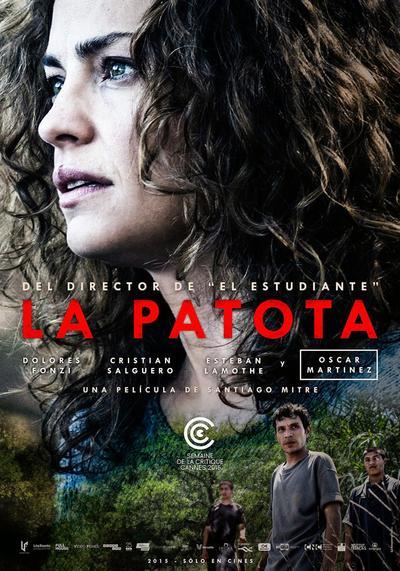
Paulina is a young lawyer with a promising career in Buenos Aires, who chooses to go back to her home town. Her father, Fernando, is a well known judge. Against his will, Paulina decides to teach in a suburban high school as part of an inclusion program. One night, after the second week working there, she’s brutally assaulted by a gang. With the disapproval of the people around her, she decides to go back to work, in the neighborhood where she was attacked, without realizing that her attackers may be even closer than she thoughtRead More »
Quote:
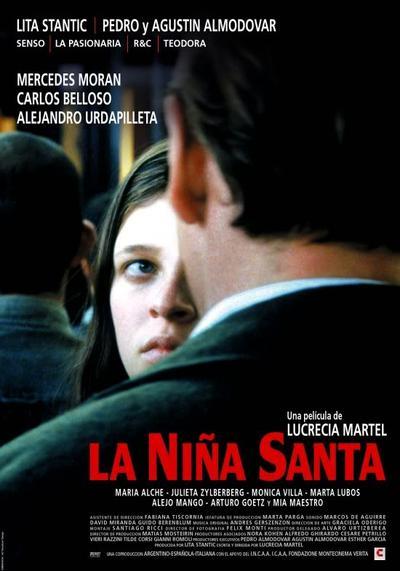
With her award-winning feature-film debut, La Ciénaga (The Swamp) (2001), writer-director Lucrecia Martel emerged as one of the brightest figures of the new Argentinean cinema. In her follow up, the 2004 Cannes Film Festival Competition entry, LA NIÑA SANTA (THE HOLY GIRL), Martel intimately explores the burgeoning sexuality and religious fervor of two teenage girls, Amalia (MARIA ALCHÉ) and her best friend, Josefina (JULIETA ZYLBERBERG). Artfully piecing together a mosaic of nuanced details, fragments of sounds, and small moments, Martel creates a potent and specific portrait of adolescent life. In the town of La Ciénaga, Amalia lives with her attractive, divorced mother, Helena (MERCEDES MORÁN), and her uncle, Freddy (ALEJANDRO URDAPILLETA), in the crumbling, run-down Hotel Termas, which her family owns and runs. After choir rehearsals the girls gather in the parish church for further instruction in faith and vocation. What does God want from me? How do I discern between the temptation of the Devil and the calling of God? In between the teachings, the girls gossip and whisper secretively. The lives of the girls and their families intersect with those of a group of visiting orhinolaryngologists (ear, nose and throat specialists) staying at the hotel for a medical convention, including the married, middle-aged Dr. Jano (CARLOS BELLOSO).Read More »

With dreams of a better life, a humble but illiterate labourer and his wife leave their poor village in Santiago to move to Buenos Aires. However, a sinister boss’ promise of a bright future will come at a high price.Read More »

Synopsis:
The vision of Lisandro Alonso, the blinding photography of Kaurismäki’s regular cameraman and the use of actor/musician Viggo Mortensen combined to ensure a magic result. A Danish military engineer sets off in 19th-century Patagonia looking for his missing daughter. A mysterious masterpiece. Nominated for The Big Screen Award
The Argentinian Lisandro Alonso, with the poet Fabian Casas, wrote a story about ‘Jauja’, an earthly paradise sought in vain for centuries because everyone who looked for it got lost on the way. In this case, it’s about the Danish captain/fortune hunter Dinessen (Danish-born, reluctant Hollywood star Viggo Mortensen) who, at the end of the 19th century, joined the Argentine infantry with his 14-year-old daughter Inge. When she runs off with a young soldier, Dinessen endlessly roams the pampas of Patagonia on the trail of a very thin dog.Read More »

A Wall of Silence (1993 ) , the debut of the famous film producer Lita Stantic , is an episode of collective biography of the generation of 68 in Argentina who lived optimism of the sixties and seventies brutal repression and now remakes his life in a democracy based on oblivion. Unlike many Argentine films that address the issue of missing persons, ‘A Wall’ leans more towards the historical and political approach, which also adopted in this article , analyzing the references to optimism of El Cordobazo and around Peron dictatorship and the development of democracy since 1983. We consider the contributions of filmmakers Lita Stantic and Maria Luisa Bemberg – members for a decade – to the Argentinian film and end with a question about the importance of the recovery of the memory in the current Argentina society.Read More »