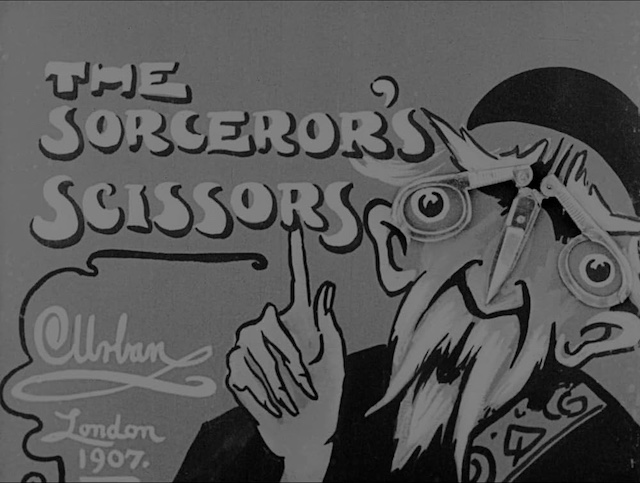
This stunning example of Edwardian cut-and-paste creativity, powered by magical scissors and Hunts Fish Glue, is part of the origin story of British animation. Former stage magician and special effects pioneer Walter Booth was one of the pioneers in adding stop-motion filming frame by frame to make static objects and still images appear to move to the filmmakers armoury.Read More »
Based on elements from the stories of Mark Twain, this feature-length Claymation fantasy follows the adventures of Tom Sawyer, Becky Thatcher and Huck Finn as they stowaway aboard the interplanetary balloon of Mark Twain. Twain, disgusted with the human race, is intent upon finding Halley’s Comet and crashing into it, achieving his “destiny.” It’s up to Tom, Becky, and Huck to convince him that his judgment is wrong and that he still has much to offer humanity that might make a difference. Their efforts aren’t just charitable; if they fail, they will share Twain’s fate. Along the way, they use a magical time portal to get a detailed overview of the Twain philosophy, observing the “historical” events that inspired his works.Read More »
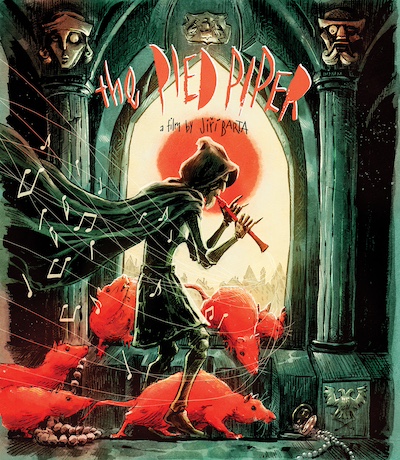
THE PIED PIPER (KRYSAŘ), 1986, Czechoslovakia, 53 min. Director Jiří Barta’s stop-motion animated masterpiece, based on The Pied Piper of Hamelin, is set in a dark and twisted medieval village of narrow streets and weird Gothic arches, half-CABINET OF DR. CALIGARI and half-Jan van Eyck. The money-obsessed citizens, carved out of wood blocks and speaking in an onomatopoeic babble, are like George Grosz caricatures, literally spouting coins from their mouths instead of words. The rats are far more organic and sympathetic, made of real fur and whiskers, constantly tunneling and burrowing under the towering arches and cobblestone streets above. (In one of the film’s many surreal moments, a rat emerges from a gargoyle’s gaping maw.) Fans of fellow Czech animation legend Jan Švankmajer and the Brothers Quay will adore Barta’s eerie, Expressionist gem, recently restored for its first-ever U.S. Blu-ray release through Krátký Film Praha, Deaf Crocodile and Comeback Company. “Barta’s mastery of all aspects of filmmaking are evident: staging, production design, lighting, animation, editing, sound and music combine into dark worlds of repression and revolt with ironic conclusions.” – Phil Tippett (MAD GOD).Read More »
Bruce Petty, one of Australia’s greatest political cartoonists, created an Oscar-winning film from his inventive and amusing exploration of the history of work and leisure.
A fast-paced, humorous and thought-provoking film using animation by Australian newspaper cartoonist Bruce Petty. This Oscar-winning film emphasises the use of leisure time as an important aspect of life in our society today. Planning for recreation and leisure time should be undertaken both on a personal and on a public level.Read More »
From nytimes The Fairy Tale of Honzik and Marenka employs an ingenious animation technique using cut-out figures that is typical of the creative genius of Karel Zeman, the writer and director of this 66-minute film. The sophistication of the technique, and a sprinkling of puns and twists in the story line that bring out a moral parable on the meaning of liberty, justice, and other social issues, make the fairy tale enjoyable for adults as well as children.Read More »
One day Tord accidentally walks in to the apartment next to his own. Another person named Tord lives there, he has just moved in. Tord and Tord start to spend time with each other.Read More »
PLOT: This animated short by Norman McLaren features synchronization of image and sound in the truest sense of the word. To make this film, McLaren employed novel optical techniques to compose the piano rhythms of the sound track, which he then moved, in multicolor, onto the picture area of the screen so that, in effect, you see what you hear.Read More »
Take an animated journey into the depths of the human mind, exploring three psychedelic trips that changed Western culture forever. Sixty years later we sit down with twelve leading current thinkers to ask: “What can expanded states of mind teach us about ourselves, the world and our place in it?”Read More »