Andy Warhol

  • Andy Warhol – Sleep (Full Version) (1963)

    1961-1970Andy WarholExperimentalUSA

    BW/Silent/5 Hrs 21 Mins at 16fps/4 hrs 45 mins at 18fps
    John Giorno

    Andy Warhol:

    “I could never finally figure out if more things happened in the sixties because there was more awake time for them to happen in (since so many people were on amphetamine), or if people started taking amphetamine because there were so many things to do that they needed to have more awake time to do them in… Seeing everybody so up all the time made me think that sleep was becoming pretty obsolete, so I decided I’d better quickly do a movie of a person sleeping. Sleep was the first movie I made when I got my 16mm Bolex.”Read More »

  • Andy Warhol – The Nude Restaurant (1967)

    USA1961-1970Andy WarholExperimentalQueer Cinema(s)

    Quote:
    At a New York City restaurant, the patrons are men, nude but for a G-string, waited on by one woman, also clad in a G-string (played by Viva) and a G-bestringed (bestrung?) waiter. Some of the “nude” patrons leave the establishment, their places taken by new customers, also nearly in the buff. There are numerous in-camera jump cuts (known as ‘strobe cuts’) and the camera weaves around a bit. The waiter and waitress move from table to table, talking to the customers. Taylor Mead sits smirking at the fountain, where eventually he partakes in a long conversation with Viva about her Catholic childhood. Viva, the waitress if not the actual person, seemingly is obsessed with the subject of lascivious priests. There is more strobe cutting and at one point, Viva turns to the camera and asks that it be turned off. The camera is turned off and, after an interlude, is turned back on again, after which Viva continues with her monologue. More patrons arrive while others go, perhaps thinking — if not speaking — of Michelangelo. Written by Tummy AuGratinRead More »

  • Andy Warhol – Lonesome Cowboys (1968)

    1961-1970Andy WarholCultQueer Cinema(s)USAWestern

    29f7c043f76a2bde437fd0d52a185152

    An outrageously funny spoof on the Western film, Lonesome Cowboys is a synthesis of Warhol’s sorties into the New York underworld, but much more humorous and with closer adherence to a nonsensical plot. The film was photographed in Arizona, in a ghost town where (somehow) two of Warhol’s superstars are discovered. The incongruous montebanks happen to be Viva, as chic and sarcastic as she was in Bike Boy and resembling a displaced model for Hound and Horn, and Taylor Mead. Mr. Mead is the zany of our time, and when five mysterious cowhands saunter into town, the hilarity commences. The cowboys are an odd assortment, a bit androgynous and city-wise, and they interact with the two in varying attitudes of lust and indifference in set-pieces of inspired film comedy. Often, Lonesome Cowboys reaches the ultimate in surrealist imagery: cowboy-deputy Mead performing the Lupe Velez Twist, his own choreographic distortion; or one of the cowboys performing ballet exercises at the hitching post. Viva’s langorous seduction of the most innocent-looking among the cowboys is actually a satirical comment on sexual artifice. This erotic, sagebrush comedy has its cruel edge, and one feels that Andy Warhol attempts to make some statement about the nature of brotherly love and the impossibility of virtue rewarded in these times of fallen idols. Select just about any Warhol film from the mid-sixties and you’ll find a scandal tucked away. Lonesome Cowboys’s most notable run-in with the law was in Atlanta where it was seized after replacing Gone with the Wind in a mall theater.Read More »

  • Andy Warhol – Blue Movie AKA Fuck (1969)

    1961-1970Andy WarholArthouseEroticaUSA

    29f7c043f76a2bde437fd0d52a185152

    Summary:
    Producer/director/cinematographer Andy Warhol presents an afternoon in a Manhattan apartment where Viva and Louis discuss social issues while lying in bed. Louis makes sexual advances and Viva giggles; they indulge in sexual foreplay and then intercourse. They talk about the Vietnam War, watch television, get dressed, eat, discuss Louis’s unhappy marriage, and finally take a shower, more and more aware of the presence of a camera. After more sex play in and out of the shower, Viva stares at the camera and asks, “Is it on?”

    Cast:
    Viva … Herself
    Louis Waldon … Himself

    In German, from German sat TVRead More »

  • Andy Warhol – The Velvet Underground and Nico (1966)

    1961-1970Andy WarholExperimentalUSA

    This Andy Warhol art film was first released in 1966. It is his chronicle of the Velvet Underground jamming while blonde German model Nico sits on a stool. Unlike other Warhol art films, the camera becomes an active participant in the film as it zooms in, pans, and moves chaotically around the performers Lou Reed, John Cale and other Undergrounders. The film is not really edited and includes a scene where the police burst in to stop the noise. Warhol himself also appears brieflyRead More »

  • Andy Warhol – Blow Job (1963)

    1961-1970Andy WarholExperimentalQueer Cinema(s)Short FilmUSA

    Free Image Hosting at www.ImageShack.us

    29f7c043f76a2bde437fd0d52a185152

    Review by Tom Vick (Allmovie.com)

    Probably the most notorious of Andy Warhol’s films, Blow Job has been called, jokingly, the longest reaction shot in the history of cinema. In it, an anonymous young man’s face is seen in close-up while he receives fellatio from an unseen partner. The serene voyeurism that runs through Warhols ’60s films reaches a kind of apotheosis in Blow Job. Sexuality, which is a distinct subtext in a number of his films, becomes the subject of this one but, in a typically Warholian joke on pornography, all the “action” occurs off-screen.Read More »

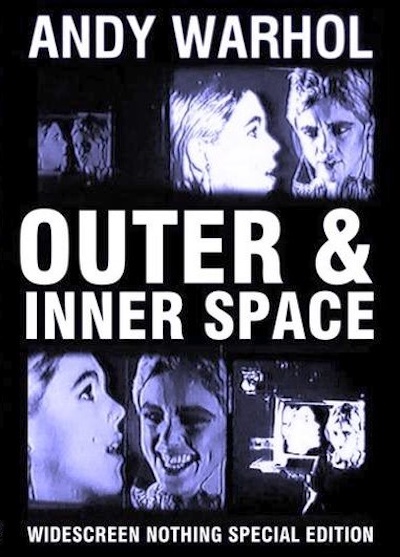
  • Andy Warhol – Outer and Inner Space (1965)

    USA1961-1970Andy WarholExperimentalVideo Art

    FILM; A Pioneering Dialogue Between Actress and Image
    By J. HOBERMAN

    ANDY WARHOL has so become his own trademark — and is so much a one-name synonym for the culture of celebrity — that it can be a shock to realize just how brilliantly original he was as a visual artist. A case in point: The double-screen video-based film installation ”Outer and Inner Space” at the Whitney Museum (through Nov. 30), which places his glamorous, doomed superstar Edie Sedgwick in a dialogue with her own video-taped image.Read More »

  • Andy Warhol – I, a Man (1967)

    USA1961-1970Andy WarholArthouse

    Color/Sound/95 mins at 24 fps
    (filmed late July 1967)

    Tom Baker/Bettina Coffin/Stephanie Graves/Cynthia May/
    Ivy Nicholson/Nico/Valerie Solanis/Ingrid Superstar/Ultra Violet

    Tom Baker: “The first time I sensed impending danger was during a scene with Ivy Nicholson. She had stipulated that she would not appear on camera with me in the nude. Shortly after the scene began I walked out of the frame and removed the towel I was wearing in order to put on my pants. Clad only in unlaundered bikini underwear, Ivy exploded in an emotional fury and stormed out of the room in tears, claiming she had been betrayed. I was talking with Warhol, who was very much perplexed by Ivy’s behaviour since, as he casually pointed out, ‘Ivy’ll cut her wrists for me…’ My third scene was with Valerie Solanis. I felt no personal threat from Valerie. Just the opposite. I found her intelligent, funny, almost charming, and very, very frightened.” (POP273)Read More »

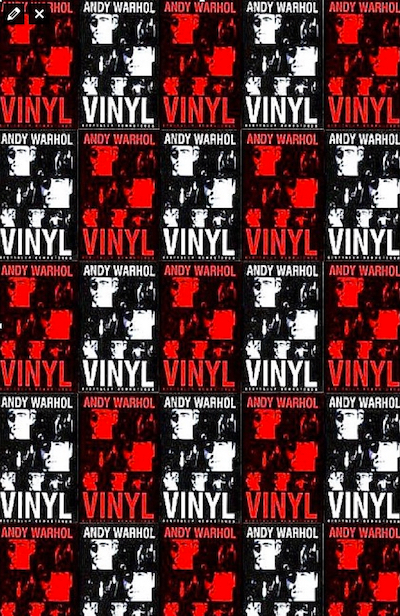
  • Andy Warhol – Vinyl [+Extra] (1965)

    USA1961-1970Andy WarholCultExperimentalQueer Cinema(s)

    Will Sloan, UltraDogme.com wrote:
    It’s cliché to observe that Andy Warhol’s filmography resembles the evolution of cinema itself. Warhol begins, as did Edison and Lumière, with silent films that invite us to wonder at a single visual idea (Sleep, Kiss, Eat). Quickly he introduced sound, color, movie stars, and more conventional visual grammar until finally arriving at Andy Warhol’s Bad (1976), which is so close to a “real movie” that Warhol himself had barely anything to do with it. Warhol made Vinyl (1965) at around the midpoint of his stylistic evolution, after his incorporation of sound but before Paul Morrissey’s domesticating influence. I like much of Warhol’s cinema on both sides of this dividing line, but Vinyl for me represents a beautiful moment when the evolution broke down. What if, after cinema’s birth, the medium had developed an entirely different visual language?Read More »

Back to top button