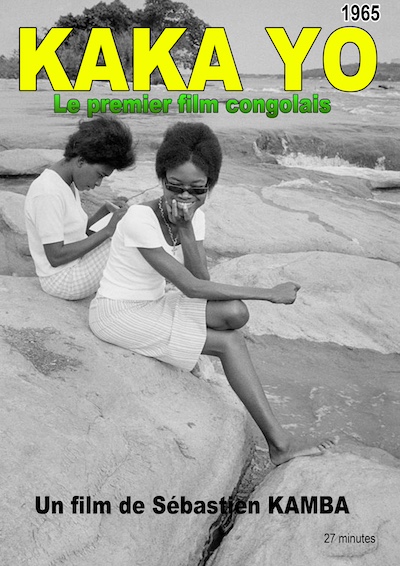

Vibrant love story, which means “Just You” in Lingala, intersperses modern life, the youth of Brazzaville at the time, the European dances in vogue in the 1960s, and life initiation, the sorcery, spiritual power and ritual.Read More »
Vibrant love story, which means “Just You” in Lingala, intersperses modern life, the youth of Brazzaville at the time, the European dances in vogue in the 1960s, and life initiation, the sorcery, spiritual power and ritual.Read More »

A young couple in Senegal must contend with the disapproval of their remote village.Read More »
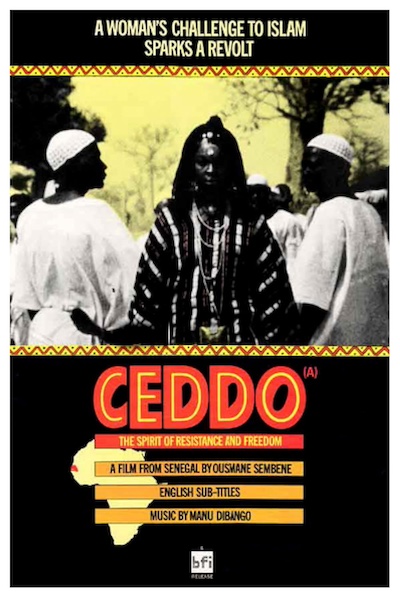
In precolonial Senegal, members of the Ceddo (or “outsiders”) kidnap Princess Dior Yacine (Tabata Ndiaye) after her father, the king, pledges loyalty to an ascendant Islamic faction that plans to convert the entire clan to its faith. Attempts to recapture her fail, provoking further division and eventual war between the animistic Ceddo and the fundamentalist Muslims, with Christian missionaries and slave traders from Europe also playing a role in the conflict. Banned in Senegal upon its release, Ceddo is an ambitious, multilayered epic that explores the combustible tensions among ancient tradition, religious colonization, political expediency, and individual freedom.Read More »

With revolutionary outrage, Ousmane Sembène chronicles a period during World War II when French colonial forces in Senegal conscripted young men of the Diola people and attempted to seize rice stores for soldiers back in Europe. As the tribe’s patriarchal leaders pray and make sacrifices to their gods, the women in the community refuse to yield their harvests, incurring the French army’s wrath. With a deep understanding of the oppressive forces that have shaped Senegalese history, Emitaï explores the strains that colonialism places upon cultural traditions and, in the process, discovers a people’s hidden reserves of rebellion and dignity.Read More »
Synopsis
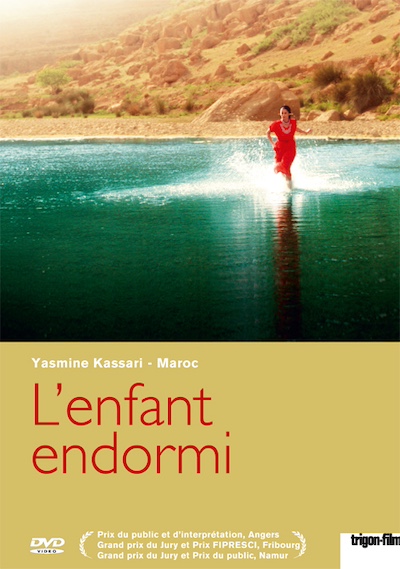
In the northeast of contemporary Morocco, Zeinab, a young wife watches her husband leave the country to go underground the day after their wedding. Zeinab is expecting a child. While she is waiting for her husband to return she lulls the foetus to sleep. Time goes by and the husband does not come back.
IMDb.comRead More »

A young diplomat is prey to the sarcasm of his own “boy”, who sees in him one of the many black-skinned Europeans totally lacking in authenticity and adrift between two cultures. But this adaptation of a novella by Francis Bebey is not limited to this simple contrast. The black man may well fall for the deceptive seductiveness of the blonde woman, but this same white beauty just as easily allows herself to be seduced by the mystery of black Africa. After all, the stereotype differences between Blacks and Whites can never tell the whole story. This culture clash is also the story of a master and his servant, of a director and his secretary, of the same director and the director-general, of a husband and his wife. It cannot be by chance that in the end, after a ritual invasion of his own living room, the diplomat rediscovers his identity by means of the mask, which as we know always conceals and reveals at the same time.Read More »

Quote:
It’s the 1930s. In a village located several kilometers from the administrative post, men attached to ancestral traditions have no other ambition than to live in peace. The evangelical mission has set up a school and asked the population to build a chapel. Work drags on, exasperating the parish priest, who enlists the help of the sacristan and the village chief to speed up the construction of the chapel. The arrival of a young teacher, full of modernist ideas, and the hostile attitude of the schoolmaster, enabled the parish priest to reinforce his authority.Read More »

Quote:
Samba Traoré had left his village years ago to seek his fortune in the big city. He has found only unemployment and rootlessness. As the film begins, he is part of a filling station holdup in which his partner is killed but Samba Traoré, determined, takes the money at gunpoint.
He returns to his village, hides the money, and lets out that he has been successful and now wants to live at home. He resumes old friendships. He marries. His impulses run away with him as opportunities arise to spend more and more of the money. At first people just think he did well in the city. Then they think he did amazingly well. Then they think that they never dreamed anyone could make so much money. Finally his trail becomes so obvious that the police hear of him.Read More »

Quote:
Tilaï opens to a long sequence, off-axis shot of a lone traveler moving away from view as he slowly traverses the arid, featureless plain on a lumbering, overburdened mule and disappears into the desolate horizon. It is an appropriately distanced and alienated introduction for the weary, but sanguine Saga (Rasmane Ouedraogo) who, after an extended journey away from his native village, has returned to the foreboding sight of anxious villagers assembled at a clearing near the entrance of the intimate community. Greeted by his brother Kougri (Assane Ouedraogo) who heads off Saga at the footpath to the village on behalf of the family, Kougri informs him of an unforeseen (and reprehensible) development during his absence: the marriage of his beloved Nogma (Ina Cissé) to their father Nomenaba (Seydou Ouedraogo), having changed his mind and taken the reluctant young woman – once promised to Saga by the old man himself – as his second wife.Read More »