Follows the 15-year-old, Heinz Stilke, a member of the Hitler Youth. Heinz is proud of his father, who died bravely for his fatherland, but suddenly learns that he himself is half Jewish. Heinz leaves his gymnasium and is forced to flee his classmates lest his secret be revealed.Read More »
Tokyo housewife Yasuko Honda (Keiko Takahashi, the director’s wife) has a workaholic husband named Saturo (Shirô Shimomoto) who has been called away for out-of-town duty for a few days, so she is home alone with her elementary-school–age son Takuto (Takuto Yonezu). Already fed up with the frequent intrusions of door-to-door salesmen, because of whom she keeps her door locked and latched, she is highly frustrated when salesman Yamakawa (Daijirô Tsutsumi) slips his hand through her chained door to offer a brochure. She slams the door on his hand, instantly making an enemy of the man, who becomes bent on revenge.Read More »
Quote: A preacher is accused of adultery, and he and his followers are chased out of town. They become stranded in an isolated forest, which is haunted by the spirits of long dead Native Americans.Read More »
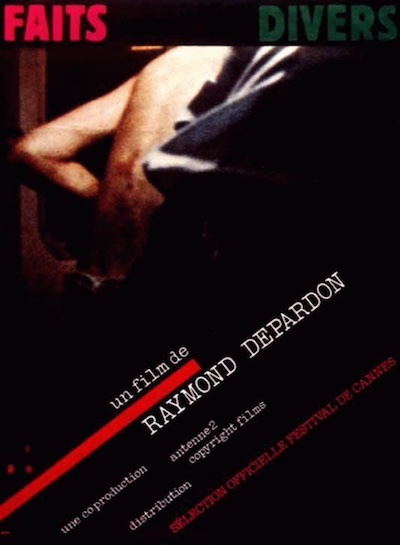
Paris, summer 1982. The day to day life of a police station in the 5th arrondissement of Paris. Day and night a reporter follows small groups of uniformed police officers who patrol the neighbourhood in their vans, intervene at the slightest radio call, prepare reports or question defendants at the central station.
Shot alone by Depardon, Faits divers (News Items) is a live report, without a commentary, on the day to day activities of police officers in the 5th arrondissement of Paris. By observing the police officers, Depardon’s camera reveals the hidden side of Paris. The Paris of everyday assaults, poverty and distress. In a way, he opened a cycle of films on those who had been forgotten by everyone and began to give them a voice as he explained: “The shooting was laborious, but in this film, I was able to record the words of individuals who never have access to the media […] Is Paris a difficult city to live in? Or a city where you get help? There is probably a French-style violence, and the police officers are poorly prepared social workers.”Read More »
This film is made in three sections, each leading towards the final abstraction, and each resembling a search for meaning and order amidst a plethora of electronic, chemical and mechanistic information. In sky light the layers of imagery are gradually stripped away: Rivers, trees, snow covered rocks and clouds gradually give way to an ominous cobalt blue sky and the rotating blades of the camera shutter. In the final sequence the layers of the photographic emulsion are gradually striped away until only dust and the light of the film projector remains.Read More »
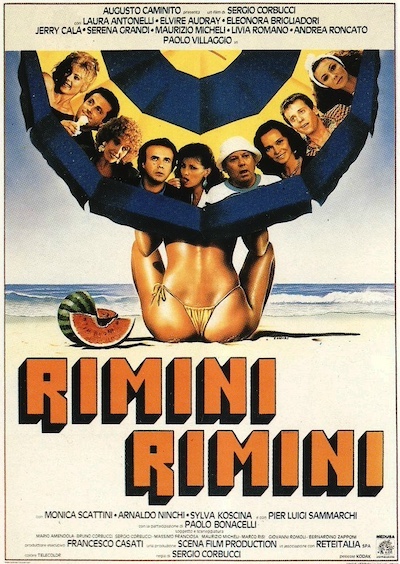
Quote: Best known for his seminal spaghetti westerns, Sergio Corbucci tried his hand at many genres during his long career as a director. Here, late in his career, he makes a nice entry in the commedia sexy all’italiana sub-genre.
The film exists in several versions; one made for television ran a lot longer than this feature film edit, and it played like an omnibus film.
In this theatrical version, the different vignettes are inter-cut. Some segments are naturally more funny than others, but it would be difficult to argue against the sexiness of the ladies involved, even if everything almost remains too tasteful.Read More »
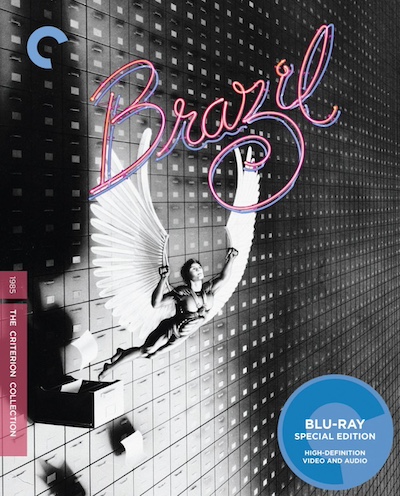
Quote: Through its wildly comic, furiously creative, and intensely moving façade, Terry Gilliam’s Brazil ponders a future made to sustain a draconian past molded by inequality. In this dystopia, the rich, having long knelt at the alter of radical capitalistic tyranny, spend their days having their flesh stretched, sliced, and injected with ultraviolet potions, while the working class types, files, signs, and stamps its way through pointless paperwork. Overrun by communicative ducts, coated wires, cement and metals, and magnified, miniature computer screens, the future conjured up by Gilliam averts the familiar prophecy of an anaesthetized, plastic world overrun by rampantly advancing technology. Indeed, men, who see advancing technology as an affront to their fiscal station and take the pecuniary gain of the morbid, perverse 1% as their modus operandi, unmistakably run the future of Gilliam’s film. New technology is expensive; paper is cheap.Read More »
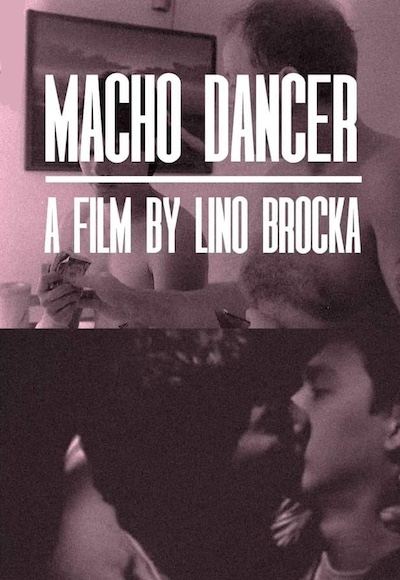
Macho Dancer is a 1988 Philippine film, directed Lino Brocka, which explores the harsh realities of a young, poor, rural gay man, who after being dumped by his American boyfriend, is forced to make a living for himself in Manila’s seamy red-light district. Based on a true story, the film frank depiction of homosexuality, prostitution, drag queens and crooked cops, porno movie-making and sexual slavery, and drugs and violence caused the Filipino government censors to order extensive edits of the film, forcing an uncensored edition to be smuggled out of the Philippines and shown to a limited number of international film festivals. This print is now part of the permanent collection at The Museum of Modern Art in New York [Images in the Dark: An Encyclopedia of Gay and Lesbian Film and Video. 1994. Raymond Murray]Read More »
Ardiente Paciencia, or El Cartero De Neruda, is a 1983 film directed by Antonio Skármeta. It was remade in 1994 as Il postino. It tells the story of Mario Jiménez, a fictional postman in Allende’s revolutionary-era Chile, who befriends the real-life poet Pablo Neruda in the years before Neruda’s death.Read More »