1971-1980

  • Kinji Fukasaku – Gunki hatameku motoni AKA Under the Flag of the Rising Sun (1972)

    1971-1980DramaJapanKinji FukasakuWar

    29f7c043f76a2bde437fd0d52a185152

    User comment from IMDB: Author: ben morris (shiryuo) from Munich, Germany:

    First of all I have to say that this film is really tough.

    It’s a bit like Rashômon. A widow wants to find out the truth about her husband being apparent executed in the Second World War by Japanese soldiers.

    But the administration isn’t ready to hand out the documents about his dead. So the woman (Hidari Sachiko) tries alone to find out what really happened, by questioning four survivors who knew her husband. And everybody tells a different story (that’s why I compare it with Rashômon, although they are set in different sceneries) and they have different opinions about the dead husband. The end turns out to be more horrible than any of you hard-boiled-audition-viewers might expect. Sorry, just kidding. Kinji Fukasaku does its best to disturb the audience. Compared with Battle Royale, Gunki hatameku motoni is much more real and in its way not entertaining at all, what Battle Royale certainly was.Read More »

  • Shuji Terayama – Den-en ni shisu aka Pastoral : To Die in the Country aka Pastoral Hide-and-Seek (1974)

    1971-1980ArthouseAsianJapanShuji Terayama

    29f7c043f76a2bde437fd0d52a185152

    Quote:
    Terayama’s second feature recapitulates some of the main themes of Throw Away Your Books in more directly personal terms: it’s a film about a film-maker’s re-examination (and attempted revision) of his own childhood. His boyhood self is an unprepossessing lad who lives with his monstrous, widowed mother, fantasises about the desirable girl-next-door, and finds the visiting circus a touchstone for his dreams of escape. With passion, wit and a genuinely engaging charm, Terayama poses the burning question: Does murdering your mother constitute a true liberation? The autobiographical stance and the circus motif have evoked countless comparisons with Fellini, but they’re very wide of the mark: the film isn’t burdened with bombast or rhetoric, but it is rich in (authentically Japanese) poetry, and its modernist approach is challenging in the best and most accessible sense.Read More »

  • Jean-Luc Godard & Jean-Pierre Gorin – Letter to Jane: An Investigation About a Still (1972)

    Documentary1971-1980FranceJean-Luc GodardJean-Pierre GorinPolitics

    Letter to Jane is a 1972 French postscript film to Tout Va Bien directed by Jean-Luc Godard and Jean-Pierre Gorin and made under the auspices of the Dziga Vertov Group. Narrated in a back-and-forth style by both Godard and Gorin, the film serves as a 52-minute cinematic essay that deconstructs a single news photograph of Jane Fonda in Vietnam. This was Godard and Gorin’s final collaboration.Read More »

  • Pál Sándor – Szabadíts meg a gonosztól aka Deliver Us from the Devil (1979)

    1971-1980ArthouseClassicsHungaryPál Sándor

    29f7c043f76a2bde437fd0d52a185152

    A Hungarian masterpiece from Sándor Pál.

    The film’s story take place in Budapest, in 1944 in the very end of the 2nd WW. The film’s photographer, Elemér Ragályi won prize in Montreal in 1979. Montreal, 1979.

    PLOT DESCRIPTION
    In this very dark comedy, the loss of a coat from a dance hall cloakroom sets off a frantic search which results in widespread death and mayhem. It is 1944, and the loss of the coat represents the family’s loss of social standing, even during a time when everyone is suffering from the Nazi occupation. The whole family is called in to search for it, and a cross-section of the social chaos of the times is exposed during their search, which involves murders and more. ~ Clarke Fountain, All Movie GuideRead More »

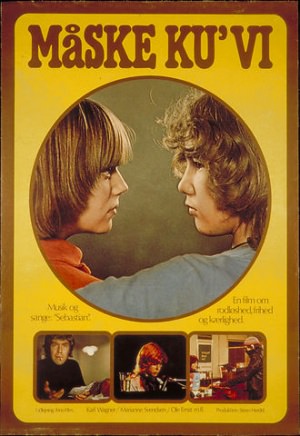
  • Morten Arnfred – Måske ku’ vi aka Could We Maybe (1976)

    1971-1980DenmarkDramaMorten Arnfred

    29f7c043f76a2bde437fd0d52a185152

    During a bank holdup, an early teenaged boy and girl (Karl Wagner and Marianne Svendsen) are taken hostage by the robbers. After a very pleasant captivity, during which they play Monopoly with their captors, they escape into the countryside. The two consummate their first love and have a number of delightful adventures but eventually must return to their everyday lives.Read More »

  • Metin Erksan – Intikam Melegi – Kadin Hamlet AKA The Angel of Vengeance – The Female Hamlet (1977)

    1971-1980ClassicsCultMetin ErksanTurkey

    29f7c043f76a2bde437fd0d52a185152

    Hamlet is now female and so are Rosencrantz and Guildenstern. Instead of taking place in England, this version takes at the beach where everyone plays volleyball in bikinis. An expressionist and surrealist adaptation of Hamlet from director Metin Erksan.Read More »

  • Noriaki Tsuchimoto – Minamata: Kanja-san to sono sekai AKA Minamata: The Victims and Their World (1971)

    1971-1980ClassicsDocumentaryJapanNoriaki Tsuchimoto

    29f7c043f76a2bde437fd0d52a185152

    Quote:
    In the small town of Minamata in Kyushu, far from the metropolitan center, the fertilizer company Chisso built a factory to take advantage of cheap labor and commenced dumping mercury-filled wastewater into the nearby sea. Soon residents began exhibiting symptoms of a mysterious illness, a happening that would eventually develop into the worst case of environmental pollution in postwar Japan. Noriaki Tsuchimoto visits the patients and their families who sued Chisso and listens to their voices. His camera gently lifts the veil that had obscured them and reveals their reality. MINAMATA: THE VICTIMS AND THEIR WORLD is impressive in how it stands on the side of the patients, not only providing a collage of individual portraits, but also an understanding of the their everyday lives.

    One of the monuments of Japanese documentary, MINAMATA: THE VICTIMS AND THEIR WORLD played at many international festivals, winning an award at Locarno.Read More »

  • Helma Sanders-Brahms – Deutschland bleiche Mutter aka Germany, Pale Mother (1980)

    Drama1971-1980GermanyHelma Sanders-Brahms

    29f7c043f76a2bde437fd0d52a185152

    Quote:
    In her film Germany, Pale Mother Sanders-Brahms depicts her childhood in Germany during and after WWII. In order to survive, mother (Lene) and child (Anna) form a self-sufficient bond which excludes the father when he returns from war. The film portrays a child’s resilience in the face of such war trauma as death, and, especially for girls, fear of assault. Anna emulates Lene’s ability to transcend suffering through her will to survive and through narrative, the focus of this paper. Lene’s reciting of the Grimms’ “The Robber Bridegroom” fairy tale, in which the heroine flees and defeats her potential assailant by telling her story, enables them to overcome their suffering as war victims and inspires Anna, the filmmaker, to narrate their story, to become the subject not the object of her life story, and to transcend the past. Postwar scenes depict the difficulty of returning to traditional family roles because of the father’s wartime absence and the resulting abuse from a disillusioned, frustrated husband/father, the postwar “enemy”. There is a role reversal in which Anna becomes the mother’s caretaker which reaches its climax in the final sceneRead More »

  • Gualtiero Jacopetti – Addio zio Tom aka Goodbye Uncle Tom (1971)

    1971-1980CultDocumentaryGualtiero JacopettiItalyThe Cannon Group

    29f7c043f76a2bde437fd0d52a185152

    Mark Deming, All Movie Guide

    Gualtiero Jacopetti and Franco E. Prosperi, best-known for the groundbreaking shockumentary Mondo Cane, directed this bizarre and shocking look at slavery in America. Set in the deep South prior to the Civil War, Zio Tom finds Jacopetti and Prosperi travelling back in time aboard a helicopter to investigate the nuts and bolts of slavery as it happened in the United States prior to abolition. Along the way, the filmmakers go aboard a slave ship as frightened Africans are brought to America under inhuman conditions; they witness the dangerous and degrading process by which slaves were made ready for market; and they visit a “breeding farm” for slaves after laws prohibit the importation of slaves from abroad. Also included is a sermon from a preacher who argues for the moral and spiritual necessity of slavery (while another man speaks out against it strictly on grounds of economics and practicality); the contrasting thoughts of men and women on the matter of miscegenation; and an interview with an educated slave who feels his circumstances are better for him than conventional employment. Also shown is the brutal torture and punishment of slaves for any number of real or imagined grievances. Re-creating both the opulence and the ugliness of the Old South on a grand scale, Zio Tom concludes with present-day African-Americans reading The Confession of Nat Turner and contemplating violent overthrow of the white-dominated culture. Understandably controversial, Zio Tom received a very brief theatrical release in the United States under the title Farewell Uncle Tom, where it received an X rating from the MPAA despite being trimmed by approximately 20 minutes from its original Italian running time.Read More »

Back to top button