In the city of São Paulo, the routine of gravedigger apprentice Deodato changes when a new working girl arrives at the cemetery. Together, they must re-register the abandoned tombs, but strange events make the apprentice wonder about the consequences of messing with the dead.Read More »
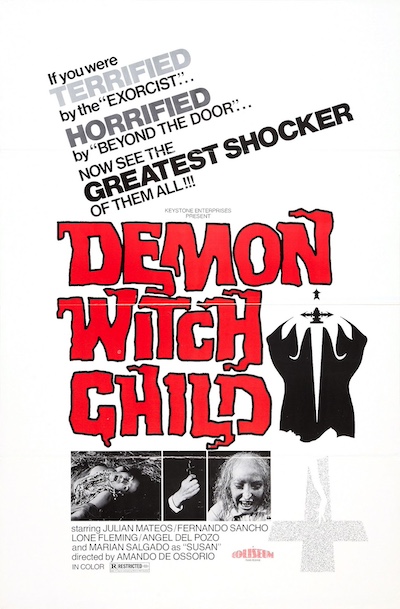
An old witch seeks vengeance through the daughter of the politician who had her thrown in jail. Soon the little girl’s head is spinning around, and an old priest is called in to perform an exorcism.Read More »
Ex-football star Paul Crewe (Burt Reynolds) ends up in a prison run by sadistic sports-nut Warden Hazen (Eddie Albert). Strong-armed into forming an inmate football team, Crewe manages to instill an esprit de corps previously lacking in the prisoners’ lives. Besides, they now have the chance to beat the guards’ football team, headed by the hissable Capt. Knauer (Ed Lauter). Hazen orders Crewe to throw the match; otherwise, Crewe will never get the pardon he’s been promised. The football game that follows consumes nearly a third of the picture.Read More »
„By the middle of the 70s, partly due to television, Hungarian films had lost much of their audience. The allure of disguised social criticism – one of the secret reasons why Hungarian films were so successful at foreign festivals – started to wear off. After 1968 social criticism became pointless. The first director to open up towards the audience (along with Zoltán Fábri) was Pál Sándor. Mourning the loss of left-wing ideals of freedom he recreated the illusion of a past community. The audience responded to his grotesque, nostalgic tone and the stories where the emphasis was always placed on the microclimate of human relationships. His “retro-films” were rich in self-irony. He never analysed and never criticised, he just told a story, created a poignant atmosphere and passionate characters. (Szeressétek Odor Emíliát – Love Emilia! 1968, Régi idők focija – Football of The Good Old Days 1973, Herkulesfürdői emlék – A Strange Role 1976, Szabadíts meg a gonosztól – Deliver Us from Evil 1978).Read More »
One man’s dreams of success take him on a Byzantine journey through the various stations of the British class system in this politically charged black comedy from director Lindsay Anderson. Mick Travis (Malcolm McDowell) is an ambitious young man who is looking to get his foot on the first rung of the ladder of success by landing a job as a salesman. After the death of Imperial Coffee’s leading drummer in the North, Travis’ charm and enthusiasm so impresses manager Mr. Duff (Arthur Lowe) that he’s given the job, and after some coaching from Gloria Rowe (Rachel Roberts), Travis sets out to find his fortune in the coffee trade.Read More »
from allmovie: One of the more cinematic entries in the mid-1970s American Film Theatre series, In Celebration is adapted from the play by David Storey. Lindsay Anderson, who directed the original stage version, reassembles his cast for this filmization. Alan Bates, James Bolam and Brian Cox play Andrew, Colin and Steven, the well-educated sons of roughhewn coal miner “Mr. Shaw” (Bill Owen) and his wife (Constance Chapman). On the occasion of their parents’ wedding anniversary, the three sons return to their dank little home village. All three boys have become successful, but only Bolam is comfortable with his success. To his parents’ dismay, Andrew announces that he has given up his law practice to become an artist; he also confesses to harboring homosexual inclinations. Prompted by the embittered Andrew, the other sons churn up memories of their childhood that they–and their parents–had hoped to keep buried. — Hal EricksonRead More »
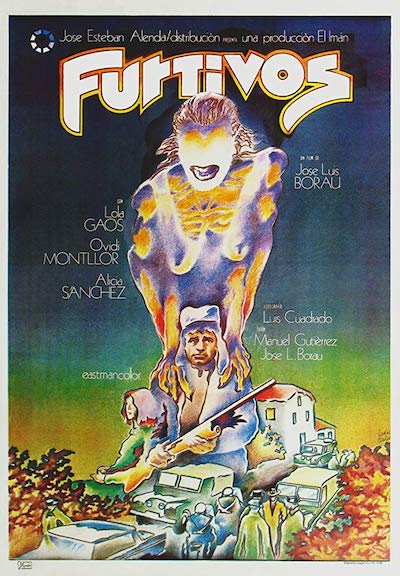
Quote: In 1975 Borau made the film for which he is best remembered Furtivos (Poachers) (1975). The plot, set in the woodlands of Segovia, is a stark story of violence incest and matricide. Co-scripted with Gutierrez Aragon, Borau took the role of the regional governor in the film. He fought the Francoist censorship to have his film released the way he intended. Furtivos was a great commercial and critical success, it won best film, Golden Shell, at the San Sebastián International Film Festival becoming one of the key film of the political transition in Spain.Read More »
Fábri linked two József Balázs novels. The Bálint Fábián story depicts the bitter peasant existence of the father of the protagonist of Hungarians with a profundity and power similar to sociographic literature of the 1930s.
Bálint Fábián is killing people on the Italian front in 1918. At home, his sons strangle the priest who is the lover of their mother. On returning from the front, instead of discovering a robust wife Bálint finds a deranged woman. He is to be the carriage driver for the baron but during the ‘white terror’ he showed solidarity with his fellow labourers, and he returns to his sons as a shepherd. His wife dies, his sons abandon him…Read More »