Staggeringly simple films: a man itching his back, a man thinking, a man yawning, but like the works of Samuel Beckett, these minute gestures stand in as grand statements of the human condition, akin to the films of Bas Jan Ader and Marcel Broodthaers.Read More »
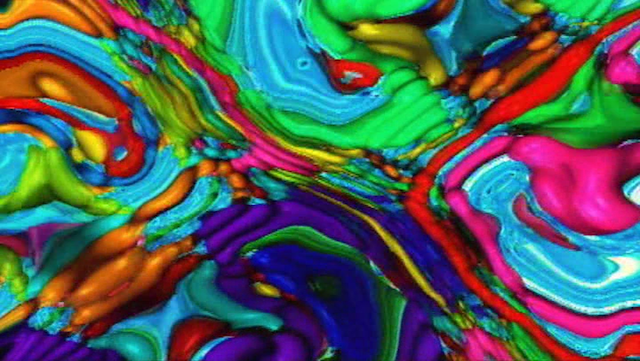
Quote: A decade after quitting Hollywood, legendary director Nicholas Ray (Rebel Without a Cause, In a Lonely Place) accepted a teaching contract at Harpur College in Binghamton, NY. There, with the intensive collaboration of his students, he began work on a project unlike anything he had done before, the making of which would consume his creative energies for the remainder of his life. Entitled We Can’t Go Home Again, that film is Ray’s enormously ambitious, profoundly personal, wildly experimental magnum opus – a collection of notes on Vietnam-era America, the generation gap and the filmmaking process itself, conceived in a dizzying kaleidoscope of split screens, superimpositions and other radical image manipulations that anticipate later trends in video art and digital effects.Read More »
People often want to hear what the artist has to say, what lies “behind” the work, yet at the same time it’s taken as a performance.
But Seth Price’s Redistribution (2007 – ) isn’t an artist talk. It uses the artist’s talk as a form and turns it into a video: the artist is at a lectern, giving an overview of his practice, but his explanations are called into question by the constructed nature of all the graphic effects, repeated sequences, voice-overs, or background music. After all, a video is just material in a chain.
When an image is filtered, you’re mostly seeing the filter.Read More »
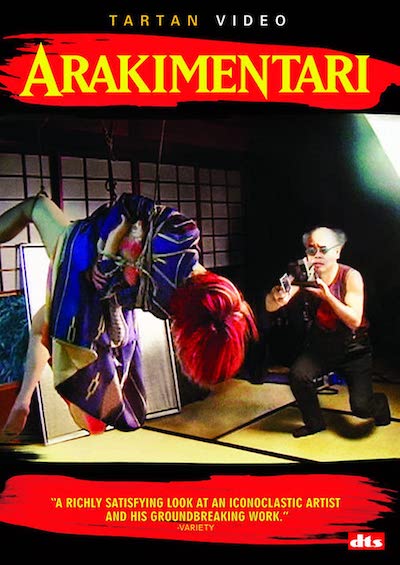
Quote: The documentary feature ARAKIMENTARI explores the work of popular and controversial Japanese photographer Nobuyoshi Araki in a style designed to match Araki’s own. Araki’s fame and the debate around his photography derive mostly from his work with nudes, which blur the lines normally established between art, erotica, and pornography. The photographs have often been credited with reversing the Japanese ban on the visual representation of pubic hair, and Araki has been seen by his supporters as one of the artistic champions of free speech and social criticism in Japan. Some of Araki’s celebrity fans–Bjork, Takeshi Kitano, Richard Kern and others–are interviewed to explain the appeal and importance of his photography. Liberally peppered with images of the photography and presented in a manner designed to imitate the combination of titillation and estrangement Araki’s work engenders, ARAKIMENTARI goes beyond the biographical documentary to the realm of artistic portrait.Read More »
A collection of 11 short poetic psycho-geographic portraits of cities and spaces from artist Dominique Gonzelez-Foerster, who’s cinematic 2007 solo show at Musée dArt moderne de la Ville de Paris will be supplemented in 2008 by the Unilever commission for the Turbine Hall of London’s Tate Modern (joining Carsten Holler’s slides, Olafur Eliason’s sun, and Doris Salcedo’s crack amongst many other prestigious past projects).Read More »
Quote: In 2007, Matthew Barney and Jonathan Bepler began a new collaborative project inspired by American author Norman Mailer’s 1983 novel Ancient Evenings, set in pharaonic Egypt. The project was conceived as a nontraditional opera with a series of one-time-only live acts performed across the American landscape over a five-year period. This opera developed as a film titled River of Fundament, which combines documentation of the three live acts with scenes set in a reconstruction of Norman Mailer’s brownstone apartment in Brooklyn Heights.Read More »
“A collection of previously almost impossible to find early Psychic TV and Temple of Psychick Youth (TOPY) film and video creations unearthed from the archives of Porridge with Everything Inc. These include works by and/or featuring Derek Jarman,Genesis Breyer P-Orridge, Peter “Sleazy” Christopherson, Trojan, John Balance, Leigh Bowery, Cerith Wyn Evans, Marie Losier, Nicolas Jenkins, Mr. Sebastian, Hazel Hill, Lady Jaye P-Orridge and others.
DVD compiled and mastered by Hazel Hill. “Read More »
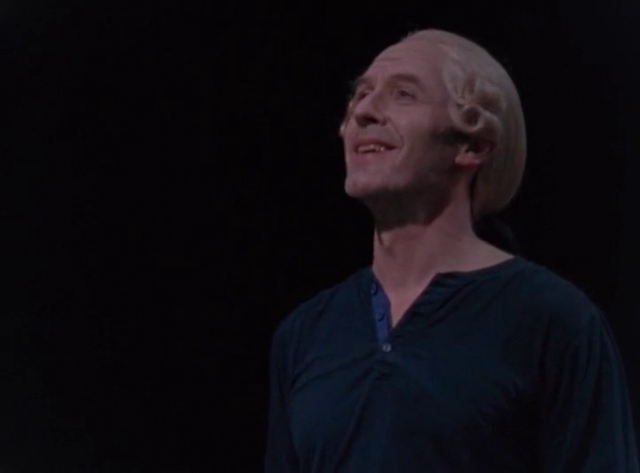
‘Event for a Stage’ is a 16mm film I made in 2015 with the actor Stephen Dillane. I normally project the work as film inside galleries and museums, and occasionally cinemas. I have always been steadfast about showing my films in the medium with which they were made and were always intended to be shown. I have therefore never allowed them to be streamed online or ever projected digitally. Film is a very different way of making and seeing a work, and over the years, I have campaigned to keep photochemical mediums available to artists and filmmakers, and I have found that I have done this best this by continuing to make and show my works in and on film.Read More »
In scenario du film Passion, Godard constructs a lyrical study of the cinematic and creative process by deconstructing the story of His 1982 film Passion. “I did not want to write the script,” he states, “I wanted to see it.” Positioning himself in a video editing suite in front of a white film screen that evokes for him the “famous blank page of Mallarme” Godard uses video as a sketchbook with Which to reconceive the film. The result is a philosophical, often humorous rumination on the desire and labor that inform the conceptual and image making process of the cinema. directly quoting from and Further elaborating on the process and content of the earlier film – Which is itself about labor and creativity – Godard’s scenario is both rigorously theoretical and intensely personal.Read More »