The post Hassan Fazili – Midnight Traveler (2019) first appeared on Cinema of the World.
]]>

In 2015, the Taliban put a price on the head of Hassan, a filmmaker, who was forced to flee Afghanistan with his wife and two young daughters. Using their camera phones, the fugitives show first-hand the many dangers refugees face when seeking asylum in a safe place.


1.66GB | 1h 28m | 1024×576 | mkv
https://nitro.download/view/06C21FFC6BC7500/Midnight.Traveler.2019.Hassan.Fazili.DVDRip.x264.mkv
or
https://nitro.download/view/33B29BF302E6C19/Midnight.Traveler.2019.Hassan.Fazili.DVDRip.x264.part1.rar
https://nitro.download/view/E2A57EB1ACE3ACD/Midnight.Traveler.2019.Hassan.Fazili.DVDRip.x264.part2.rar
Language(s):Dari,English
Subtitles:English,French
The post Hassan Fazili – Midnight Traveler (2019) first appeared on Cinema of the World.
]]>The post Hana Makhmalbaf – Lezate divanegi AKA Joy of Madness (2003) first appeared on Cinema of the World.
]]>
Quote:
Shot on a digital video camera by the then 14-year-old Hana Makhmalbaf, Joy Of Madness is, in the words of its precociously talented young director, “a documentary on the surface but a feature film in essence.”
Partly it’s an idiosyncratic account of Hana’s elder sister Samira attempting to cast her own film, At Five In The Afternoon, with non-professionals in war-scarred Kabul in autumn 2002. It’s also a revealing portrait of a shattered society still traumatised by its experiences under the terrifying rule of the Taliban.
What connects the various characters in Joy Of Madness are their feelings of fear. An elderly mullah goes back on his agreement to Samira and her colleagues to play a cart-driver because he’s worried that his professional status will be affected, and that film itself is sinful. Meanwhile an impoverished gypsy family is convinced that the crew will kill their malnourished baby during the shoot. And the widowed teacher Agheleh, herself only 22 and whom Samira is determined to cast as the lead, writes a letter explaining why she feels she can’t take on the role: who will look after her three children and how will she be able to return to her previous job?
Joy Of Madness captures the determination, the persuasiveness, and the single-mindedness of the Makhmalbaf clan at work, with father Mohsen and stepmother Marziyeh Mehskini also part of a close-knit production team. Samira herself, who also directed The Apple and Blackboards, comes across as a volatile and demanding figure as she flatters, cajoles, and criticises those she seeks to cast. Mohsen reinforces her sales pitches by stressing to people how famous his daughter is in the world beyond Afghanistan (“a thousand newspapers have written about her”, he explains), and he’s the one asked to ensure the wavering Agheleh signs up to the project. But it’s Hana who deserves the credit for such a candid view of her own filmmaking family.
Tom [email protected]


2.80GB | 1h 10mn | 754×566 | mkv
https://nitro.download/view/6D9E752B9EB3FA4/Joy_of_Madness.2003.DVDRip.x264.mkv
Language(s):Persian
Subtitles:English
The post Hana Makhmalbaf – Lezate divanegi AKA Joy of Madness (2003) first appeared on Cinema of the World.
]]>The post Margaux Benn, Solène Chalvon-Fioriti – Afghanistan: Vivre en pays Taliban AKA Afghanistan: Willkommen bei den Taliban AKA Afghanistan: The Land of the Taliban (2021) first appeared on Cinema of the World.
]]>
ARTE wrote:
Afghan security forces are non-existent, a president has fled to Tajikistan, and the fundamentalists have settled in an empty place.
Last May, when the Taliban were already in control of a large part of the country, our filmmakers followed the “masters of the countryside” on their land, whose public stonings had struck fear into the hearts of the whole world.
Twenty years after being driven out of power by the American military intervention, the Taliban entered Kabul, without resistance, to the astonishment of the international community.
With Afghan security forces non-existent and a president on the run in Tajikistan, the fundamentalists have settled into an empty place.
Last May, when the Taliban were already in control of a large part of the country, our filmmakers followed the “masters of the countryside” on their land, whose public stonings had struck fear into the whole world.
Zainab, 10 years old, spends four hours a day learning the Koran in a makeshift school, as the Taliban had not built a school for girls. Her father, who lost relatives in an Afghan and US forces attack, praises the fighters, who he says keep the village safe. Grocers and farmers, under constant vigilance, say the same thing…
The Taliban are everywhere: from food legislation to the frequency of prayers, they interfere in all aspects of daily life. Not far away, in a mosque, the “shadow government” decides on laws and new prohibitions. Then, at the foot of a hundred-year-old tree, judges administer justice in a public court. The only sanctuary for the women, otherwise invisible in the public space: the clinic, where they share their pains with a young general practitioner from the capital.
By immersing themselves in a Taliban village, and after having obtained rare access to the main institutions, the filmmakers shed a disturbing light on today’s Taliban society, and on the workings of this ultra-conservative parallel state which, if the rebels win, could well foreshadow the Afghanistan of tomorrow.


608MB | 36m 34s | 1280×720 | mkv
https://nitro.download/view/8E767DE1E337E1E/Afghanistan.Vivre.en.pays.Taliban.2021.WEB-DL.720p.mkv
Language(s):German; unidentified language(s) from Afghanistan
Subtitles:English hardcoded
The post Margaux Benn, Solène Chalvon-Fioriti – Afghanistan: Vivre en pays Taliban AKA Afghanistan: Willkommen bei den Taliban AKA Afghanistan: The Land of the Taliban (2021) first appeared on Cinema of the World.
]]>The post Atiq Rahimi – Syngué sabour, pierre de patience AKA The Patience Stone (2012) first appeared on Cinema of the World.
]]>
Quote:
In a war ridden country a woman watches over the husband reduced to a vegetable state by a bullet in the neck, abandoned by Jihad companions and brothers. One day, the woman decides to say things to him she could never have done before.


2.18GB | 1h 42m | 1024×436 | mkv
https://nitro.download/view/79E774D911B7027/Syngue.sabour.AKA.The.Patience.Stone.2012.576p.BluRay.x264.mkv
or
https://tezfiles.com/file/5f1d40af36da5/Syngue.sabour.AKA.The.Patience.Stone.2012.576p.BluRay.x264.mp4
Language(s):Farsi
Subtitles:English, French, Persian
The post Atiq Rahimi – Syngué sabour, pierre de patience AKA The Patience Stone (2012) first appeared on Cinema of the World.
]]>The post George Gittoes – Tailor Story (2011) first appeared on Cinema of the World.
]]>
“Gittoes’s work often asks two questions: what are the experiences of other artists working and surviving in war zones? Or, what is his moral responsibility as an artist-correspondent? When Gittoes allows his subjects to explain the former, or, when he talks about his own experience of the latter, his work is clear and insightful.

Gittoes’s most successful projects are his films, in which his subjects can convey all the subtlety and depth of what they have known. They are able to establish what the psychiatrist R. D. Laing called “inter-experience,” a psychological connection between people, essential for social and political action. In his film The Bullets of the Poets (1987), Gittoes and co-creator Gabrielle Dalton document the struggles of Sandinista revolutionaries during their decade-long struggle against Nicaragua’s right-wing dictatorship. Without commentary or intervention, Gittoes provides spaces for feminist poets to tell the story of their country and their art—including the Revolutionary poet Gioconda Belli, who describes her work as “an art of urgency.”

Diary excerpts from the 1995 Rwandan genocide drive home the moral imperative of Gittoes’s humanitarian art. Unlike the sketchbooks in the front galleries, these four large pages are written with a nib pen and appended with photographs. Fictional stories and factual accounts collide as wobbly handwriting intensifies their immediacy. The journals are ornamented with snapshots bordered by loose, muted strokes of watercolor or pen. Horribly wounded civilians, their faces disfigured by machetes, explode from the page, staring down viewers with searing physical and emotional pain.

“Rwanda Maconde” (1995) recounts a massacre at the Kibeho refugee camp. Words gush forward feverishly, spilling down the page with forceful propulsion. A few lines have been hurriedly redacted and the text changes size or bleeds or devolves into emphatic scribbles. At the anchored center, one photo shows a boy staring fearfully; in another, the bodies of a mother and child are dumped unceremoniously into a mass grave. Both images are framed by burning slashes of color. The spare and direct construction of the document hits you square in the gut.

In his installations, Gittoes puts foreign conflicts squarely into our domain. “DVD Store” (2011) smartly re-creates a small, Taliban-threatened video shop the artist documented in his 2009 film The Miscreants of Taliwood, shot in Pakistan’s nearly lawless Northwest Frontier Province. The tiny outlet, covered floor to ceiling with ads and packaging for local Pashto films, screens trailers for Gittoes-produced Tali movies on small monitors overhead, including Moon Light (a parody of the vampire romance Twilight) and a female-empowered flick, The Tailor’s Story. These DVD stands become loci for what Benjamin Barber termed “Jihad vs. McWorld,” places where globalizing markets come into violent opposition with tribal, fundamentalist reactionaries.”

1.64GB | 1h 57mn | 720×400 | avi
https://nitro.download/view/0966F4D216FC018/Tailor_Story.avi
or
https://tezfiles.com/file/c13cc89c42252/Tailor_Story.avi
Language:Pashtun
Subtitles:English hardcoded
The post George Gittoes – Tailor Story (2011) first appeared on Cinema of the World.
]]>The post Atiq Rahimi – Syngué sabour, pierre de patience AKA The Patience Stone (2012) first appeared on Cinema of the World.
]]>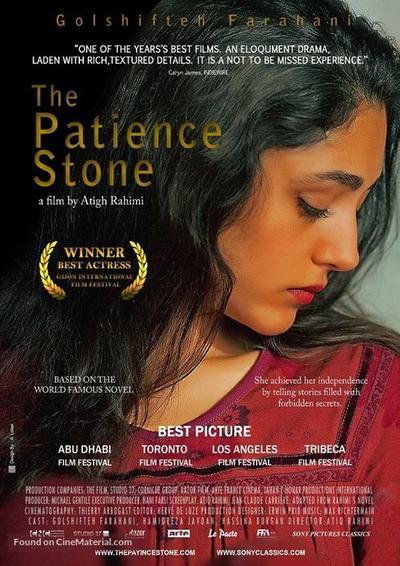
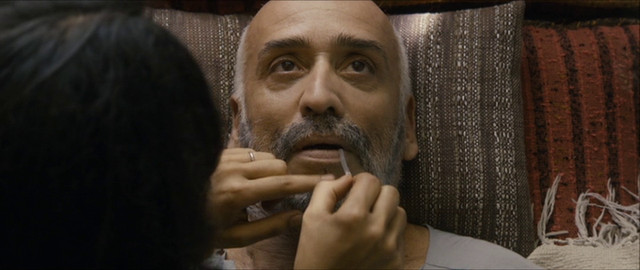
Somewhere, in Afghanistan or elsewhere, in a country torn apart by a war… A young woman in her thirties watches over her older husband in a decrepit room. He is reduced to the state of a vegetable because of a bullet in the neck. Not only is he abandoned by his companions of the Jihad, but also by his brothers. One day, the woman decides to tell the truth to him about her feelings about their relationship to her silent husband. She talks about her childhood, her suffering, her frustrations, her loneliness, her dreams, her desires… She says things she could never have done before, even though they have been married for the past 10 years. Therefore, this paralyzed man unconsciously becomes syngue sabour, a magic stone which, according to Persian mythology, when placed in front of a person shields her from unhappiness, suffering, pains and miseries. In this wait for her husband to come back to life, the woman struggles to survive and live. She finds refuge in her aunt’s place, who is…



Language(s):Persian
Subtitles:English (Optional)
The post Atiq Rahimi – Syngué sabour, pierre de patience AKA The Patience Stone (2012) first appeared on Cinema of the World.
]]>The post Siddiq Barmak – Osama (2003) first appeared on Cinema of the World.
]]>
The movies are a little more than a century old. Imagine if we could see films from previous centuries — records of slavery, the Great Fire of London, the Black Plague. “Osama” is like a film from some long-ago age. Although it takes place in Afghanistan, it documents practices so cruel that it is hard to believe such ideas have currency in the modern world. What it shows is that, under the iron hand of the Taliban, the excuse of “respect” for women was used to condemn them to a lifetime of inhuman physical and psychic torture. No society that loves and respects women could treat them in this way.
The heroine of the film, Osama (Marina Golbahari) is a pre-adolescent in a household without a man. Under the rules of the Taliban, women are not to leave the house without a male escort, or take jobs, so Osama, her mother and grandmother are condemned to cower inside and starve, unless friends or relatives bring food. They do not. Finally the grandmother suggests that Osama cut her hair and venture out to find work, pretending to be a boy.
This story is told against a larger context of institutional sadism against women. An opening scene shows women in blue burkhas holding a demonstration — they want the right to take jobs — and being attacked by soldiers who begin with water cannons and eventually start shooting at them. Obviously Osama is risking her life to venture out into this world, and soon she’s in trouble: She is snatched away from her job and sent to a school to indoctrinate young men in the ways of the Taliban.
There it is only a matter of time until her real sex is discovered. The punishment handed down by a judge is revealing: This child becomes one of the many wives of a dirty old man, a mullah who keeps his young women as prisoners. At that, Osama gets off lightly; another woman in the film is buried up to her neck and stoned for … well, for behaving like a normal person in a civilized society.
The movie touches some of the same notes as “Baran” (2001), an Iranian movie about an unspoken love affair between a young Iranian worker and an Afghan immigrant who is a girl disguised as a boy. The film is not as tragic as “Osama,” in part because Iran is a country where enlightened and humanistic attitudes are fighting it out side by side with the old, hard ways. But in both cases Western audiences realize that to be a woman in such a society is to risk becoming a form of slave.
What is remarkable is the bravery with which filmmakers are telling this story in film after film. Consider Tahmineh Milani’s “Two Women” (1999), which briefly landed her in jail under threat of death. Or Jafar Panahi’s harrowing “The Circle” (2000), showing women without men trying to survive in present-day Tehran, where they cannot legally work, or pause anywhere, or be anywhere except inside and out of sight. The real weapons of mass destruction are … men.
Who will go to see “Osama?” I don’t know. There is after all that new Adam Sandler movie, and it’s a charmer. And “The Lost Skeleton of Cadavra” is opening, for fans of campy trash. I’m not putting them down. People work hard for their money, and if they want to be entertained, that’s their right. But brave dissenting Islamic filmmakers are risking their lives to tell the story of the persecution of women, and it is a story worth knowing, and mourning. In this country Janet Jackson bares a breast and causes a silly scandal. The Taliban would have stoned her to death. If you put these things into context, the Jackson case begins to look like an affirmation of Western civilization.Review by Roger Ebert


Osama.2003.DVDRip.x264-brento.mkv

General
Container:	Matroska
Runtime:	1h 22mn
Size:	1.60 GiB
DXVA:	Compatible
Minimum settings:	Not met
Video
Codec:	x264
Resolution:	698x550 ~> 977x550
Aspect ratio:	16:9
Frame rate:	24.000 fps
Bit rate:	2 556 kb/s
Audio
2.0ch AC-3 @ 224 kb/s
https://nitro.download/view/E52A1B6EE771183/Osama.2003.DVDRip.x264-brento.mkv
Language(s):Dari, Pashto, English, French, Arabic
Subtitles:English
The post Siddiq Barmak – Osama (2003) first appeared on Cinema of the World.
]]>